Reading a skincare ingredient list can feel like decoding a foreign language — long chemical names, abbreviated compounds, and an overwhelming number of components in every single product. But within that list, certain ingredients consistently cause problems for skin health: irritation, breakouts, barrier disruption, hormonal disruption, or contact sensitisation that worsens with repeated exposure. Knowing which ones to look for — and avoid — transforms the way you shop for skincare and immediately improves the quality of what you put on your skin every day.
This guide covers the most important skincare ingredients to avoid, what they do to skin, which products commonly contain them, and what to choose instead.
| Did You Know? Contact dermatitis — skin irritation and sensitisation from skincare ingredients — affects an estimated 20 to 30% of people who use skincare products regularly. The most common culprits are fragrance, preservatives, and certain surfactants. Many cases are misdiagnosed as sensitive skin when the real cause is a specific ingredient that is being applied daily. |
1. Fragrance and Parfum
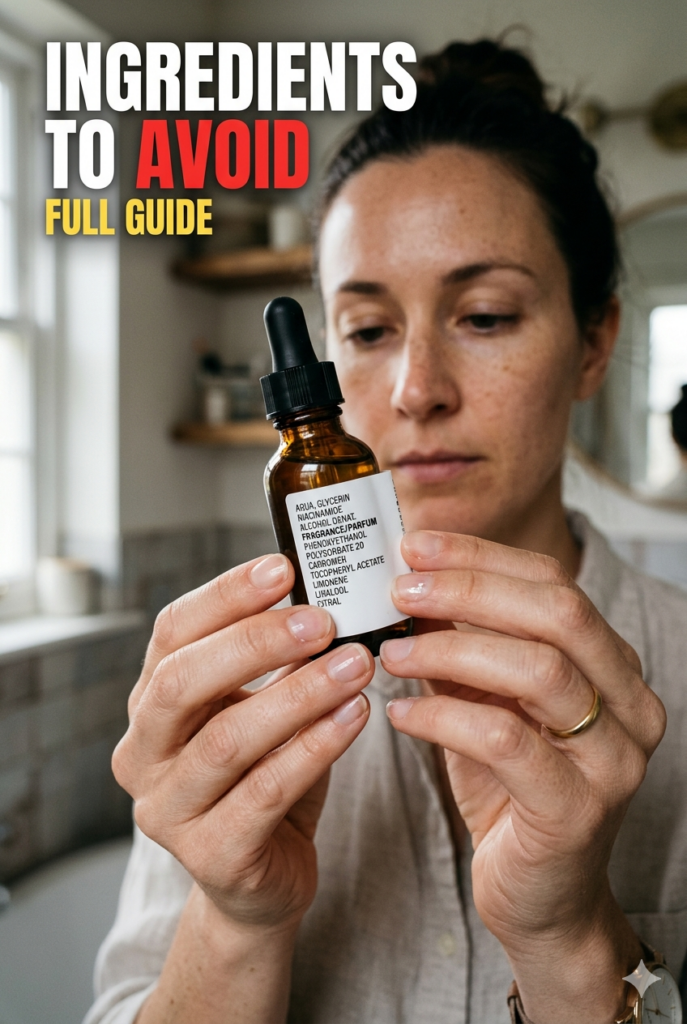
Fragrance is the single most common cause of contact dermatitis and skin sensitisation from skincare products — and it is found in the vast majority of mainstream skincare, haircare, and body care products. It is listed on ingredient labels simply as ‘fragrance’ or ‘parfum’ — a legally protected umbrella term that can encompass hundreds of individual chemical compounds without disclosure. Repeated exposure to fragrance ingredients causes progressive sensitisation in many people — meaning reactions worsen with each exposure rather than improving. For acne-prone, rosacea-prone, and sensitive skin types, fragrance-free formulations are non-negotiable. Look for products labelled fragrance-free rather than unscented — unscented products often contain masking fragrances that cause the same issues.
2. Sodium Lauryl Sulphate (SLS)
Sodium lauryl sulphate is the most common foaming agent in cleansers, shampoos, toothpastes, and body washes. It is highly effective at creating the lathering action consumers associate with cleansing — but it achieves this by being one of the most barrier-disrupting surfactants used in personal care. SLS damages the tight junction proteins that hold the skin barrier together, increases skin permeability, and causes a prolonged disruption of the acid mantle that takes two or more hours to restore. For acne-prone skin in particular, the reactive sebum overproduction triggered by daily SLS exposure can significantly worsen breakout frequency. Look for SLS-free cleansers using gentler surfactants such as cocamidopropyl betaine or sodium cocoyl isethionate.
3. Alcohol Denat and High-Alcohol Formulations
Denatured alcohol — listed as alcohol denat, SD alcohol, or ethanol — is used in many toners, serums, and lightweight products as a solvent and to create a fast-drying, lightweight texture. In low concentrations it is less problematic, but as a primary or early ingredient it causes significant skin barrier damage, increases transepidermal water loss, triggers reactive oil production in oily skin types, and paradoxically worsens the dryness and sensitivity it appears to temporarily relieve. It is particularly common in toners marketed for oily and acne-prone skin — the very skin types it most damages. Check toner and serum ingredient lists for alcohol denat in the first five ingredients and choose alternatives.
4. Oxybenzone and Chemical Sunscreen Filters
Oxybenzone, octinoxate, homosalate, and avobenzone are the most common chemical UV filters in sunscreens. Studies have confirmed that these compounds are absorbed systemically through the skin — detected in bloodstream, urine, and breast milk after topical application. Oxybenzone specifically has demonstrated endocrine-disrupting activity in research, with effects on oestrogen and testosterone function at concentrations found in human blood after sunscreen application. While regulatory bodies maintain that current evidence does not prove harm at normal use levels, many dermatologists recommend switching to mineral sunscreens containing zinc oxide or titanium dioxide — which remain on the skin surface and are not absorbed systemically — particularly for daily facial use.
5. Parabens
Parabens — methylparaben, propylparaben, butylparaben, and ethylparaben — are preservatives used in the majority of water-containing skincare products. They are effective, inexpensive, and stable preservatives, but they have oestrogenic activity — they bind to oestrogen receptors in the body and mimic oestrogen’s effects at low levels. While the clinical significance of this in everyday cosmetic use remains under investigation, the precautionary principle leads many consumers and formulators to avoid them, particularly for products used daily over many years. Paraben-free alternatives using phenoxyethanol or sodium benzoate are widely available.
6. Formaldehyde-Releasing Preservatives
Several preservatives used in skincare and haircare release small amounts of formaldehyde — a known carcinogen and contact allergen — as they degrade. These include DMDM hydantoin, imidazolidinyl urea, diazolidinyl urea, quaternium-15, and bronopol. They are found in some shampoos, conditioners, body lotions, and liquid soaps. While the amounts released are small, cumulative daily exposure from multiple products adds up — and these preservatives are among the most common causes of cosmetic contact dermatitis. Check ingredient lists and choose products using alternative preservative systems.
7. Comedogenic Oils in Facial Products
Not all natural oils are beneficial for acne-prone skin. Coconut oil, wheat germ oil, flaxseed oil, and cocoa butter have high comedogenicity ratings — meaning they are likely to clog pores and cause breakouts in people with acne-prone skin. Many natural and clean beauty products use these oils as moisturising ingredients in facial formulations, where they cause exactly the breakouts their ‘natural’ labelling implies they should prevent. Non-comedogenic facial oils for acne-prone skin include jojoba oil (technically a wax ester that closely mimics the skin’s own sebum), squalane, and rosehip oil. Always check comedogenicity before applying any new oil to the face.
Quick Reference: What to Check on Every Label
- Fragrance or parfum — avoid for sensitive, acne-prone, and rosacea skin
- Sodium lauryl sulphate (SLS) — avoid in daily facial cleansers
- Alcohol denat or SD alcohol in the first five ingredients — avoid in toners and serums
- Oxybenzone, octinoxate — consider switching to mineral sunscreen alternatives
- DMDM hydantoin, imidazolidinyl urea — formaldehyde-releasing preservatives to minimise
- Coconut oil, cocoa butter in facial moisturisers — avoid for acne-prone skin
| Pro Tip: Use the free Yuka app or INCI Beauty website to scan or search the ingredient list of any skincare product. These tools flag potentially problematic ingredients instantly and rate overall product safety — making ingredient checking fast and accessible for people who are new to reading labels. |
You do not need to become an expert chemist to make better skincare choices — you just need to know which specific ingredient names to watch for and avoid. Start by checking your current cleanser and moisturiser for the ingredients in this guide. Making two or three product swaps based on this information can produce a noticeable improvement in skin clarity and comfort within weeks.