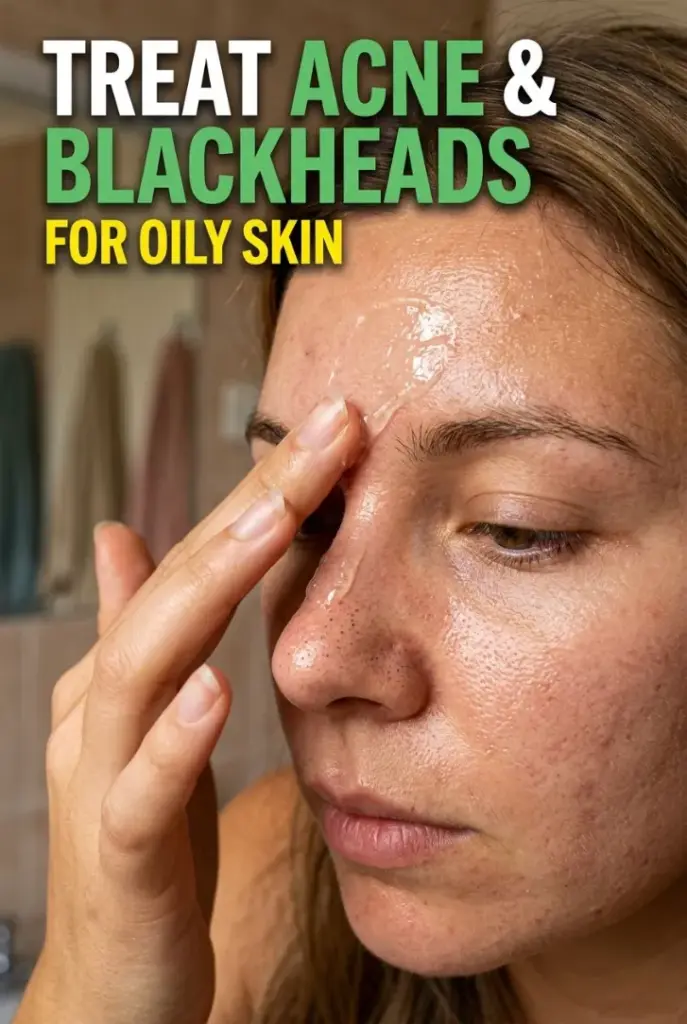
Oily skin and acne are closely connected — and understanding why helps explain both why standard acne advice often fails oily skin types and what actually works. Oily skin produces excess sebum from overactive sebaceous glands — and this excess oil does not cause acne directly but it creates the ideal environment for it. When excess sebum combines with dead skin cells in the pore lining, it forms the plugs that become blackheads (open comedones) when oxidised and whiteheads (closed comedones) when sealed. When bacteria colonise these plugged pores and the immune system responds with inflammation, active acne forms.
Treating oily skin with acne requires a different approach than treating dry or normal skin with acne — specifically one that controls oil without triggering the reactive overproduction that makes oiliness worse, addresses the bacterial and inflammatory components of acne, and clears the pore congestion that produces blackheads. This complete guide covers all three simultaneously.
| Did You Know? Oily skin types have a higher density of sebaceous glands per square centimetre than other skin types — particularly in the T-zone. These glands are hormonally regulated and respond to androgens (including testosterone and DHT) by increasing sebum output. This is why oiliness and acne worsen during puberty, around menstruation, and during periods of high stress that elevate cortisol — cortisol drives androgen production that directly stimulates sebaceous glands. |
The Biggest Mistake Oily Skin Makes
The most common and most counterproductive mistake for oily, acne-prone skin is over-cleansing and over-stripping. The instinct is logical — skin produces too much oil, so remove the oil as aggressively as possible. But stripping sebum signals the sebaceous glands that the skin surface is depleted and triggers them to produce even more oil to compensate — a reactive overproduction that makes skin oilier than before. Harsh cleansers, alcohol-based toners, and aggressive scrubbing all trigger this cycle. The correct approach is gentle oil regulation — reducing production at the cellular level rather than stripping the surface repeatedly.
Step 1: The Right Cleanser for Oily Acne Skin
Use a gentle, pH-balanced gel or foam cleanser — not a bar soap or a harsh foaming cleanser. The cleanser should leave skin feeling clean and comfortable — never tight, stripped, or squeaky. Look for non-comedogenic formulations containing either salicylic acid (0.5% to 2%) for pore penetration and blackhead prevention, niacinamide for sebum regulation, or a combination of both. Natural option: raw honey massaged onto damp skin for 60 seconds and rinsed thoroughly provides antimicrobial cleansing that removes excess oil without stripping. Cleanse morning and evening — never more than twice daily even on particularly oily days.
Step 2: Targeted Treatment for Active Acne
For Inflamed, Red Breakouts
Apply benzoyl peroxide 2.5% as a spot treatment to individual inflamed spots each evening. At this low concentration it kills the acne-causing bacteria effectively without the excessive dryness and irritation of higher concentrations. Natural alternative: diluted tea tree oil (three drops in one teaspoon of jojoba oil) applied directly to spots produces comparable antibacterial results with superior skin tolerability. Apply after cleansing and before moisturiser and leave overnight.
For Recurring Breakouts Across the T-Zone
Apply a niacinamide serum (5 to 10%) to the full face after cleansing, morning and evening. Niacinamide reduces sebum production at the cellular level by regulating the activity of sebaceous glands — directly addressing the root cause of oily, acne-prone skin rather than just treating individual spots. It also reduces the post-acne pigmentation that oily skin is particularly prone to. With consistent daily use, most people notice meaningfully reduced oiliness and fewer new breakouts within three to four weeks.
Step 3: Treating Blackheads on Oily Skin
Daily Prevention — The ACV Toner
After cleansing every evening, apply diluted apple cider vinegar (one part ACV to three parts water) to the skin using a cotton pad. The acetic and malic acids gently exfoliate the pore lining chemically — dissolving the sebum-dead cell mixture that forms blackhead plugs before it has a chance to oxidise. ACV’s antibacterial properties simultaneously reduce the bacterial load on the skin surface. Used daily, this toner prevents the accumulation that creates blackheads rather than treating them after they form.
Weekly Deep Clean — Clay Mask
Use a clay mask once per week — kaolin or bentonite clay mixed with ACV or water to a smooth paste. Apply to the T-zone and blackhead-prone areas and leave for 12 minutes. Clay adsorbs excess sebum, dead cells, and pore-clogging impurities through a physical binding mechanism that draws them out as the clay dries. Weekly clay masking prevents the progressive pore congestion that keeps blackheads perpetually present on oily skin. Follow immediately with your ACV toner and a lightweight moisturiser.
Step 4: Moisturise — Even Oily Skin Needs It
Skipping moisturiser on oily skin creates the reactive sebum overproduction cycle described at the start of this guide. Use an oil-free, non-comedogenic gel moisturiser — lightweight enough to provide water-based hydration without adding oil. For oily acne-prone skin, pure aloe vera gel applied to damp skin is one of the most effective natural moisturisers — it hydrates without clogging pores, soothes acne inflammation, and gently supports healthy cell turnover through its natural salicylate content.
Step 5: SPF Every Morning — Essential for Acne Skin
UV exposure worsens acne inflammation, darkens every post-acne mark significantly, and worsens the hyperpigmentation that oily acne-prone skin is particularly prone to. Apply a lightweight, non-comedogenic mineral SPF 30 or higher every single morning as the final step. Look for SPF formulated specifically for oily or acne-prone skin — these use a matte or water-based formula that does not add to the congestion problem.
| Pro Tip: Sheet masks soaked in green tea extract used once or twice weekly provide intensive sebum-regulating and anti-inflammatory benefits specifically for oily acne-prone skin. Green tea’s EGCG is one of the few natural compounds shown in clinical research to reduce sebum production measurably with regular topical application. Leave on for 15 to 20 minutes and do not rinse after removal — allow the essence to fully absorb. |
Oily skin with acne and blackheads responds dramatically to the right consistent approach — one that works with the skin’s biology rather than against it. Gentle cleansing, targeted niacinamide, daily ACV toning, weekly clay masking, and consistent SPF protection address every driver of oily acne-prone skin simultaneously. Give this approach six consistent weeks and photograph your before and after — the improvement will be visible and motivating.