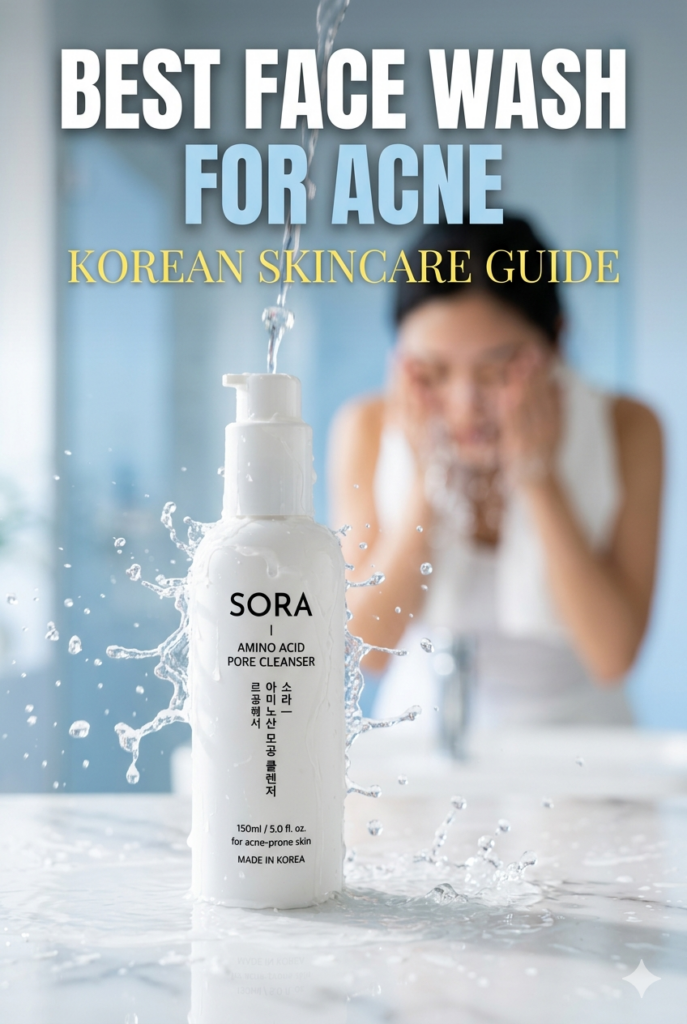
Korean skincare — often called K-beauty — has influenced global skincare more profoundly than any other beauty tradition over the past decade. The glass skin aesthetic, the 10-step routine concept, and dozens of now-mainstream ingredients all originate from Korean beauty culture. But perhaps the most significant and most practically useful contribution of K-beauty is its fundamental approach to cleansing: gentler, more pH-conscious, more thorough, and more respectful of the skin barrier than the harsh, stripping approach that Western skincare long promoted.
For acne-prone skin specifically, the Korean philosophy of cleansing is transformative. Here is what makes Korean face washes different, what ingredients to look for, and how to choose and use the right one for clear, healthy skin.
| Did You Know? Korean beauty culture places enormous emphasis on skin barrier health — called skin barriercare or ‘barrier first’ philosophy. This approach recognises that a compromised skin barrier (from over-cleansing, harsh ingredients, or incorrect pH) is a primary driver of acne, sensitivity, and premature ageing. Korean face washes are formulated with this in mind — gentle enough to cleanse without ever disrupting the barrier. |
What Makes Korean Face Washes Different for Acne
pH-Balanced Formulas
The most significant differentiator of Korean cleansers is their attention to pH. Traditional Western soaps and many Western cleansers have a high alkaline pH (8 to 11) that disrupts the skin’s natural acidic protective layer. Korean cleansers are formulated to a pH of 5 to 6 — close to the skin’s natural 4.5 to 5.5 — which means they clean effectively without disrupting the acid mantle. For acne-prone skin, this is critically important: an intact acid mantle limits the growth of Cutibacterium acnes bacteria that cause breakouts. A pH-balanced Korean cleanser literally creates a less hospitable environment for acne bacteria with every wash.
Gentle Surfactant Systems
Korean cleansers replace the harsh sodium lauryl sulphate (SLS) found in most Western foaming cleansers with gentler surfactant alternatives — cocamidopropyl betaine, sodium cocoyl isethionate, and lauryl glucoside — that cleanse effectively while causing far less barrier disruption and irritation. These gentler surfactants produce a soft, silky foam rather than the harsh lather of SLS-based products, and leave skin comfortable and hydrated rather than tight and stripped after washing.
Double Cleansing Method
The double cleanse is perhaps the most impactful Korean cleansing concept for acne-prone skin. The first cleanse uses an oil-based cleanser — cleansing oil, balm, or micellar water — to dissolve oil-based impurities: sunscreen, excess sebum, makeup, and pollution particles. The second cleanse uses a water-based foam or gel to remove water-based impurities: sweat, skin secretions, and any residue from the oil cleanser. This two-step evening approach ensures the skin is genuinely clean at a level that prevents the pore-clogging and bacterial accumulation that drives breakouts — without requiring the aggressive cleansers that Western routines often substitute for thoroughness.
Key Ingredients to Look For in a Korean Acne Cleanser
Centella Asiatica (Cica)
Centella asiatica — also known as tiger grass or cica — is one of the most beloved and most studied ingredients in Korean skincare. Its active compounds (asiaticoside, madecassoside, asiatic acid) reduce skin inflammation, accelerate wound healing, and strengthen the skin barrier. In a face wash for acne-prone skin, it calms the redness and irritation of active breakouts while cleaning, and supports barrier repair after washing. Look for it listed as centella asiatica extract, cica, or by its individual active compounds.
Salicylic Acid (BHA)
Korean cleansers containing low-concentration salicylic acid (0.5% to 1%) provide gentle pore-cleansing action — the oil-soluble acid penetrates into pore lining and dissolves the sebum-dead cell mixture that creates blackheads and whiteheads. Korean formulations tend to use lower concentrations than Western equivalents, reducing irritation risk while maintaining effectiveness. Leave the cleanser on for 30 to 60 seconds before rinsing to maximise the contact time with pore debris.
Niacinamide
Niacinamide — vitamin B3 — is a K-beauty staple for acne-prone skin. In a cleanser it provides gentle oil regulation, mild antibacterial action, and anti-inflammatory benefit throughout the cleansing process. It is the most well-tolerated of all active ingredients for sensitive acne-prone skin and is safe for daily use in people who find salicylic acid too drying.
Tea Tree and Heartleaf
Many Korean cleansers for acne include tea tree oil or heartleaf (houttuynia cordata) — a Korean plant with comparable antimicrobial and anti-inflammatory properties. Both ingredients kill acne-causing bacteria and reduce the inflammation that makes existing breakouts more severe, while remaining gentle enough for twice-daily use in cleanser formulations.
How to Use a Korean Face Wash Correctly
- Always double cleanse in the evening — oil-based cleanser first, water-based second
- In the morning, a single gentle water-based cleanse is sufficient
- Use lukewarm water — never hot
- Lather the cleanser in your hands before applying to face — never apply directly to dry skin
- Massage gently for 60 seconds before rinsing
- Rinse for a full 30 seconds — thorough rinsing is a key part of the Korean cleansing philosophy
- Follow immediately with a toner to restore pH and prepare skin for subsequent products
| Pro Tip: After cleansing with any Korean face wash, apply your next product — toner, essence, or serum — within 60 seconds while skin is still slightly damp. Korean skincare philosophy emphasises layering products on damp skin for maximum absorption — the slightly open post-cleanse skin absorbs treatment ingredients significantly more effectively than completely dry skin. |
The Korean approach to cleansing for acne-prone skin is not about more powerful products — it is about smarter ones. Gentle, pH-balanced, barrier-respectful cleansers used correctly twice daily produce clearer skin faster than any harsh Western cleanser by working with the skin’s natural defences rather than stripping them away. Make the switch and give your skin four weeks to show you the difference.