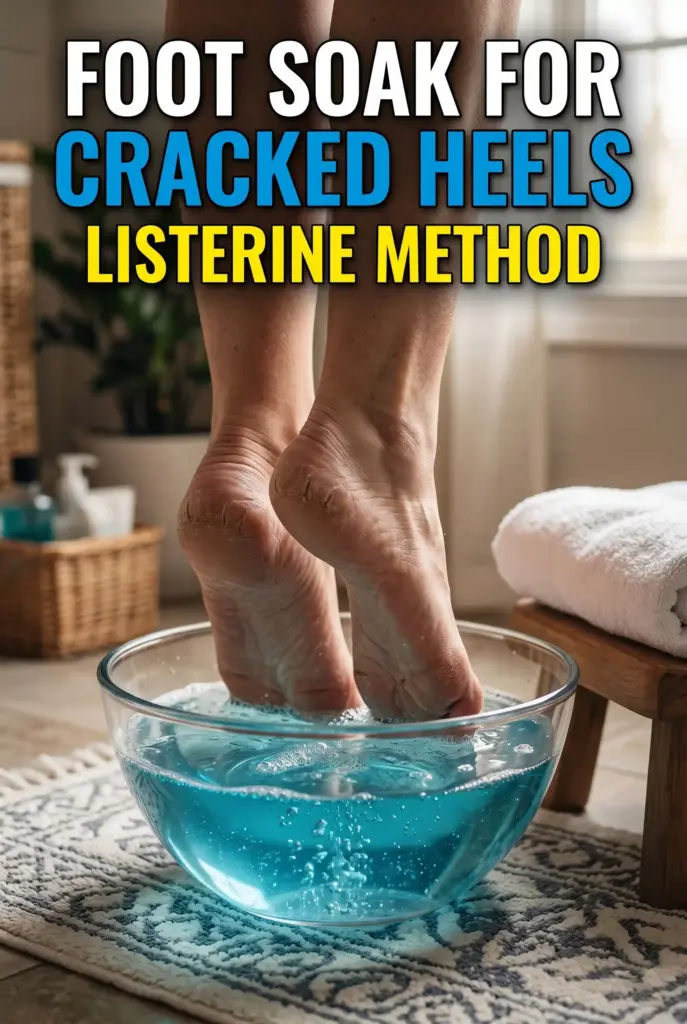
The Listerine foot soak — mouthwash mixed with warm water and vinegar — has become one of the most widely shared home foot care remedies on the internet, and for good reason. Unlike many viral beauty hacks that overstate their benefits, this one has a genuine pharmacological basis. Listerine’s active ingredients — eucalyptol, menthol, thymol, and methyl salicylate — are not just freshening compounds. They are clinically documented antifungal and antibacterial agents that address two of the most common underlying causes of problematic feet: fungal overgrowth and bacterial colonisation. Combined with warm water’s softening and white vinegar’s acidic keratin-dissolving action, the soak creates an environment that simultaneously softens cracked skin, kills foot odour-causing bacteria, inhibits fungal growth, and leaves feet noticeably cleaner and fresher.
This guide covers exactly what each ingredient does, the best recipes for different foot concerns, and the correct technique that makes the Listerine soak genuinely effective rather than simply a pleasant-smelling foot bath.
| Did You Know? Listerine was originally developed in 1879 as a surgical antiseptic — not as a mouthwash. Its four active essential oil ingredients (eucalyptol, thymol, menthol, and methyl salicylate) were chosen for their documented antimicrobial activity in clinical settings. When the formula was later marketed as a mouthwash, the same antimicrobial properties that made it effective for wound care make it effective for foot care — the oral and foot applications share the same active mechanism. |
What Each Ingredient Does in the Foot Soak
Listerine
The four active essential oils in Listerine have specific, documented activity against the organisms responsible for the most common foot problems. Thymol has the strongest antifungal activity of the four — inhibiting Trichophyton species, the dermatophytes responsible for athlete’s foot and toenail fungal infections. Eucalyptol provides additional antifungal and antibacterial action. Menthol delivers immediate cooling relief and antimicrobial activity. Methyl salicylate — the compound that gives Listerine its characteristic sharp scent — has anti-inflammatory and mild analgesic properties that reduce the discomfort of cracked, sore heel skin.
White Vinegar
White vinegar’s acetic acid creates an acidic environment in the soak that directly softens the thickened keratin protein of calluses and heel cracking. Acetic acid also has independent antifungal activity against Candida species and inhibits the bacteria responsible for foot odour by disrupting their metabolic processes. The combination of Listerine’s essential oil antimicrobials and vinegar’s acidic antifungal action addresses the same foot problems through two complementary mechanisms — producing better results than either ingredient alone.
Warm Water
The warm water base is not incidental — it is essential. Warm water hydrates and swells the outer layers of the thickened heel skin, making the cracked callus significantly more pliable and easier to remove with a pumice stone. It also dilutes the Listerine and vinegar to skin-safe concentrations, opens pores to allow the active compounds to reach the fungal and bacterial colonies residing in the skin folds and nail margins, and provides the muscle-relaxing warmth that relieves foot fatigue alongside the cosmetic benefits.
Classic Listerine Foot Soak Recipe
Ingredients: Half a cup of original Listerine (blue or amber — original formula contains all four active ingredients), half a cup of white vinegar, enough warm water to cover both feet in a basin.
Method: Mix Listerine and vinegar in the basin, then add enough warm water to fully submerge feet. Soak for 20 to 30 minutes. During the soak, gently massage heels and the balls of feet. After soaking, use a pumice stone or foot file to remove softened dead skin — the combination of Listerine, vinegar, and warm water makes this significantly easier and more effective than dry filing. Rinse feet thoroughly with clean warm water, dry completely (paying careful attention between the toes), and apply a generous layer of Vaseline or shea butter to heels while skin is still warm. Pull on cotton socks.
The after-soak moisturiser and socks step is as important as the soak itself. The Listerine and vinegar combination dries and cleans the skin surface; without immediate intensive moisturisation, the newly exposed skin hardens quickly. Applying an occlusive moisturiser while feet are still warm from the soak and sealing with socks overnight transforms the soak’s softening benefit into lasting heel repair.
Enhanced Recipe for Severe Cracked Heels
Ingredients: Half a cup Listerine, half a cup white vinegar, two tablespoons Epsom salt, ten drops tea tree essential oil, warm water.
Epsom salt adds magnesium that relaxes foot muscles and contributes to callus softening through its ionic interaction with keratin. Tea tree oil reinforces the antifungal action of the Listerine thymol for heels with active fungal involvement. Soak for 20 minutes, pumice stone during, dry thoroughly, then apply a thick layer of castor oil (specifically effective for cracked skin — ricinoleic acid penetrates deeply) under cotton socks overnight.
Enhanced Recipe for Foot Odour
Ingredients: Three-quarters of a cup Listerine, half a cup apple cider vinegar, five drops peppermint essential oil, warm water.
Apple cider vinegar replaces white vinegar for its additional acetic acid and antimicrobial properties. Peppermint oil adds menthol’s immediate freshness alongside its antimicrobial activity against odour-producing bacteria. This combination used three times weekly eliminates persistent foot odour that regular washing has not resolved within two weeks of consistent use.
How Often to Use the Listerine Foot Soak
- For cracked heel treatment: twice or three times weekly until heels are significantly improved — typically two to three weeks — then weekly for maintenance
- For foot odour: three times weekly consistently
- For fungal nail or athlete’s foot treatment: daily for the first two weeks, then every other day — results take months for fungal nail conditions as the nail must grow out
- For general foot maintenance: once weekly as a self-care ritual
| Important: Do not use this foot soak on broken, bleeding, or deeply infected heel cracks. Open wounds require clean water treatment and medical evaluation for signs of infection. The Listerine and vinegar combination is for intact skin treatment only — it causes stinging and potential irritation on open wounds. |
The Listerine foot soak earns its viral reputation because it genuinely works — and it works because its ingredients address the real, underlying causes of cracked, odorous, fungus-prone feet rather than just masking them. The combination of antifungal essential oils from Listerine, keratin-softening acetic acid from vinegar, and the physical removal of softened dead skin during the soak produces results that dedicated foot care products at twenty times the cost often cannot match. Try it twice this week and notice the difference in your heels by the weekend.