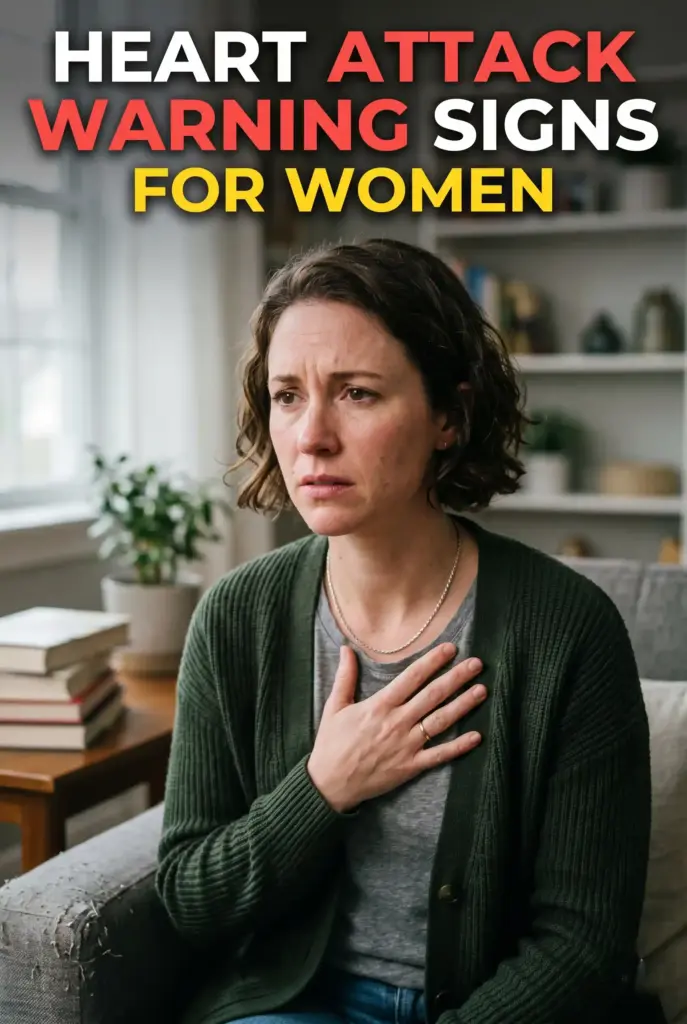
Heart disease is the leading cause of death in women worldwide — surpassing all cancers combined. Yet a persistent and dangerous misconception remains: that heart attacks are primarily a man’s concern, and that when they do occur in women they present the same way they do in men — sudden dramatic chest pain, clutching the arm, collapsing. This misconception is medically dangerous. Women are significantly more likely than men to experience heart attacks with atypical symptoms — or with symptoms so subtle that they are dismissed as anxiety, indigestion, fatigue, or the flu — until the cardiac event is well advanced.
Research consistently shows that women wait longer than men to call emergency services during a heart attack, are more likely to drive themselves to hospital rather than calling an ambulance, and are more often initially misdiagnosed in emergency departments. These delays cost heart muscle. Every 30 minutes of additional delay in treating a heart attack allows approximately four million more heart muscle cells to die. Understanding the specific warning signs most common in women — including the ones that do not feel cardiac at all — is one of the most genuinely life-saving pieces of health information available.
| Important: If you experience any combination of the symptoms in this article — particularly unusual fatigue alongside chest discomfort, jaw pain, or shortness of breath — call emergency services immediately. Do not wait to see if it passes. Do not drive yourself to hospital. Heart attack outcomes are directly determined by treatment speed. The faster treatment begins, the more heart muscle is preserved and the better the survival and recovery outcomes. |
Why Women’s Heart Attack Symptoms Differ
The biological reasons for this symptom difference are now well understood. Women’s coronary arteries are typically smaller than men’s, and are more likely to develop microvascular disease — a pattern of widespread small-vessel blockage rather than single large-vessel blockage. Microvascular disease produces a different symptom pattern than the classic single-vessel blockage that causes the dramatic chest pain portrayed in media. Women also have different pain perception pathways, different hormonal influences on cardiac pain signalling, and a broader distribution of cardiac nerve fibres that refers pain to different body areas than in men. Oestrogen’s protective cardiovascular effects before menopause mean that many women’s first cardiac events occur later in life — when other conditions can mask cardiac symptoms.
Warning Sign 1: Unusual, Overwhelming Fatigue
This is the most commonly reported and most commonly dismissed heart attack warning sign specific to women. Not the tiredness of a busy week or a poor night’s sleep — but an extreme, overwhelming, unexplained exhaustion that makes ordinary activities feel effortful, that persists despite rest, and that feels distinctly different from anything previously experienced. Research has found that more than 70% of women who suffered a heart attack reported unusual fatigue in the days or weeks before the event — sometimes for up to four weeks beforehand. This prodromal fatigue represents the heart sending increasingly urgent signals as it works harder to compensate for reduced blood flow. It is consistently described as qualitatively different from normal fatigue — as though the body’s energy reserves have been suddenly depleted. Any sudden, unexplained change in baseline energy in a woman with cardiac risk factors warrants medical evaluation.
Warning Sign 2: Chest Discomfort — But Not Necessarily Pain
Many women do experience chest symptoms during a heart attack — but they frequently describe them differently from the dramatic crushing chest pain of the classic portrayal. Women more commonly describe chest pressure, tightness, squeezing, heaviness, or fullness — sensations that may come and go rather than being constant, that may feel mild enough to dismiss as heartburn or indigestion, or that may not feel like anything that was previously associated with the word ‘pain.’ Any unexplained chest discomfort, pressure, or tightness — particularly one that is new, that lasts more than a few minutes, or that comes and goes over several days — requires medical evaluation rather than antacids.
Warning Sign 3: Pain or Discomfort in the Jaw, Neck, Back, or Arms
Referred pain from the heart travels along shared nerve pathways to areas of the body that are not the chest — and women are more likely than men to experience heart attack pain referred to these non-chest locations. Jaw aching or pain — sometimes described as a toothache-like sensation — is one of the most consistently reported atypical cardiac symptoms in women and one of the most commonly misattributed to dental causes. Upper back pain or aching between the shoulder blades, pain in either or both arms (not necessarily the left arm as commonly believed), and neck pressure or discomfort are all potential cardiac referred pain patterns. When any of these occur alongside other symptoms on this list — particularly fatigue, nausea, or breathlessness — cardiac origin must be considered immediately.
Warning Sign 4: Shortness of Breath
Difficulty breathing that arrives unexpectedly — at rest, with minimal activity, or after activities that were previously easy — is a significant cardiac warning sign in women and is often the primary or most prominent symptom when chest discomfort is absent or mild. When the heart muscle is struggling to pump adequately, the lungs receive insufficient circulation and begin accumulating fluid — producing the breathlessness that reflects the heart’s failure to maintain adequate output. Shortness of breath that wakes a woman at night, that makes lying flat uncomfortable, or that has progressively worsened over days or weeks in someone with cardiac risk factors requires urgent medical evaluation regardless of whether chest pain is present.
Warning Sign 5: Nausea, Vomiting, and Indigestion
Gastrointestinal symptoms are significantly more common as heart attack presentations in women than in men — and they are among the most dangerous because they are so readily explained away. The vagus nerve — which supplies both the heart and the gastrointestinal tract — transmits cardiac distress signals in ways that produce the stomach-pain, nausea, vomiting, and indigestion-like symptoms that many women with heart attacks initially attribute to something they ate or a stomach bug. When nausea or upper abdominal discomfort occurs alongside any other symptom on this list — especially fatigue, breathlessness, or jaw pain — the possibility of cardiac origin should override the assumption of a digestive cause.
Warning Sign 6: Cold Sweats and Lightheadedness
Breaking into a cold sweat without physical exertion, feeling suddenly dizzy or lightheaded, or experiencing a feeling of impending doom or unusual anxiety are all reported cardiac symptoms in women — particularly when they occur in combination with other signs on this list. The cold sweat and lightheadedness reflect the sympathetic nervous system’s emergency activation in response to the cardiovascular crisis: heart rate accelerates, blood pressure may drop, and circulation is redirected to vital organs, producing the pallor, sweating, and dizziness that often accompany heart attacks in both sexes but are particularly prominent in women’s presentations.
The Weeks Before — The Prodromal Symptoms
One of the most important findings from women’s cardiac research is that most women who survive heart attacks report having experienced warning symptoms for days to weeks beforehand — symptoms they did not recognise as cardiac. These prodromal symptoms include the unusual fatigue described above, disturbed sleep from breathing difficulty when lying flat, intermittent chest discomfort that resolved and was therefore dismissed, and a general persistent feeling of being unwell. Recognising that these experiences may represent the heart’s increasingly urgent signals — and seeking evaluation rather than waiting for them to pass — can prevent the full heart attack from occurring.
Who Is at Highest Risk
- Post-menopausal women — oestrogen’s protective cardiovascular effect is lost after menopause, causing cardiac risk to increase significantly
- Women with diabetes — diabetes increases cardiac risk in women more than in men relative to the non-diabetic baseline
- Women with high blood pressure, high cholesterol, or a family history of early heart disease
- Smokers — smoking is one of the strongest modifiable cardiovascular risk factors
- Women who experienced pre-eclampsia or gestational diabetes — both significantly increase lifetime cardiac risk
- Women under chronic high stress with inadequate sleep and physical inactivity
| Did You Know? Women under 50 who have heart attacks have twice the in-hospital mortality rate of men in the same age group — primarily because their atypical symptoms cause delayed treatment. A woman in her 40s presenting with fatigue, nausea, and jaw pain is significantly less likely to receive rapid cardiac investigation than a man in his 40s presenting with chest pain. Awareness of these statistics underscores why women themselves must advocate urgently for cardiac evaluation when they experience concerning symptoms. |
The most important thing you can do with this knowledge is remember it in the moment it matters — and advocate for yourself or the woman you love when something does not feel right. Heart attacks in women are not always dramatic. They do not always produce crushing chest pain. They do not only happen to older women or to women who look unwell. If an unusual combination of symptoms arrives — especially fatigue, breathlessness, jaw pain, or nausea together — take it seriously, call emergency services, and let the medical team rule out a cardiac cause. The cost of being wrong is a hospital trip. The cost of waiting can be a life.