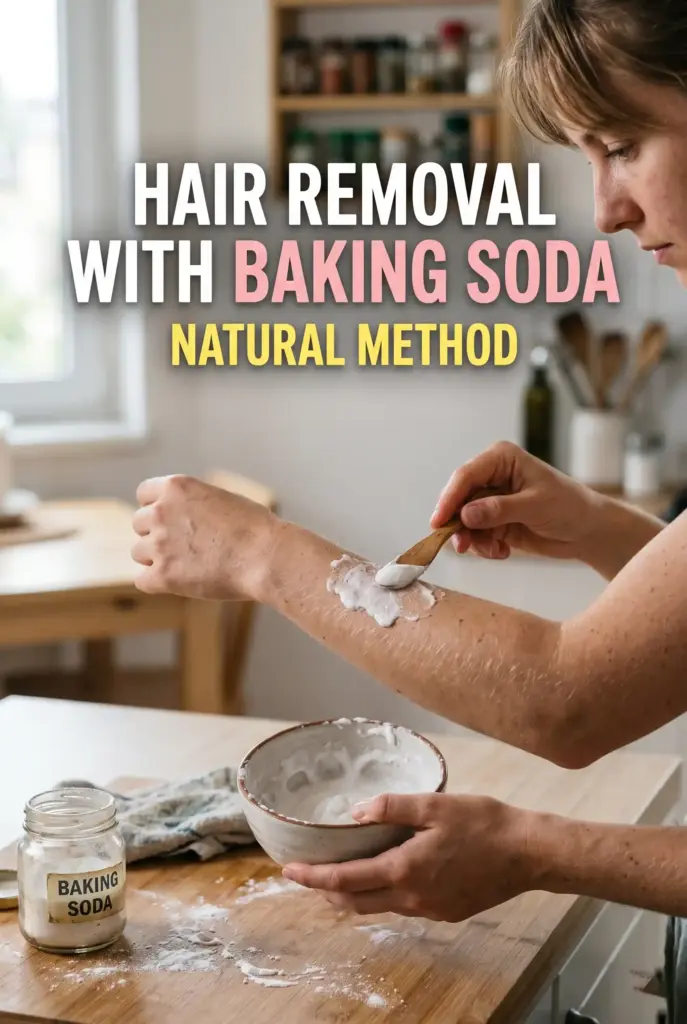
Baking soda — sodium bicarbonate — is one of the most versatile natural ingredients in any kitchen, and its applications in natural beauty routines extend far beyond skincare and teeth whitening. Used consistently and correctly as part of a hair removal routine, baking soda can both remove fine surface hair and — with repeated application over weeks — gradually weaken the hair follicle and slow regrowth. It is not a dramatic or instant solution, but for fine facial hair, peach fuzz, and delicate body areas where commercial waxing or shaving is harsh and irritating, baking soda offers a genuinely gentle and affordable alternative.
This guide covers the science behind baking soda’s effect on hair, the best methods for different areas and hair types, exactly how to use each technique safely, and the important precautions that protect the skin while the hair removal works. All methods are designed for fine to medium hair — coarse, thick body hair responds better to physical removal methods like sugaring.
| Did You Know? Baking soda has a pH of approximately 8.3 — significantly more alkaline than the skin’s natural pH of 4.5 to 5.5 and more alkaline than the hair shaft’s optimal pH of 3.5 to 5.0. This alkalinity disrupts the hydrogen bonds that give the hair shaft its structural integrity, gradually weakening the keratin protein structure with repeated application. This is the proposed mechanism behind baking soda’s hair reduction effect over consistent weeks of use — not instant removal, but progressive follicle weakening. |
Method 1: Baking Soda and Coconut Oil Depilatory Paste
Ingredients: One tablespoon baking soda, one tablespoon coconut oil, one teaspoon turmeric (optional — adds hair-weakening benefit).
Method: Mix all ingredients to a smooth paste. Apply to the area of unwanted hair in the direction of hair growth. Leave for 15 to 20 minutes. Rinse with warm water and gently rub in circular motions against hair growth during rinsing. Pat dry and apply a soothing moisturiser immediately.
The coconut oil in this recipe serves two purposes: it provides a skin-protective carrier that prevents the baking soda’s alkalinity from over-stripping the skin, and its lauric acid conditions the skin surface during the treatment. Turmeric adds curcumin, which traditional South Asian beauty practice attributes with follicle-weakening properties that, with consistent twice-weekly use over four to six weeks, gradually reduces hair regrowth density. The immediate effect is smooth, exfoliated, bright skin — the hair reduction effect builds progressively. Use twice weekly for maximum results.
Method 2: Baking Soda and Lemon Juice for Fine Facial Hair
Ingredients: One teaspoon baking soda, one teaspoon fresh lemon juice.
Method: Mix the two ingredients — they will fizz briefly as the acid and alkali react, which is normal. Apply immediately to the area of fine facial hair using a cotton swab or fingertip. Leave for five to eight minutes only — no longer on the face where skin is more sensitive. Rinse thoroughly with cool water. Apply aloe vera gel or a gentle moisturiser immediately. Use two to three times per week.
The combination of baking soda’s alkalinity and lemon juice’s citric acid creates a pH-shifting treatment that weakens the hair shaft’s keratin structure more effectively than baking soda alone. The citric acid also has mild bleaching properties that lighten fine hair, making it less visible even before removal occurs. This method is particularly suited to the upper lip, chin, and forehead peach fuzz that many women want to address without the risk of skin darkening from shaving or the pain of waxing. Always patch test before the first application — the lemon addition increases the potential for sensitivity in people with reactive skin.
Method 3: The Baking Soda Scrub Removal Method
Ingredients: Two tablespoons baking soda, one tablespoon raw honey, enough warm water to form a thick paste.
Method: Mix all ingredients to a gritty paste. Apply to the area of unwanted hair. Using firm circular motions with clean fingers, scrub the area for three to four minutes — the physical abrasion combined with baking soda’s alkaline effect on hair structure removes fine surface hair mechanically. Rinse with warm water. Pat dry and moisturise immediately.
This method works as an exfoliating hair removal treatment — the physical abrasion of the baking soda crystals against the hair shaft at the skin surface can remove very fine hair through friction while simultaneously exfoliating the dead skin cell layer. The honey adds antimicrobial protection and mild enzymatic exfoliation that leaves the skin noticeably brighter after treatment. Results are most visible on the softest, finest hair and the treatment is most suitable for areas of soft peach fuzz rather than coarser hair. Use weekly or twice weekly.
Method 4: Baking Soda and Egg White Mask for Hair Growth Reduction
Ingredients: One tablespoon baking soda, one egg white, half a teaspoon cornflour.
Method: Whisk all ingredients together to a smooth paste. Apply to the area of unwanted hair and press a tissue or cotton strip firmly on top while still wet. Allow to dry completely — 15 to 20 minutes. Peel off firmly in one motion against the direction of hair growth. Rinse with cool water and apply moisturiser.
This peel-off method combines baking soda’s alkaline hair-weakening effect with the physical hair-trapping action of the egg white film as it dries. When the film is peeled, it removes the fine hairs adhered to it alongside the dead skin cell layer beneath — providing both hair removal and exfoliation in one treatment. The cornflour improves the film strength and makes the peel cleaner. Use fortnightly — more frequent use is unnecessary as the peel-off method removes hair at the surface rather than the root, and two weeks allows adequate regrowth for the next treatment to be effective.
Important Precautions for All Methods
- Always patch test on the inner wrist for 24 hours before first use on the face or sensitive areas
- Never use any of these methods on broken, sunburned, or actively irritated skin — the alkalinity causes significant discomfort on compromised skin
- Always moisturise immediately after every baking soda treatment — the alkalinity temporarily disrupts the skin’s acid mantle and moisture barrier, and rapid moisturisation after rinsing prevents dryness and irritation
- Apply SPF the morning after any facial baking soda treatment — the exfoliation mildly increases UV sensitivity
- Limit application time strictly — longer is not more effective and increases the risk of skin irritation
- These methods are for fine to medium hair only — coarse, thick hair requires dedicated hair removal methods
| Pro Tip: For the fastest hair reduction results, combine the baking soda paste method with raw papaya during the same session: apply raw papaya paste to the area for 10 minutes first, then rinse and apply the baking soda coconut oil paste for 15 minutes. Papaya’s papain enzyme breaks down hair shaft keratin from within while the baking soda’s alkalinity disrupts it from the surface — the dual-action combination produces more noticeable follicle weakening with consistent twice-weekly use than either ingredient alone. |
Baking soda hair removal is a gentle, affordable, and genuinely effective approach for fine and unwanted hair — particularly for women who want an alternative to shaving, waxing, or commercial depilatory creams for sensitive areas. The key is consistency: used twice weekly over four to six weeks, the progressive follicle-weakening and physical removal methods work together to produce noticeably reduced hair density and slower regrowth. Start with Method 1 this week and give it six consistent weeks before assessing the results.