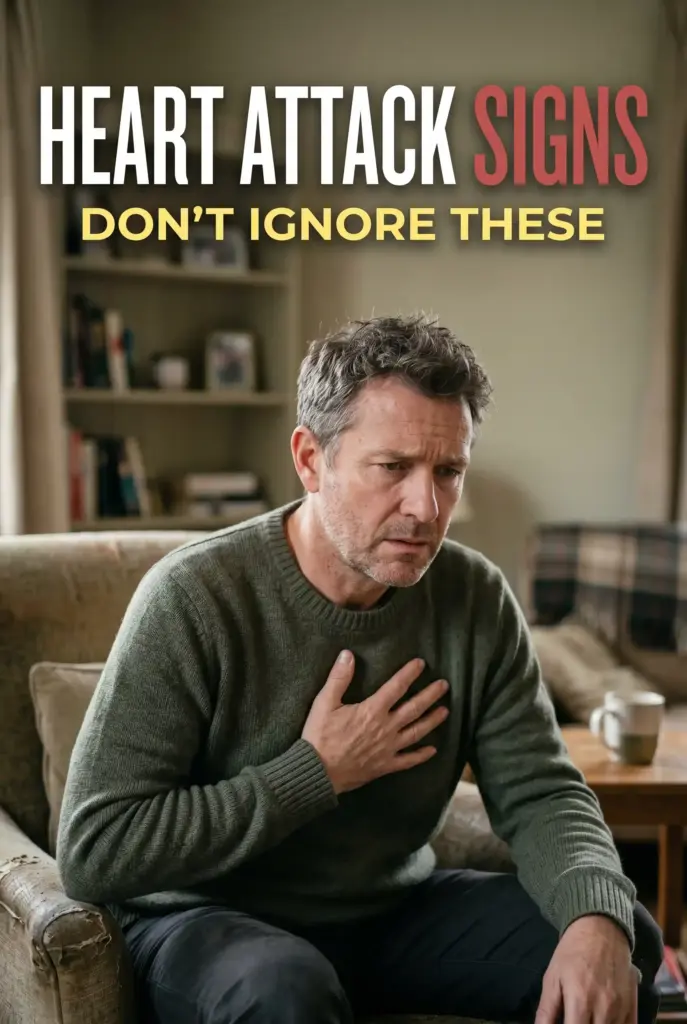
Heart disease is the leading cause of death worldwide — and the tragedy is that a significant proportion of fatal heart attacks occur in people who experienced warning signs for hours, days, or even weeks beforehand but did not recognise them as cardiac in origin. The classic Hollywood portrayal of a heart attack — a man clutching his chest and collapsing dramatically — represents only a fraction of how heart attacks actually present. Many attacks, particularly in women, begin with symptoms so subtle that they are dismissed as indigestion, fatigue, anxiety, or simply getting older.
Understanding the real, full range of heart attack warning signs — including the less dramatic ones that are frequently missed — is one of the most genuinely life-saving pieces of health information available. The faster a heart attack is treated, the more heart muscle is preserved and the better the outcome. Every minute of delay costs approximately two million heart muscle cells. Here are the signs to know.
| Important: If you experience any combination of the symptoms described in this article, particularly chest discomfort with shortness of breath, jaw pain, or unusual sweating, call emergency services immediately. Do not drive yourself to hospital. Do not wait to see if symptoms pass. Time is the most critical factor in heart attack outcomes — earlier treatment saves significantly more heart muscle and dramatically improves survival. |
Sign 1: Chest Discomfort — Not Always What You Expect
The most recognised heart attack sign is chest pain — but most people imagine it as a dramatic, sudden, crushing pain. In reality, cardiac chest discomfort is often described as pressure, squeezing, fullness, or aching rather than sharp pain. It may come and go rather than being constant. It may feel like someone is sitting on the chest, or like a tight band around the ribcage. Some people describe it as heartburn or indigestion. The discomfort typically lasts more than a few minutes or goes away and comes back. Any unexplained chest discomfort, heaviness, or pressure — particularly in combination with other symptoms on this list — warrants immediate emergency evaluation.
Sign 2: Discomfort Radiating to Other Areas
One of the most diagnostically important heart attack signs is pain or discomfort that radiates outward from the chest to the left arm, both arms, the jaw, neck, upper back, or stomach. This radiating pain occurs because the same nerve pathways that serve the heart also serve these areas of the body — when the heart muscle is deprived of oxygen, pain signals travel along these shared pathways and register as coming from the arm, jaw, or shoulder rather than the heart itself. Left arm and jaw pain are particularly associated with cardiac origin. Many heart attack patients initially believe they have pulled a muscle in the arm or have dental pain — only realising the cardiac connection in retrospect.
Sign 3: Shortness of Breath
Difficulty breathing that comes on unexpectedly — particularly when resting or performing only mild activity that was previously easy — is a significant cardiac warning sign. When the heart muscle is struggling, it is less able to pump blood efficiently, causing fluid to accumulate in the lungs and making breathing feel difficult. Shortness of breath may occur with or without chest discomfort — making it particularly important as a standalone warning sign in people who have not identified any chest symptoms. Shortness of breath that is new, unexplained, or disproportionate to activity level, especially in anyone with cardiac risk factors, requires urgent medical evaluation.
Sign 4: Unusual Fatigue — Particularly in Women
Extreme, unexplained fatigue in the days or weeks before a heart attack is one of the most commonly reported symptoms in women — and one of the most frequently dismissed. This is not ordinary tiredness from a busy day. It is a profound, overwhelming exhaustion that makes even simple activities feel effortful, that does not improve with rest, and that feels distinctly different from normal fatigue. Research has found that women are significantly more likely than men to experience this unusual fatigue as a prodromal heart attack symptom — sometimes for two to four weeks before the event itself. Any sudden, unexplained change in energy levels — particularly in women over 40 with cardiovascular risk factors — warrants medical assessment.
Sign 5: Cold Sweats, Nausea, and Lightheadedness
Breaking out in a cold sweat without exertion or elevated temperature, feeling nauseated or vomiting without a digestive cause, and experiencing lightheadedness or feeling faint are all symptoms that commonly occur together as heart attack warning signs — particularly when they appear alongside any chest discomfort or breathing difficulty. These symptoms occur because the cardiovascular system is under severe stress — the body activates its sympathetic nervous system in response, producing sweating, nausea, and altered blood flow patterns that cause lightheadedness. These symptoms are particularly common in women and in people experiencing what is called a silent heart attack — where no dramatic chest pain occurs.
Sign 6: Jaw, Neck, and Upper Back Pain
Pain or aching in the jaw, teeth, neck, or upper back without any obvious musculoskeletal cause is a frequently overlooked heart attack symptom — particularly in women. Because the cardiac referred pain pathways include the jaw and upper back nerves, many people experiencing these symptoms visit a dentist or assume they have slept awkwardly. When jaw or neck pain appears in combination with any other symptoms on this list, the possibility of cardiac origin must be taken seriously immediately. Women are statistically more likely than men to present with jaw and back pain as their primary or only heart attack symptom.
Sign 7: The Warning Signs in the Days Before
Research consistently shows that many heart attack survivors experienced warning symptoms in the days or even weeks before the major cardiac event — symptoms they did not recognise as cardiac in origin. These include unusual fatigue, disturbed sleep caused by difficulty breathing when lying flat, intermittent chest discomfort that resolved and was therefore dismissed, and an unexplained general feeling of being unwell. These prodromal symptoms represent the heart sending increasingly urgent signals as the coronary artery gradually becomes more blocked. Recognising them as potentially cardiac and seeking evaluation rather than dismissing them can prevent the full heart attack from occurring.
Who Is Most at Risk
- People over 45 for men and over 55 for women — cardiac risk increases significantly with age
- People with a family history of heart disease — particularly first-degree relatives who had cardiac events before 55 (men) or 65 (women)
- People with high blood pressure, high cholesterol, or diabetes — all significantly increase cardiac risk
- Current smokers — smoking is one of the most powerful modifiable cardiac risk factors
- People who are physically inactive, overweight, or under chronic high stress
- Women post-menopause — oestrogen’s protective cardiovascular effect is lost after menopause
| Did You Know? Women are more likely than men to die from a first heart attack — partly because their symptoms are more often atypical and therefore recognised and treated later. The average time from symptom onset to hospital arrival is significantly longer for women than men. Awareness of the non-classic heart attack symptoms that women most commonly experience is one of the most important areas of public health education in cardiovascular medicine. |
The most important thing you can do with this information is remember it for the moment it matters — and that moment may come when you least expect it. Heart attacks are not always dramatic. They are not always painful. They do not always happen to the person you expect. If something feels wrong in your chest, your breathing, or your body in a way that is new and unexplained — particularly if you have cardiac risk factors — take it seriously, call for help, and let the medical team rule out a cardiac cause. The cost of being wrong is a hospital trip. The cost of ignoring it can be a life.