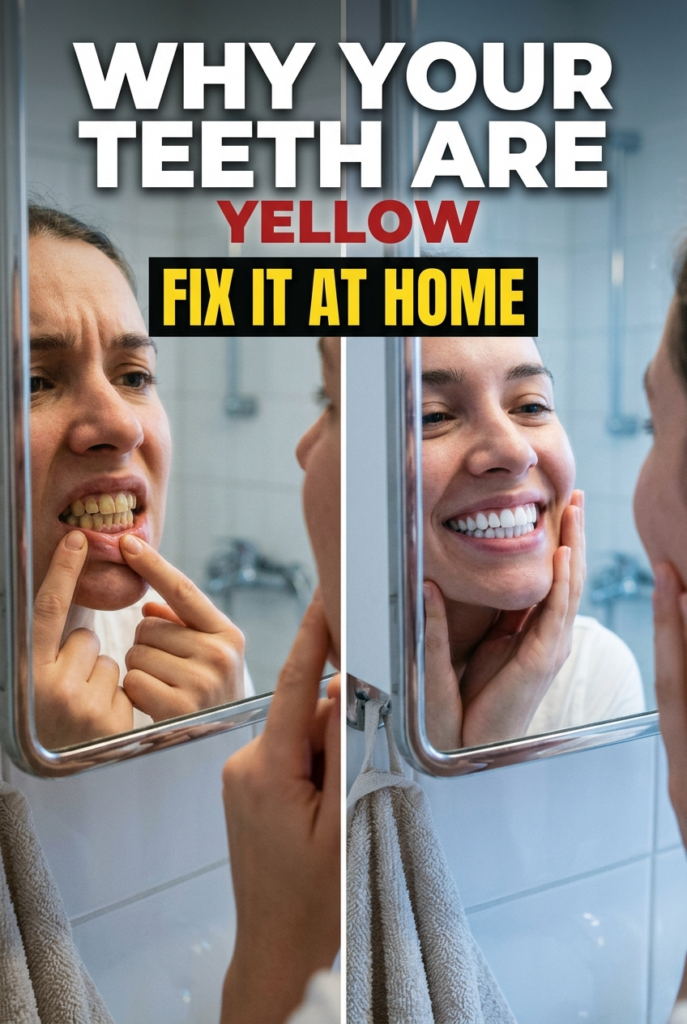
You brush twice a day. You use whitening toothpaste. You rinse with mouthwash. And yet when you smile in a photo, your teeth are still noticeably yellow. It is one of the most frustrating oral health experiences — doing everything right and still not seeing the results you want. The reason this happens is that most people are treating the symptom without understanding the actual cause, and the cause of yellow teeth is often not what people assume.
Understanding why your teeth are the color they are — and what type of discoloration you are dealing with — is the essential first step toward genuinely whitening them. Not all yellowing responds to the same treatments, and wasting time on the wrong approach is why so many people give up on natural whitening before giving effective methods a real chance.
| Science Says: Tooth color is determined by two distinct layers: the outer enamel (which is naturally semi-translucent and white) and the inner dentin (which is naturally yellow). As enamel wears thin with age or acidic erosion, more of the yellow dentin shows through — producing yellowing that no whitening treatment can fully reverse because the yellow is structural, not surface-level. This is why protecting enamel is the most important long-term tooth whitening strategy. |
The Most Common Reasons Teeth Turn Yellow
Coffee, Tea, and Red Wine Staining
These three beverages are the biggest culprits behind surface tooth staining. They contain tannins — polyphenol compounds that bind to tooth enamel and leave a yellowish-brown deposit with every sip. The staining is progressive and cumulative — each cup adds a tiny layer, and over months and years this builds into visible discoloration that standard brushing cannot remove. The enamel’s microscopic surface texture provides countless attachment points for these compounds, which is why they are so persistent.
Tobacco Use
Cigarettes and tobacco products contain tar and nicotine that create some of the most stubborn and deeply set tooth stains of any substance. Nicotine is colourless until it contacts oxygen, at which point it turns yellow-brown and bonds powerfully to tooth enamel. Tobacco staining penetrates deep into enamel micro-pores and requires either professional scaling or consistent natural abrasive treatments to reduce over time.
Enamel Thinning With Age
As we age, tooth enamel gradually wears thin from acidic foods, brushing, and normal use. The thinner the enamel becomes, the more the naturally yellow dentin beneath shows through. This type of yellowing — intrinsic discoloration — cannot be bleached away topically because it is structural. The best response is slowing enamel erosion through diet changes and remineralizing treatments.
Poor Brushing Technique
Many people brush their teeth but do not brush effectively. Brushing for less than two minutes, missing the gum line, not brushing the back surfaces of teeth, and brushing immediately after acidic foods (which temporarily softens enamel) all allow plaque and surface stains to accumulate and harden into tartar that turns progressively more yellow over time.
Natural Remedies That Actually Fix It
Baking Soda — The Most Effective Daily Treatment
Baking soda’s mild abrasive texture physically scrubs surface stains from enamel while its alkalinity creates an environment where stain-causing bacteria cannot survive. Mix one teaspoon of baking soda with enough water to form a paste and brush gently for two minutes two to three times per week. Studies consistently confirm that baking soda-containing toothpastes remove significantly more surface stain than regular toothpastes. Results are visible within two to four weeks of consistent use.
Oil Pulling — The Daily Stain Prevention Habit
Swishing one tablespoon of coconut oil around your mouth for 10 to 15 minutes each morning removes the plaque layer on which surface stains accumulate. Without this sticky plaque layer, tannins from coffee and tea have less surface to adhere to and staining slows significantly. Oil pulling does not bleach teeth but it prevents the plaque-related yellowing that makes teeth look progressively darker over time. Daily practice produces noticeably whiter-looking teeth within three to four weeks.
Strawberry and Baking Soda — The Natural Bleaching Combination
Ripe strawberries contain malic acid — a natural compound that dissolves surface tannin deposits on enamel. Combined with baking soda’s physical exfoliation, this is the most effective natural whitening combination available. Mash one strawberry and mix with half a teaspoon of baking soda. Apply to teeth, leave for five minutes, then rinse thoroughly and brush with fluoride toothpaste. Use once per week. Do not use more frequently as malic acid can soften enamel with overuse.
Prevention Is the Most Powerful Treatment
Rinse your mouth with water immediately after coffee, tea, or wine — this prevents tannins from fully bonding to enamel before they are washed away. Use a straw for cold staining beverages to bypass the front tooth surfaces. Brush two minutes twice daily with correct technique. And see a dental hygienist for professional cleaning once every six months — no home remedy fully replaces the plaque and tartar removal that professional cleaning provides.
| Important: Avoid brushing immediately after acidic foods or drinks (citrus, wine, soda) — the acid temporarily softens enamel and brushing during this window causes microscopic enamel erosion that worsens yellowing over time. Wait at least 30 minutes after acidic consumption before brushing. |
Yellow teeth are rarely a sign of poor hygiene — they are most often a sign of staining from beloved daily beverages, normal aging, or a combination of both. Understanding your specific cause allows you to choose the most effective treatment. Start with oil pulling daily and baking soda brushing twice weekly — and within a month you will see the difference that targeted, consistent treatment produces.