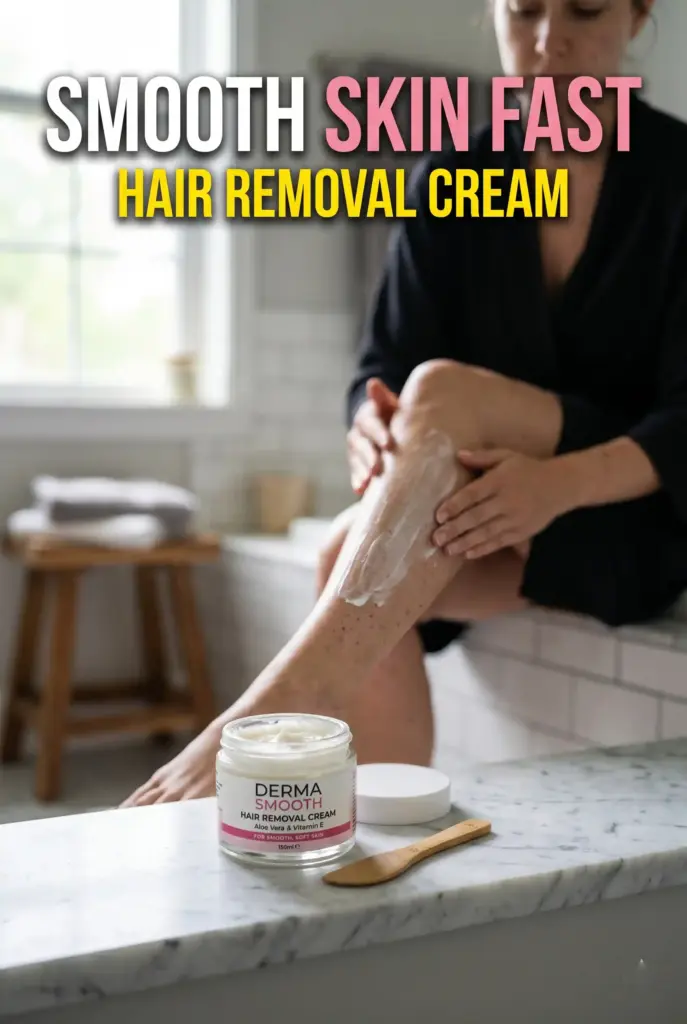
Hair removal creams — also called depilatory creams — offer a distinct set of advantages over other hair removal methods that make them the right choice for many people and many areas of the body. Unlike shaving, which cuts the hair at skin level and leaves the sharp, blunt tip that regrows as stubble within days, depilatory creams dissolve the hair shaft just below the skin surface using chemical agents. The result is a softer, tapered regrowth tip that feels less scratchy and takes slightly longer to become noticeable — producing smoother results that last three to seven days rather than the one to three days of shaving.
However, hair removal creams are not without nuance. The chemical agents that dissolve hair are strong enough to cause skin irritation if used incorrectly, on the wrong skin type, or on sensitive areas without appropriate formulation. Understanding how they work, which products suit which skin types and body areas, and the technique that produces perfect results while protecting the skin is the difference between an excellent experience and an irritating one.
| Science Says: Depilatory creams work through thioglycolate chemistry — the active ingredient (typically calcium thioglycolate or potassium thioglycolate) breaks the disulfide bonds that hold the keratin protein chains of the hair shaft together. When these bonds are disrupted, the structural integrity of the hair collapses and the shaft can be wiped away. This same chemical reaction is why depilatory creams are timed precisely — the formula must have sufficient contact time to dissolve the hair without the extended contact time that would allow the same reaction to affect the skin’s surface proteins. |
How to Choose the Right Hair Removal Cream
By Body Area
Different body areas have different skin sensitivity and hair coarseness — and hair removal creams are formulated to match. Face-specific formulas use lower concentrations of thioglycolate and include additional skin-calming ingredients because facial skin is significantly more reactive than body skin. Never use a body-formulated cream on the face — the higher concentration of active ingredient causes chemical irritation on thinner facial skin. Conversely, face-formulated creams are often insufficient to dissolve coarser leg or bikini hair. Bikini line formulas use a concentration between the two extremes, with additional skin-soothing ingredients for the sensitive inguinal area.
By Skin Type
Sensitive skin formulations replace harsh fragrances with minimal or no fragrance and include skin-barrier-supporting ingredients like aloe vera, chamomile, or vitamin E alongside the active thioglycolate. People with a history of skin reactions to cosmetic products, eczema, or contact dermatitis should specifically choose sensitive-skin formulations and always patch test regardless of the product’s marketing claims. Normal to dry skin types benefit from formulations with additional moisturising ingredients that prevent the post-removal dryness that standard formulas can cause. Oily skin types tolerate standard formulations without additional moisturising ingredients.
The Correct Application Technique
- Always patch test 24 hours before first use — apply a small amount to the inner wrist, leave for the full recommended time, rinse, and wait 24 hours to assess for any delayed reaction.
- Apply to clean, dry skin — never to skin that has been recently exfoliated, sunburned, or treated with any other active product within the previous 24 hours.
- Apply a thick, even layer that completely covers the hair — areas where the cream is too thin or unevenly applied will leave patches of undissolved hair.
- Do not rub in — apply generously on top of the skin surface and leave. The cream must maintain contact with the hair shaft throughout the processing time.
- Follow the timing instructions precisely — the minimum time ensures complete hair dissolution; the maximum time is the safety limit beyond which skin irritation risk increases significantly.
- Use the spatula provided (or a damp cloth) to wipe off the cream — gently in one direction. Never rub or scrub during removal.
- Rinse with cool water — thoroughly removing all cream residue. Warm water opens pores and can increase sensitivity to any residual active ingredient.
- Apply a gentle, fragrance-free moisturiser immediately after rinsing — the skin’s surface protein layer is mildly affected by the thioglycolate and benefits from immediate soothing and barrier support.
Areas Hair Removal Cream Works Best On
- Legs — the most popular area, producing the smoothest results and lasting three to five days
- Underarms — faster regrowth but completely smooth results with no razor irritation or ingrown hair risk
- Bikini line — use bikini-specific formulations only; never standard body cream on this area
- Upper lip and chin — use only face-specific formulations; patch test every time on facial skin
- Back and shoulders — difficult-to-reach areas where shaving is impractical and waxing requires assistance
Common Mistakes to Avoid
- Using body cream on facial skin — causes chemical burns on thinner, more reactive facial skin
- Leaving on longer than the maximum recommended time — does not improve results and significantly increases irritation risk
- Using on recently shaved skin — freshly shaved skin has micro-abrasions that make it much more reactive to the chemical agents
- Using on skin with cuts, rashes, sunburn, or eczema — breaks in the skin barrier allow the active ingredients direct access to living tissue causing chemical irritation
- Using immediately before sun exposure — the skin is temporarily more sensitive after depilatory use; wait 24 hours before prolonged sun exposure and apply SPF
| Pro Tip: For the smoothest possible results on legs, exfoliate 24 hours before using a hair removal cream — not immediately before or after. Removing the dead cell layer that sits on top of the hair shafts 24 hours in advance allows the cream to reach the hair closer to the skin surface, producing cleaner removal and longer-lasting smoothness. Wait the full 24 hours between exfoliation and cream application to allow any micro-sensitivity from the exfoliation to resolve. |
Hair removal cream used correctly produces some of the smoothest and most convenient at-home hair removal results available — without the cutting angles of shaving that produce immediate regrowth stubble, without the pain and skin trauma of waxing, and without the skill requirement of threading. Choose the right formula for your skin type and area, follow the timing precisely, moisturise immediately after rinsing, and patch test every new product without exception. The result is smooth, comfortable skin that stays that way for days.