Cracked heels are one of the most common and most undertreated beauty concerns — and for most people who have them, they become a year-round issue rather than a temporary seasonal problem. The heel bears the entire weight of the body with every step, making the skin here subject to more mechanical pressure than anywhere else on the body. The skin responds to this pressure by thickening into a protective callus — but when that thickened skin becomes excessively dry, it loses the flexibility needed to accommodate normal movement and begins to crack. Mild cracking is cosmetically unpleasant. Deep cracking — heel fissures — becomes painful, bleeds, and creates openings for bacterial and fungal infection.
The encouraging reality is that cracked heels respond reliably and dramatically to the right consistent routine. The skin on the heel is not damaged in any permanent way — it is simply dry, thickened, and in need of the softening, exfoliation, and intensive moisturisation that repairs it predictably within two to three weeks. Here is the complete routine.
| Did You Know? The skin on the heel contains no oil glands — making it entirely dependent on external moisturisation to maintain suppleness. This fundamental anatomical fact is why heel skin cracks more readily than skin elsewhere, and why consistent daily moisturisation is not optional maintenance but a biological necessity for heel health. Even perfectly healthy heel skin will crack without consistent topical moisture because it has no internal moisture source of its own. |
Step 1 — Weekly Softening Soak
Every cracked heel care routine must begin with a softening soak that prepares the thickened skin for exfoliation. Never attempt to file dry heel skin — it is ineffective, potentially damaging, and produces uneven results. Fill a basin with comfortably warm water and add two tablespoons of baking soda (which softens thickened keratin through its alkalinity) and one cup of Epsom salt (which adds magnesium for muscle relaxation and additional softening). Soak both feet for 15 to 20 minutes. For severely cracked heels, add two tablespoons of apple cider vinegar — the acetic and malic acids soften hardened keratin chemically, complementing the baking soda’s action and making the subsequent exfoliation far more effective.
Step 2 — Exfoliation While Still Wet
Immediately after the soak — while the heel skin is still warm, wet, and softened — use a pumice stone or foot file to remove the loosened dead skin. Always perform this step while the foot is wet, never on dry skin. Work in one direction using even, moderate pressure across the heel surface and the outer edges where cracking concentrates. Rinse the pumice stone regularly during use. The goal is progressive reduction of the callus over multiple weekly sessions rather than attempting complete removal in a single session. Stop when you feel mild resistance and the skin beneath looks fresher — over-exfoliating leaves new cells exposed before they have appropriately toughened.
Step 3 — The Critical Overnight Moisture Treatment
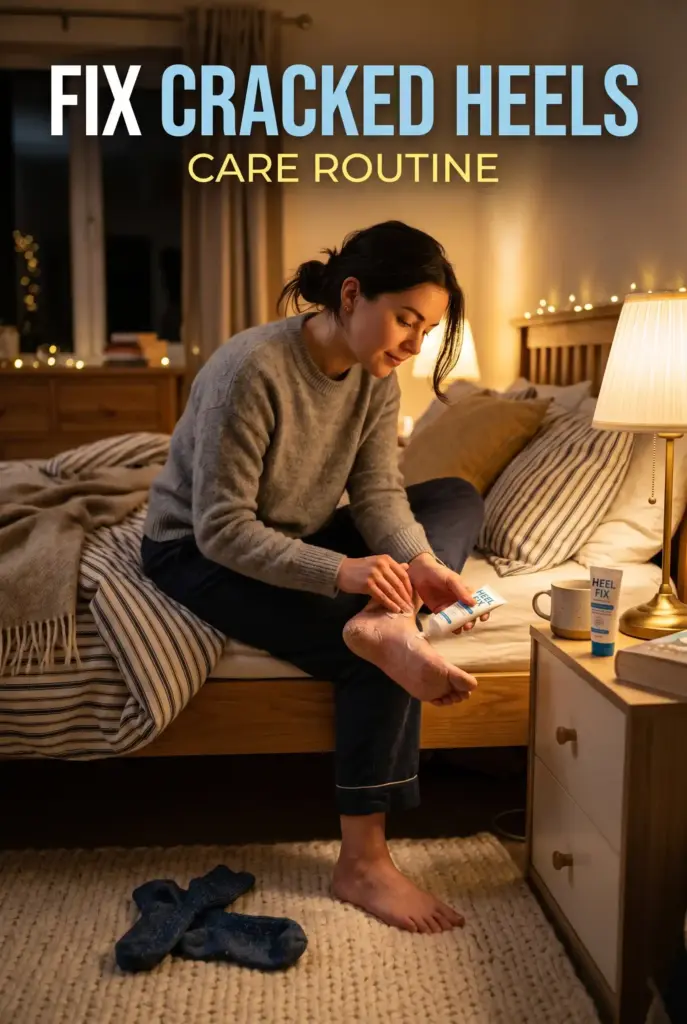
This is the most transformative step of the entire routine — and the one most people skip. Immediately after exfoliation, while heel skin is still warm and pores are open, apply one of the following generously to both heels: pure shea butter (oleic acid and vitamin E penetrate deeply, providing the longest-lasting moisturisation of any natural product), virgin coconut oil (deeply conditioning and antimicrobial — particularly beneficial when cracking has exposed raw skin vulnerable to infection), or Vaseline (the most occlusive option — the most effective moisture-sealing barrier available and the fastest to produce visible softening results). Pull on clean cotton socks immediately and sleep with them on. By morning, the combination of soak-softened and intensively moisturised heel skin produces a transformation that daytime moisturising alone could never achieve.
Step 4 — Daily Maintenance
The weekly soak produces the intensive progress; daily maintenance preserves and builds on it. Every day — particularly in the two minutes immediately after showering when skin is warm and pores are open — apply a generous amount of heel cream, shea butter, or Vaseline to both heels. Massage in with firm circular motions and pull on socks before the moisture evaporates. This daily post-shower habit maintained between soak days prevents the gradual re-hardening that undoes treatment progress and is the single biggest difference between people who resolve their cracked heels successfully and those who make temporary improvements followed by relapse.
Step 5 — Daytime Protection
What happens during the day directly determines how quickly overnight treatment progress is undone. Walking barefoot on hard floors removes moisture from heels with every step. Open-backed shoes and sandals cause the heel skin to spread and crack with each footfall. During active heel treatment, wear closed-heel shoes with cushioned insoles throughout the day. Before wearing open shoes, apply a thick layer of Vaseline or heel balm to protect the softening skin from the drying effect of air and friction exposure. Hydrocolloid heel patches worn inside shoes during active treatment provide continuous moisture and protection throughout the day and significantly accelerate the healing of open fissures.
For Painful Open Heel Cracks
Healing paste for open fissures: Mix one tablespoon of raw honey with one tablespoon of shea butter and three drops of tea tree essential oil. Apply directly into the crack before the overnight socks treatment. Honey’s antimicrobial hydrogen peroxide prevents infection, accelerates wound healing, and provides humectant moisture that draws water into the damaged tissue. Shea butter seals and conditions. Tea tree provides antifungal and antibacterial protection for exposed skin. Most shallow heel fissures close within three to five nights of consistent nightly application.
| Pro Tip: The single most impactful change for long-term cracked heel management is the overnight sock method used every night — not just after the weekly soak. Applying Vaseline to heels and pulling on cotton socks every single night before bed produces heel improvement within two weeks that surprises most people. The continuous overnight moisture seal achieves what daytime moisturising alone cannot — sufficient uninterrupted contact time for genuine deep-layer softening of the thickened heel skin. |
Cracked heels respond predictably and significantly to this routine applied with consistency. Weekly soak and exfoliation, nightly intensive moisture and socks, daily post-shower maintenance, and protective footwear during active treatment produces soft, smooth, pain-free heels within two to three weeks for most people — regardless of how severe the cracking currently is. Start tonight with whatever moisturiser you have and a pair of socks. Let the routine show you what consistent heel care produces.