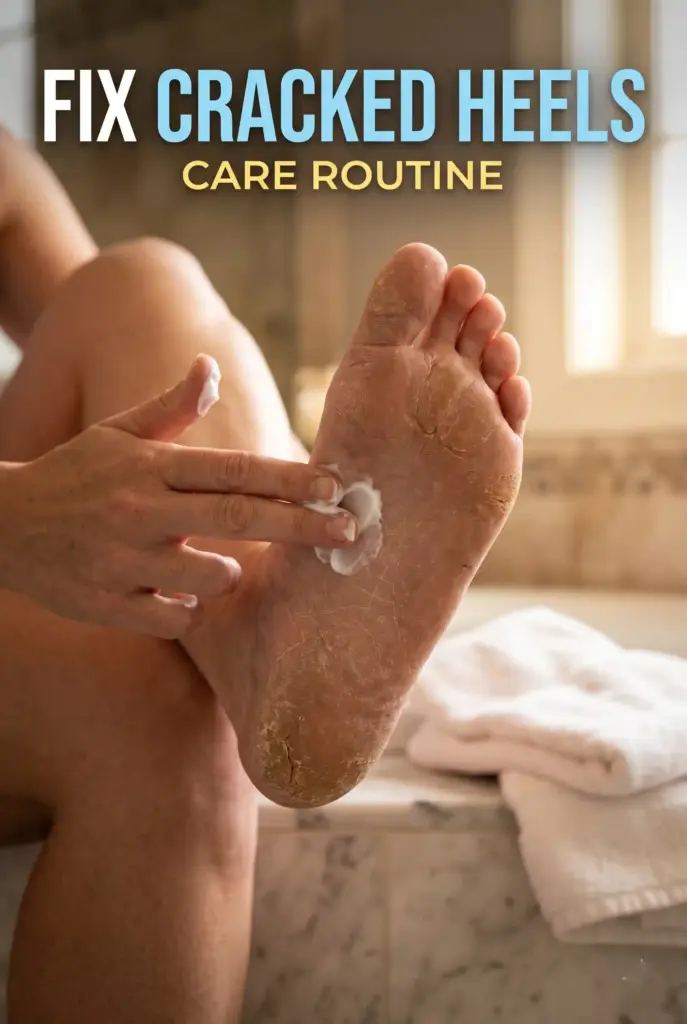
Cracked heels are one of the most common and most undertreated foot care issues — and for many people they become a persistent, year-round problem rather than a temporary seasonal one. The heel bears the entire weight of the body with every step, making the skin here subject to more mechanical pressure than anywhere else. This constant pressure causes the skin to thicken into callus as a protective response — but when that thickened skin becomes excessively dry, it loses the flexibility needed to accommodate movement and begins to crack. In mild cases this produces an unattractive appearance and rough texture. In more advanced cases the cracks deepen into painful fissures that can bleed, become infected, and make walking genuinely uncomfortable.
The good news is that cracked heels respond remarkably well to the right consistent routine — and the products required are simple, inexpensive, and already in most people’s homes. Here is the complete care routine that transforms cracked heels into soft, smooth skin within two to three weeks of consistent application.
| Did You Know? The skin on the heel is the thickest anywhere on the body — typically five times thicker than skin elsewhere — and it has no oil glands of its own. This means heel skin relies entirely on moisture applied from the outside to remain supple and flexible. Without consistent topical moisturisation, even otherwise healthy heel skin will gradually thicken and crack from the simple lack of natural lubrication that other skin areas receive from their own sebaceous glands. |
Step 1: The Weekly Softening Soak
Every soak in this routine must precede any exfoliation — attempting to file dry heel skin is ineffective and potentially damaging. Fill a basin with comfortably warm water and add two tablespoons of baking soda and one cup of Epsom salt. Soak both feet for 15 to 20 minutes. The baking soda’s alkalinity softens the hardened keratin protein of the callus, making it significantly easier to remove. The Epsom salt adds magnesium that relaxes the small foot muscles and reduces any inflammation in the heel tissue. The warm water hydrates the outer callus layer and prepares it for the exfoliation step.
For very severe cracked heels, add two tablespoons of apple cider vinegar to the soak — the acetic and malic acids soften the tough keratin of heel callus chemically, complementing the baking soda’s mechanical softening action. Most people with moderate cracking notice dramatic softening of the heel skin within the first five minutes of soaking — the callus layers separate slightly and the fresh skin beneath becomes accessible.
Step 2: Exfoliation — While Skin Is Wet
Immediately after the soak — while the heel skin is still warm, wet, and soft — use a pumice stone or foot file to remove the softened dead skin. Always perform this step while the foot is still wet, never on dry skin — dry exfoliation is less effective, more abrasive, and produces uneven results. Work in one direction using moderate, even pressure across the heel surface. Focus on the thickest areas of callus — the back of the heel and the outer edges where cracking most frequently occurs. Rinse the pumice stone regularly during use to prevent the removed skin cells from reducing its effectiveness.
Never over-exfoliate in a single session — removing more dead skin than the skin beneath is ready to support leaves new cells exposed before they have toughened adequately. The goal is progressive reduction of the callus over multiple weekly sessions rather than attempting complete removal in one. Stop exfoliating when you feel mild resistance rather than pushing through significant discomfort.
Step 3: The Intensive Overnight Treatment
This is the most important step of the entire routine and the one that produces the most dramatic results. Immediately after exfoliation, while heel skin is still slightly damp and pores are open from the warm soak, apply a generous, thick layer of one of the following to both heels: pure shea butter (the most nourishing natural heel treatment available — its oleic acid and vitamin E penetrate the deep layers of callus and provide the longest-lasting moisturisation of any natural product), virgin coconut oil (deeply conditioning and antimicrobial — particularly beneficial when cracking has led to any small open fissures that are vulnerable to infection), or Vaseline (the most occlusive option — creates the most effective moisture-sealing barrier and produces the fastest softening results in clinical comparisons).
Pull on clean cotton socks immediately after applying and sleep with the socks on. The cotton socks create warmth that improves absorption, prevent the product from transferring to sheets, and maintain the moisture-sealing effect throughout the night. By morning, the combination of soak-softened, exfoliated, and then intensively moisturised heel skin produces a transformation that one session of daytime moisturising could never achieve. After two to three nights of this overnight treatment, even severely cracked heels begin to close and soften measurably.
Step 4: Daily Maintenance Between Soak Days
The weekly soak and exfoliation produces the intensive progress; daily maintenance preserves and builds on it. Every day — particularly after showering — apply a generous amount of a thick heel cream or any of the treatments listed above to both heels. The two minutes immediately after showering are the most effective application window because the warm water has temporarily opened the skin surface and the heel skin is at its most receptive to moisture absorption. Apply while feet are still slightly damp, massage in with firm circular motions, and pull on socks before the moisture evaporates. This daily habit maintains the softening progress made during the weekly routine and prevents the gradual re-hardening that stops cracked heel treatment from holding its results.
Step 5: Protect During the Day
What happens during the day determines how quickly the routine’s overnight progress is undone. Walking barefoot on hard floors — particularly tile and wood — creates the friction and pressure that strips moisture from heels and accelerates callus reformation. Wearing supportive footwear with cushioned insoles throughout the day reduces the mechanical stress on heel skin that drives thickening. Open-backed shoes and sandals that allow the heel skin to spread sideways with each step accelerate cracking — closed-heel shoes with cushioning provide significantly better heel skin protection during active treatment. In open shoes, apply a heel balm or Vaseline before going out to protect the softening heel skin from the drying effects of air exposure.
Natural Heel Crack Healing Paste
For open or painful heel cracks: Mix one tablespoon of raw honey with one tablespoon of shea butter and three drops of tea tree essential oil. Apply directly into any open cracks before the overnight socks treatment. Honey’s antimicrobial hydrogen peroxide prevents infection in exposed skin, accelerates wound healing, and provides humectant moisture. Shea butter seals and conditions. Tea tree oil provides additional antimicrobial protection. This combination typically closes shallow heel fissures within three to five nights of consistent nightly application.
| Pro Tip: The single most impactful change for cracked heel treatment is the overnight sock method used consistently every night rather than just after the weekly soak. Even applying plain Vaseline to heels and pulling cotton socks on every single night before bed — with no soak or exfoliation on other nights — produces dramatic heel improvement within two weeks that surprises most people who try it. The continuous overnight moisture seal achieves what daytime moisturising alone cannot — sufficient contact time for genuine deep-layer softening. |
Cracked heels are one of the most reliably treatable beauty concerns available — they respond predictably and significantly to the right routine applied consistently. Weekly soak and exfoliation, nightly intensive moisture and socks, daily post-shower maintenance, and protective footwear during treatment produces soft, smooth heels within two to three weeks for most people regardless of how severe the cracking currently is. Start tonight with whatever moisturiser you have and a pair of socks. The results will convince you to continue.