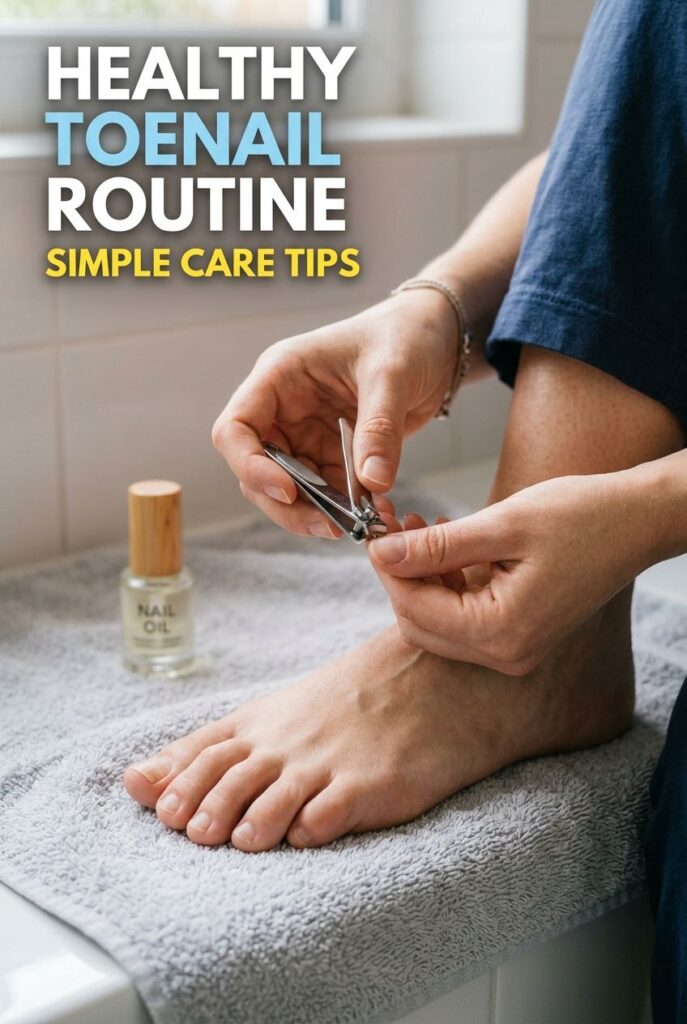
Toenail health is one of the most overlooked aspects of personal care — and one of the most revealing. The condition of the toenails reflects nutritional status, circulation, hygiene habits, and the presence of fungal or bacterial conditions that can spread if neglected. Beyond health indicators, well-maintained toenails are one of the simplest and most accessible beauty improvements a person can make — requiring no professional treatment, no expensive products, and very little time when done consistently.
This complete toenail care routine covers the correct techniques for trimming, filing, cleaning, and nourishing toenails, the natural treatments for the most common toenail problems, and the daily habits that keep nails healthy between care sessions.
| Did You Know? Toenails grow significantly more slowly than fingernails — approximately 1.5mm per month compared to 3mm for fingernails. This slower growth rate means that toenail conditions take longer to visibly improve after treatment, and that consistency in care is even more important than for fingernails. A healthy toenail takes nine to twelve months to grow from base to tip — patience and consistency are essential. |
Step 1: Prepare — Soften Before You Trim
The most common toenail care mistake is trimming dry, hard nails — which causes splitting, cracking, and uneven cuts that lead to ingrown toenails. Always perform toenail care after soaking the feet for 10 to 15 minutes in warm water, or immediately after a shower or bath when nails are naturally softened. Soft nails cut cleanly without cracking or splitting and are significantly less likely to produce the sharp edges that grow into the surrounding skin. Add Epsom salt and a few drops of tea tree oil to your pre-care soak for additional softening and antifungal protection.
Step 2: Trim Correctly to Prevent Ingrown Nails
Incorrect trimming is the primary cause of ingrown toenails — one of the most painful and preventable nail conditions. Always trim toenails straight across — never curved to follow the shape of the toe tip. The nail edge should be level with or very slightly longer than the skin at the toe tip. Never cut down into the corners or round the edges — this removes the natural barrier the nail provides to the surrounding skin and allows the nail to grow into the flesh as it extends. Use sharp, clean nail clippers specifically designed for toenails — fingernail clippers are too small and create uneven, splitting cuts on the thicker toenail plate.
Step 3: File and Smooth the Edges
After trimming, use a fine-grit nail file to smooth any rough or sharp edges that trimming leaves. File gently in one direction only — never saw back and forth, which weakens the nail edge and causes peeling. Pay particular attention to the corners — even when trimming straight across, small sharp points at the corners can catch on socks and bedding, causing tearing and potential ingrown nail development. A smooth, even nail edge is the foundation of both nail health and the clean appearance of well-maintained toenails.
Step 4: Clean Under and Around the Nail
Use an orange stick or a nail cleaning brush to gently remove any debris accumulated under the free edge of the nail and in the sulcus (the groove where the nail meets the skin at the sides). Never use metal implements under the nail — they separate the nail plate from the nail bed, creating space where bacteria and fungi accumulate. The nail-skin junction and the sulcus grooves are the most common entry points for fungal infection — keeping these areas clean and dry is the most effective fungal nail prevention available.
Step 5: Nourish — Cuticle and Nail Oil
After cleaning, apply a nourishing oil to the cuticles, nail folds, and nail plate. The best oils for toenail nourishment are jojoba oil (closely mimics the skin’s natural sebum), vitamin E oil (antioxidant protection and nail plate conditioning), and tea tree oil diluted in a carrier (antimicrobial and antifungal protection). Massage the oil into the cuticles and around the nail base using circular motions for one to two minutes per foot. This massage improves circulation to the nail matrix — the living tissue from which the nail grows — producing healthier, faster-growing, better-conditioned nails with consistent weekly practice.
Natural Treatments for Common Toenail Problems
For Yellowed Nails
Mix one tablespoon of baking soda with the juice of half a lemon and soak nails in the paste for 10 minutes, then rinse. The lemon’s citric acid and vitamin C bleach the yellow staining from the nail surface while baking soda’s alkalinity kills the bacteria that contribute to discolouration. Use twice weekly for gradual brightening. Yellowed nails that do not respond to this treatment within three to four weeks may indicate fungal infection requiring targeted antifungal treatment.
For Fungal Nail Infection
Apply undiluted tea tree oil to affected nails twice daily using a cotton swab, ensuring it reaches under the free edge and into the nail fold. Tea tree oil has documented antifungal activity against Trichophyton species — the dermatophytes responsible for most toenail fungal infections. Results are slow — toenail fungus treatment always takes months because the affected nail must grow out fully while new healthy nail grows in — but consistent twice-daily application produces positive clinical results in a significant proportion of cases. Combine with daily foot soaks in diluted apple cider vinegar for enhanced antifungal action.
For Dry, Brittle Nails
Apply castor oil to toenails and the surrounding skin every evening before bed — castor oil’s ricinoleic acid penetrates the nail plate and nail bed more deeply than most oils, providing intensive conditioning that reduces brittleness and cracking. Pull on cotton socks after applying to improve absorption overnight. Consistent nightly castor oil application noticeably improves nail flexibility and reduces breakage within two to three weeks.
Daily Habits That Keep Toenails Healthy
- Dry feet and between the toes completely after every shower or swim — moisture trapped between toes and under nails is the primary cause of fungal infection
- Wear moisture-wicking socks — cotton and bamboo socks absorb sweat and keep the nail environment dry throughout the day
- Rotate footwear — wearing the same shoes every day prevents them from drying fully between uses, maintaining the moist fungal-friendly environment inside
- Wear flip-flops in communal areas — pools, gym changing rooms, and shared showers are the primary transmission environments for nail fungus
- Eat biotin, zinc, and protein consistently — these three nutritional factors most directly affect nail growth rate and strength
| Pro Tip: Complete your toenail care routine once every two to three weeks rather than letting nails grow until they are uncomfortable. Regular trimming maintains the correct nail length that prevents ingrown nails, reduces the debris accumulation that harbours bacteria and fungi, and makes each care session faster and easier. Short regular sessions consistently outperform infrequent intensive sessions for long-term nail health. |
Healthy, well-maintained toenails are the result of consistent, correct care applied regularly — not expensive treatments or professional appointments for most people. Start with the soak, trim straight across, file smooth, clean carefully, and nourish with oil. Build these five steps into your routine once every two to three weeks and your toenails will show the difference within one to two months.