Baking soda — sodium bicarbonate — is one of the most studied and most consistently effective natural teeth whitening ingredients available. It has been used in commercial toothpastes for decades, and its safety and efficacy are well-documented in dental research. Unlike expensive whitening kits or harsh bleaching treatments, baking soda works through a gentle mechanical and chemical process that removes surface stains without the tooth sensitivity that peroxide-based whitening products commonly cause. And most people have it in their kitchen right now.
Here is everything you need to know about using baking soda for whiter teeth at home — the right methods, the correct frequency, what to combine it with for enhanced results, and the important boundaries that keep your enamel safe.
| Science Says: Baking soda has a Relative Dentin Abrasivity (RDA) score of just 7 — compared to 70 to 150 for most whitening toothpastes and up to 200 for some charcoal products. This extremely low abrasivity makes it one of the safest mechanical exfoliants for tooth enamel available, capable of removing surface stains without scratching the enamel surface that higher-abrasivity products damage over time. |
How Baking Soda Whitens Teeth
Baking soda whitens teeth through two mechanisms working together. First, its mild abrasive texture physically scrubs the tannin deposits from coffee, tea, and wine that accumulate on the enamel surface and create the yellowish-brown staining most people want to remove. Second, its alkaline pH creates an oral environment in which the bacteria responsible for plaque formation and enamel-staining acid production cannot thrive. This dual action removes existing staining while preventing the bacterial activity that contributes to new staining accumulation. The result is progressively whiter teeth with consistent use, combined with improved overall oral hygiene.
Method 1: Basic Baking Soda Paste
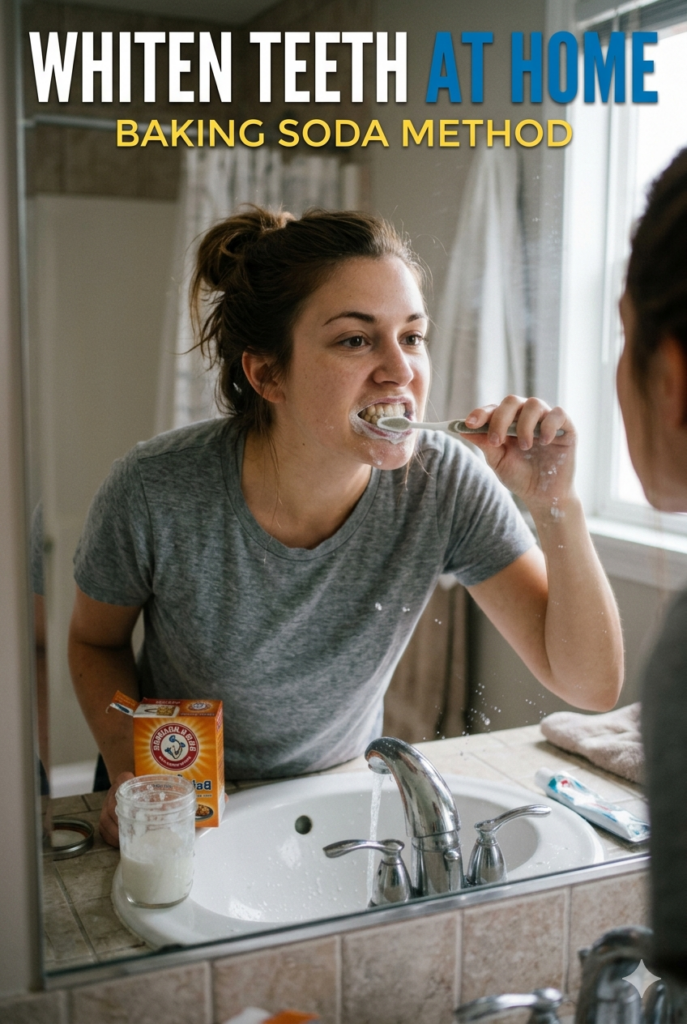
Mix one teaspoon of baking soda with just enough water to form a smooth, slightly runny paste — not too thick, not too watery. Apply to a soft-bristled toothbrush and brush teeth gently using small circular motions for two full minutes. Pay particular attention to the front surfaces of the teeth where staining is most visible. Rinse thoroughly with water and follow immediately with your regular fluoride toothpaste — this step remineralises the enamel and provides the cavity protection that baking soda alone does not offer. Use this method twice per week. Daily use is unnecessary and provides no additional benefit over twice-weekly application.
Method 2: Baking Soda and Hydrogen Peroxide
For a more active whitening effect, combine baking soda with a small amount of 3% hydrogen peroxide instead of water. The hydrogen peroxide adds a mild bleaching action to the mechanical scrubbing of the baking soda — addressing both surface stains and slightly deeper discolouration simultaneously. Mix half a teaspoon of baking soda with enough 3% hydrogen peroxide to form a paste of the same consistency as Method 1. Brush gently for two minutes, rinse thoroughly, and follow with fluoride toothpaste. Use once per week maximum when using this combination — hydrogen peroxide can cause sensitivity with more frequent use in some people.
Method 3: Baking Soda and Coconut Oil Paste
For people with sensitive teeth or gums who find plain baking soda paste slightly abrasive, combining it with coconut oil creates a gentler formulation. Mix one teaspoon of baking soda with one teaspoon of solid coconut oil — the coconut oil acts as a smooth, antimicrobial carrier that reduces the direct contact of baking soda crystals with enamel while the lauric acid in coconut oil provides additional antibacterial plaque-reducing action. This combination is the most gentle of the three methods and produces slightly slower but equally consistent whitening results with regular twice-weekly use.
Method 4: Baking Soda as a Pre-Brush Treatment
Rather than replacing your regular toothpaste, use baking soda as a pre-treatment before brushing. Dip a damp toothbrush lightly in baking soda and brush gently for 60 seconds to remove surface staining. Rinse, then brush normally with your regular fluoride toothpaste for two minutes. This approach keeps baking soda treatment time shorter, reduces any enamel contact duration, and ensures you receive full fluoride protection from your regular toothpaste immediately afterwards. This is the most conservative and enamel-protective approach to baking soda whitening.
How Long Before You See Results
Week 1 to 2: Teeth feel noticeably smoother and cleaner after treatment — the plaque and surface deposit layer is reducing. Some people notice the beginning of brightening at this stage.
Week 3 to 4: Visible reduction in coffee and tea staining. Teeth appear cleaner and less yellow in natural lighting.
Week 6 to 8: Consistent surface stain removal produces noticeably whiter teeth. The improvement is gradual but real and maintains itself with ongoing twice-weekly use.
Important Safety Guidelines
- Never use baking soda more than twice per week — consistent twice-weekly use is sufficient and more frequent use provides no additional whitening benefit
- Always follow baking soda brushing with fluoride toothpaste — baking soda does not prevent cavities and fluoride is essential for remineralising enamel after any brushing
- Use a soft-bristled brush only — medium or hard bristles combined with any abrasive, including low-abrasivity baking soda, cause gum recession and enamel wear over time
- Do not use baking soda on dental work — crowns, veneers, bridges, and composite bonding are abraded by baking soda and cannot be whitened by it in any case
- Stop if sensitivity develops — some people experience temporary sensitivity with baking soda use, which resolves when use is reduced or stopped
| Pro Tip: Rinse your mouth with water immediately after drinking coffee, tea, or red wine — before the tannins fully bond to the enamel surface. This simple habit, combined with twice-weekly baking soda treatment, produces faster and more lasting whitening results than baking soda alone. You are preventing new staining at the same time as removing existing staining. |
White teeth at home with baking soda is genuinely achievable, safe when used correctly, and costs almost nothing. Start with Method 1 this week — two minutes, twice per week, followed by fluoride toothpaste. Give it six to eight weeks of consistent use and the improvement in tooth clarity will be visible and motivating.