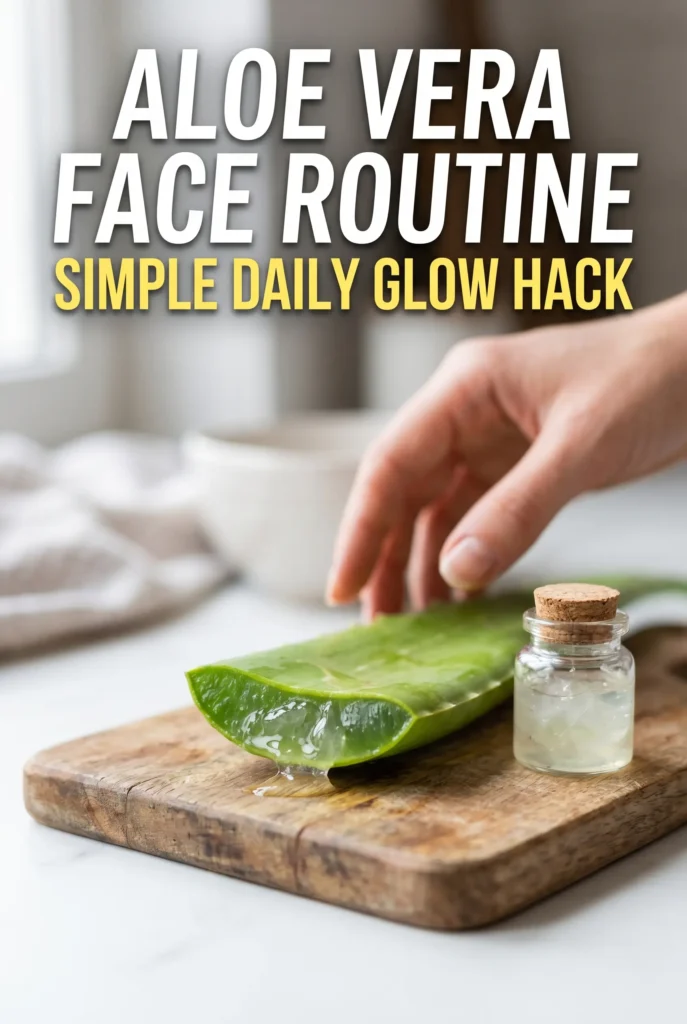
Aloe vera is one of those rare natural ingredients that genuinely lives up to its reputation. Used on the face daily, it hydrates without clogging pores, reduces the inflammation that drives acne and redness, fades dark spots over consistent weeks, and provides the gentle daily exfoliation that keeps the skin surface smooth and bright. It suits every skin type — oily skin benefits from its lightweight non-comedogenic hydration, dry skin from its moisture-attracting compounds, sensitive skin from its remarkable anti-inflammatory action, and ageing skin from its collagen-stimulating acemannan content.
The reason most people do not experience aloe vera’s full potential is not that the ingredient does not work — it is that they use it occasionally and incorrectly rather than daily and deliberately. This guide covers exactly how to incorporate aloe vera into a simple daily facial routine for every skin concern, with the specific techniques and timing that produce the results most people never achieve from occasional gel application.
| Science Says: A study published in the Annals of Dermatology found that aloe vera gel applied twice daily for 90 days significantly improved facial skin elasticity, reduced wrinkle appearance, and increased collagen production in women over 45 compared to placebo. The mechanism was identified as aloe’s acemannan polysaccharide stimulating fibroblast proliferation — the cells responsible for producing collagen — at concentrations achievable through topical application of pure gel. |
Why Fresh Aloe Vera Beats Store-Bought Gel
Before covering how to use aloe vera daily, it is worth understanding the significant difference between fresh gel scraped directly from a living aloe leaf and the commercial aloe vera gels sold in bottles. Fresh gel contains the full spectrum of active compounds at their natural concentrations: acemannan (the primary polysaccharide), proteolytic enzymes, aloesin (the melanin-inhibiting compound), natural salicylates, and the full complement of vitamins and minerals. Commercial gels are typically 98 to 99% water with a small aloe extract, thickeners, preservatives, and often fragrance or colouring. If access to a fresh aloe plant is possible — and the plant is inexpensive and requires minimal care — fresh gel produces noticeably better results than even the best commercial alternatives. For those without access to a fresh plant, choose products with aloe vera as the first or second ingredient and no artificial colours, fragrances, or alcohol.
The Morning Aloe Vera Facial Routine
Step 1: Aloe Vera as a Morning Cleanser
Massage a small amount of fresh aloe vera gel onto damp skin for 60 seconds in gentle circular motions and rinse with cool water. Aloe’s proteolytic enzymes dissolve the overnight accumulation of dead skin cells and sebum from the skin surface without stripping the natural oil barrier — making it a perfect morning cleanser for all skin types, particularly those that find standard cleansers leave their skin tight or dry. The alkalising action of aloe’s natural compounds after overnight acid buildup on the skin surface provides a gentle pH reset that prepares the skin for subsequent products. This step replaces a standard cleanser for many people once they experience how their skin feels after the switch.
Step 2: Aloe Vera as a Toner
After cleansing — whether with aloe or a standard cleanser — apply a thin layer of fresh aloe vera gel to the still-damp face using clean hands, pressing it gently into the skin rather than rubbing. Allow to absorb for 60 seconds before applying any other product. This toner application delivers aloe’s active compounds directly to the skin surface while it is most permeable — the slightly damp, freshly cleansed state when pores are temporarily more open and absorption is highest. The thin layer of gel creates the moist base that makes subsequent moisturisers and treatments absorb more effectively, and the aloesin begins its melanin-inhibiting work on any dark spots present from the very first morning application.
Step 3: Aloe Vera Mixed With SPF
For a lightweight all-in-one morning finish, mix one part aloe vera gel with two parts of your regular SPF and apply as a combined final step. The aloe dilutes the sometimes heavy or greasy texture of sunscreen while adding its hydrating and anti-inflammatory compounds to the daily sun protection layer. This combination is particularly effective for oily skin types who find standard SPF feels too heavy — the aloe creates a lighter, more skin-like texture that does not contribute to the midday shine that makes many oily-skin people reluctant to apply adequate sunscreen.
The Evening Aloe Vera Facial Routine
After Cleansing — Aloe as the First Treatment Layer
After your evening cleansing routine, apply a generous layer of fresh aloe vera gel to the entire face as the first treatment step. Leave on for 10 to 15 minutes as a treatment mask — during this time the proteolytic enzymes provide gentle chemical exfoliation of the surface dead cell layer, the acemannan begins stimulating the fibroblast activity that produces collagen overnight, and the aloesin starts working on any hyperpigmentation. After 10 to 15 minutes, do not rinse — simply press any remaining gel into the skin with clean fingertips and proceed to your next routine step. The overnight period allows aloe’s collagen-stimulating activity to work during the skin’s peak repair window.
Aloe as a Spot Treatment
Apply a concentrated dab of fresh aloe vera gel directly to any active spots, dark marks, or dry patches after your routine steps and before your final moisturiser. Aloe’s direct application to individual spots delivers its full antibacterial, anti-inflammatory, and aloesin melanin-inhibiting activity to the exact location where it is needed most. For active red spots: aloe reduces the swelling and redness visibly within hours of application and accelerates healing. For dark post-acne marks: nightly targeted application produces progressive lightening over four to six weeks. For dry patches: the combination of aloe’s water content and its occluding action when it dries as a thin film provides the isolated moisture repair that standard moisturiser sometimes cannot achieve on stubborn dry areas.
Aloe Vera for Specific Skin Concerns
For Oily and Acne-Prone Skin
Apply fresh aloe vera gel as a lightweight overnight moisturiser — a thin layer applied after cleansing and toning, left on without rinsing as the final step. For oily skin, aloe provides sufficient water-based hydration to prevent the reactive sebum overproduction that stripped skin triggers, without adding any oil or pore-clogging ingredients. Its salicylate content provides ongoing gentle pore-dissolving action overnight. Its antibacterial compounds reduce the bacterial load on skin continuously. Most people with oily acne-prone skin who switch to aloe vera as their primary evening moisturiser notice reduced oiliness within two weeks.
For Dry and Dehydrated Skin
Layer aloe vera under a richer moisturiser rather than using it alone for dry skin. Apply the aloe gel first to damp skin, allow 30 seconds for partial absorption, then apply your regular cream or oil on top immediately. The aloe acts as a humectant layer that draws and holds moisture at the skin surface while the cream or oil above creates an occlusive seal. This layering technique — hydration then occlusion — produces significantly more effective moisture retention than either product used alone, and allows dry skin to experience aloe’s brightening and anti-inflammatory benefits without the tightness that aloe alone can produce on very dry skin types.
For Anti-Aging and Dark Spots
The most effective daily anti-aging use of aloe vera is the overnight leave-on application described above. Consistent nightly acemannan delivery during the skin’s peak collagen-synthesis window — between 11pm and 4am when cell turnover doubles — produces the collagen stimulation that improves elasticity and reduces fine lines with consistent daily application over 90 days. The aloesin compound, delivered every evening to dark spots and uneven areas, progressively inhibits melanin production in those specific locations. The improvement builds gradually but compounds over months into measurably younger-looking, more even-toned skin.
How to Build Your Daily Aloe Vera Habit
- Keep a small container of freshly scraped aloe gel in the refrigerator — replace every three days for maximum active compound content and the additional de-puffing benefit of cool gel application
- Apply aloe to slightly damp skin at every step for maximum absorption — the presence of surface moisture increases the penetration of aloe’s active compounds significantly
- Be consistent for six weeks before assessing results — aloe’s brightening and anti-aging effects are cumulative and build with each skin cell cycle
- Use SPF every morning without exception — aloe’s vitamin C and exfoliating enzyme activity mildly increases UV sensitivity
| Pro Tip: Mix one drop of rosehip oil into your aloe vera gel before the evening leave-on application. Aloe’s water-based compounds and rosehip oil’s fat-soluble vitamin A and C create a combined treatment that addresses both the water and oil components of skin hydration simultaneously — the aloe attracts and holds water at the surface while the rosehip oil provides the lipid layer that prevents it from evaporating. This combination produces noticeably more plump, radiant morning skin than either ingredient used alone. |
Aloe vera used daily as described in this guide is one of the most genuinely transformative natural skincare habits available. Its benefits are not subtle — within one week of consistent daily use most people notice improved skin comfort and reduced redness. Within four weeks, skin texture is visibly smoother. Within eight weeks, dark spots are lighter and skin appears consistently more radiant. The investment is minimal — one aloe plant or a good quality gel — and the results are what expensive products endlessly promise and rarely consistently deliver.