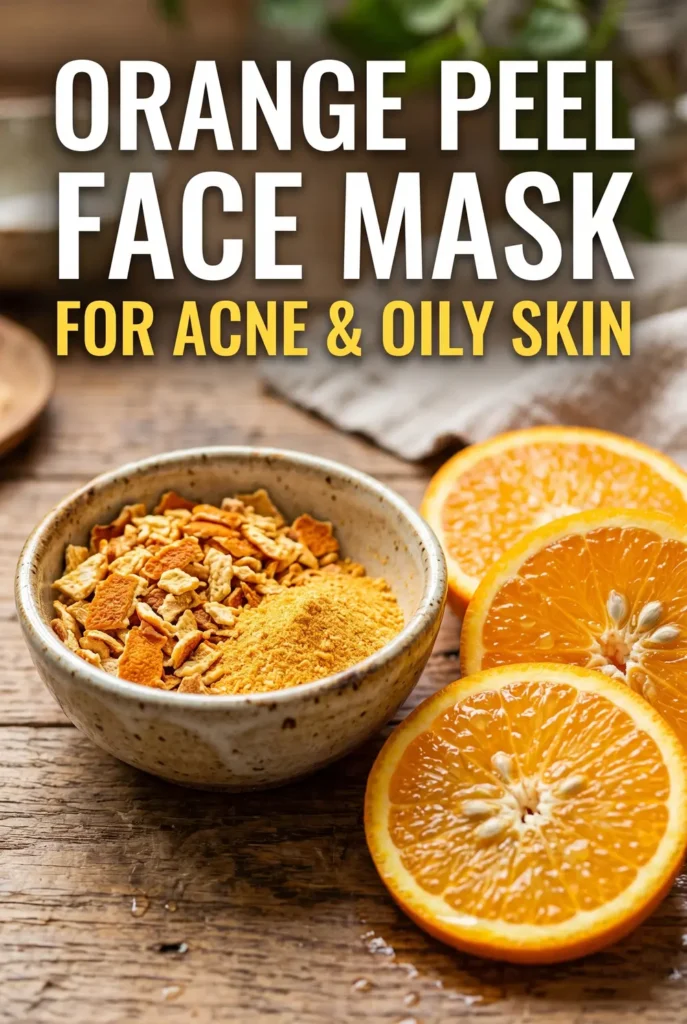
Orange peel powder has an impressive and well-deserved reputation in natural skincare circles — and for oily, acne-prone skin specifically, it is one of the most comprehensively suited single ingredients available. Its active compound profile addresses every major concern of oily skin simultaneously: the astringent tannins reduce excess sebum production, the vitamin C inhibits the post-acne melanin overproduction that creates dark spots, the natural citric acid gently exfoliates the dead cell layer that blocks pores, and the hesperidin flavonoids reduce the chronic skin inflammation that drives both acne and the post-acne redness that lingers after individual spots clear.
The key to effective orange peel masks for acne and oily skin is pairing the orange peel with the right anti-acne companions — clay for deep pore cleaning, ACV for pH restoration, and tea tree oil for direct bacterial killing — rather than the richer oils and creams used in dry-skin orange peel recipes. Here are the best formulations.
| Did You Know? Orange peel contains six times the vitamin C concentration of orange juice per gram — vitamin C inhibits tyrosinase (the melanin enzyme) and is essential for collagen synthesis. The peel also contains d-limonene — a terpene that has demonstrated antibacterial activity against Cutibacterium acnes in laboratory research — and natural pectin, a mild humectant that provides hydration without the comedogenic risk of heavier moisturising compounds. These combined make orange peel one of the few natural ingredients that brightens, treats acne, and hydrates simultaneously without clogging pores. |
How to Prepare Orange Peel Powder for Acne Skin
Use organic oranges — the essential oil compounds in non-organic peel can include pesticide concentrations higher than the fruit flesh. Peel the orange avoiding the white bitter pith. Sun-dry or oven-dry at the lowest temperature until completely crisp. Grind to a fine powder — for acne-prone skin, the finest possible powder is essential, as coarser particles can cause micro-trauma to already-inflamed skin. Sieve and regrind any larger pieces. Store in a dry airtight glass jar. The powder keeps for three to four months and retains its active compound concentration when stored correctly.
Recipe 1 — Clay and Orange Peel Deep Pore Mask
Ingredients: One tablespoon orange peel powder, one tablespoon kaolin or bentonite clay, one tablespoon apple cider vinegar (diluted 1:1 with water), three drops tea tree oil.
Method: Mix all ingredients to a smooth paste. Apply to clean skin and leave for 10 to 12 minutes — never until completely rigid and dry. Rinse thoroughly with cool water. Use once weekly.
This is the most powerful acne and oily skin recipe in the collection. Kaolin clay adsorbs excess sebum and draws pore-blocking debris to the surface. The ACV restores the skin’s natural acidic pH that cleansing disrupts, and its acetic acid gently dissolves the sebum-cell mixture inside pores before it oxidises into blackheads. Tea tree oil’s terpinen-4-ol kills acne bacteria directly. Orange peel provides vitamin C brightening and natural citric acid exfoliation. This four-mechanism combination addresses congestion, bacteria, pH, and brightening in a single weekly treatment — the most efficient use of time for consistently oily, breakout-prone skin.
Recipe 2 — Honey and Orange Peel Antibacterial Mask
Ingredients: One tablespoon orange peel powder, one tablespoon raw honey, one teaspoon aloe vera gel, two drops tea tree oil.
Method: Mix all ingredients and apply to clean skin for 15 minutes. Rinse with lukewarm water. Use twice weekly.
This gentler recipe is ideal for oily skin that is also sensitive or reactive — where clay and ACV are too stimulating. Raw honey’s antimicrobial hydrogen peroxide and defensin-1 peptides kill acne bacteria without irritating the skin barrier. Aloe vera’s aloesin reduces post-inflammatory hyperpigmentation and soothes active inflammation. Orange peel’s vitamin C and citric acid provide the brightening and mild chemical exfoliation without the intensity of clay. Use this recipe on the days between the weekly clay mask for a consistent twice-weekly antibacterial and brightening routine.
Recipe 3 — Orange Peel and Turmeric Anti-Inflammatory Mask
Ingredients: One tablespoon orange peel powder, half a teaspoon turmeric powder, one tablespoon plain low-fat yogurt, one teaspoon raw honey.
Method: Mix all ingredients and apply to clean skin for 15 minutes. Rinse thoroughly — turmeric leaves a temporary yellow tint if not completely rinsed.
This recipe is most effective as a post-acne treatment — for skin where active spots are clearing and dark marks are the primary remaining concern. Orange peel and turmeric together provide two different tyrosinase-inhibiting pathways operating simultaneously, producing the most significant dual-mechanism dark spot fading of any recipe in this guide. Yogurt’s lactic acid accelerates the removal of the surface layer of pigmented cells. Honey provides ongoing antimicrobial protection. Use twice weekly specifically on areas where post-acne marks are most concentrated.
Essential Rules for Orange Peel on Acne Skin
- Always use the finest possible powder — coarser particles cause micro-tears in inflamed acne skin that worsen rather than help
- Apply SPF every morning after any orange peel mask — the vitamin C and citric acid mildly increase UV sensitivity, and unprotected UV exposure creates new dark marks faster than the mask fades existing ones
- Never apply to active open or bleeding spots — concentrate masks on non-active areas and use honey-aloe spot treatment separately on individual active spots
- Patch test before first facial use — citrus compounds cause sensitivity reactions in some individuals
- Be consistent for six weeks minimum — vitamin C skin brightening and pore refinement build progressively with each treatment cycle
| Pro Tip: Use cooled green tea as the liquid base in any of these recipes instead of water when mixing to a paste. Green tea’s EGCG catechins add significant anti-sebum and anti-inflammatory benefits specifically to the oily and acne-prone skin applications — reducing sebum production at the cellular level and calming the gum inflammation that drives acne severity. The additional two minutes of preparation time produces noticeably more oil-controlling and anti-acne results compared to the same recipes made with plain water. |
Orange peel powder for oily and acne-prone skin works because its active compound profile specifically matches the biology of the skin concern it addresses. Consistent twice-weekly use of these recipes — rotating the deep-pore clay mask weekly with the antibacterial honey mask and the brightening turmeric recipe — provides comprehensive, multi-angle acne management from a single affordable natural ingredient. Start this weekend with Recipe 1 and let six consistent weeks demonstrate what targeted natural acne care achieves.