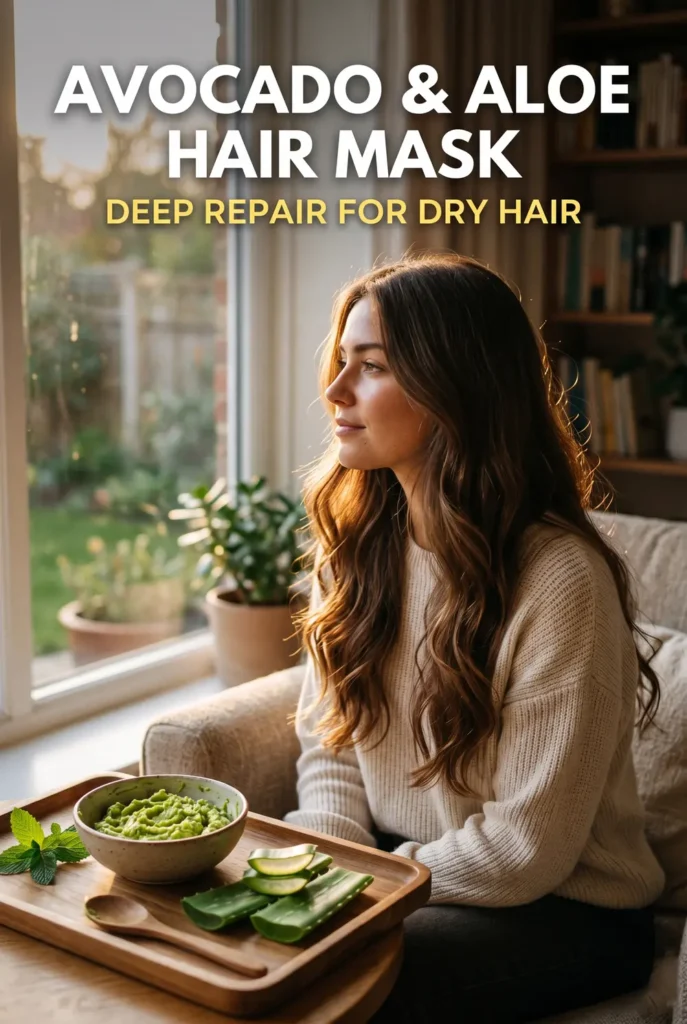
Dry hair is not simply hair that lacks water — it is hair with a damaged or insufficient lipid layer surrounding the hair shaft that allows moisture to escape faster than the hair can retain it. The cuticle — the overlapping scale-like outer layer of each hair strand — lifts and gaps when the hair shaft lacks adequate lipid content, allowing water to evaporate while making the hair rough, frizzy, and prone to breakage. Effective deep conditioning for dry hair must address this lipid layer specifically — providing the fatty acids and proteins that restore cuticle integrity and create a genuine moisture-retaining environment within the hair shaft.
Avocado and aloe vera together address dry hair through two complementary mechanisms that make them one of the most effective natural combinations for this specific concern. Avocado provides the rich lipid content that rebuilds the hair shaft’s lipid layer. Aloe vera provides the water-based hydration, pH balancing, and proteolytic enzyme activity that prepares the hair surface to accept and retain that moisture. Here is everything you need to know about using this combination for genuinely transformed dry hair.
| Science Says: Avocado oil has a unique penetration profile among natural oils: its oleic acid content (approximately 70%) allows it to penetrate the hair cortex — the inner structural layer of the hair shaft — rather than simply coating the surface. A study published in the Journal of Cosmetic Science found that oil penetration into the hair cortex significantly reduced the protein loss from washing, heat styling, and brushing that is the primary cause of the weakening and breakage characteristic of dry damaged hair. |
What Avocado Brings to This Mask
Ripe avocado provides one of the richest natural sources of hair-beneficial compounds available in food form. Oleic acid — present at approximately 70% of avocado’s fatty acid content — penetrates deeply into the hair cortex rather than sitting on the surface, providing internal conditioning that synthetic silicone-based conditioners cannot replicate. Linoleic acid provides the omega-6 fatty acid component of the hair’s natural lipid layer that is depleted in dry, damaged hair. Vitamin E is an antioxidant that protects existing hair structure from oxidative damage. Biotin supports keratin synthesis. And the natural proteins in avocado provide the amino acid building blocks for keratin repair. Together, these compounds rebuild the hair shaft from the inside out in a way that topical conditioners alone cannot achieve.
What Aloe Vera Brings to This Mask
Aloe vera’s role in this combination is to prepare the hair and scalp surface for maximum avocado absorption and to contribute its own independent conditioning and scalp-health benefits. Proteolytic enzymes in fresh aloe vera dissolve the dead skin cell buildup around hair follicle openings that restricts healthy hair emergence and can trap the mask’s active compounds on the surface rather than allowing them to reach the hair shaft. Aloe’s natural pH of approximately 4.5 balances the scalp’s pH to the optimal range for cuticle closure and moisture retention — a closed cuticle locks the avocado’s conditioning compounds inside the shaft rather than allowing them to leach out during rinsing. Acemannan provides direct follicle stimulation benefit, and aloe’s deep water content provides the genuine hydration that dry hair needs alongside the lipid conditioning of avocado.
Basic Avocado and Aloe Deep Conditioning Mask
Ingredients: Half a ripe avocado (very ripe for maximum oil content), three tablespoons fresh aloe vera gel, one tablespoon coconut oil, one tablespoon raw honey.
Method: Mash the avocado to a completely smooth paste — any lumps will be difficult to rinse from hair. Mix in aloe vera gel, coconut oil, and honey until fully combined and smooth. Apply to clean, damp hair from roots to tips, working the mask through every section thoroughly. Cover with a shower cap and leave for 45 minutes to one hour. Rinse with cool water and shampoo once. Follow with a light conditioner if hair feels heavy after the mask washes out.
Cool water rinsing is important for this mask — cool water closes the cuticle after treatment, sealing the conditioning compounds inside the hair shaft before the cuticle has the opportunity to lift and allow them to escape. Warm or hot water at the rinse stage releases much of the conditioning benefit. The coconut oil complements avocado’s oleic acid with its own cortex-penetrating lauric acid. Honey adds humectant moisture retention alongside the lipid conditioning of the oils.
Enhanced Recipe for Severely Dry and Damaged Hair
Ingredients: Half a ripe avocado, three tablespoons aloe vera gel, one tablespoon argan oil, one egg yolk, one tablespoon raw honey, one teaspoon vitamin E oil.
Method: Mash avocado thoroughly. Mix in all remaining ingredients until completely smooth. Apply to clean damp hair, cover with shower cap and leave for one hour. Rinse with cool water only — never hot when egg is included. Shampoo once.
The egg yolk adds lecithin — an emulsifying phospholipid that helps the mask adhere to the hair shaft surface and fills the gaps in the damaged cuticle layer with a film that smooths the surface and reduces moisture loss until the cuticle repairs naturally over weeks of consistent treatment. Argan oil adds vitamin E at higher concentration than avocado alone. Vitamin E oil provides maximum antioxidant protection for the hair protein structure. This is the most intensive dry hair treatment in the collection and produces the most dramatic immediate improvement in hair softness and manageability.
Lightweight Version for Fine Dry Hair
Ingredients: One quarter of a ripe avocado, four tablespoons aloe vera gel, one teaspoon jojoba oil, one teaspoon raw honey.
Method: Blend all ingredients until completely smooth. Apply to clean damp hair concentrating on lengths and ends, avoid the roots. Leave for 30 minutes. Rinse thoroughly with cool water.
Fine hair that is also dry needs lightweight conditioning that moisturises without weighing the hair down or reducing volume. Reducing the avocado amount, substituting jojoba (which most closely mimics the hair’s natural sebum and does not leave a heavy coating), and focusing application on the lengths and ends rather than the roots addresses the dryness without the heaviness that makes fine hair appear flat and lifeless after richer masks.
How Often and When to Use
- Severely dry or chemically treated hair: once weekly consistently — every Sunday or chosen day
- Moderately dry hair: every two weeks, with a lighter conditioner on alternate wash days
- Fine dry hair: every two weeks using the lightweight version, concentrating on ends only
- Best time: apply before a bath or shower so the body heat during bathing maintains warmth under the shower cap, improving mask penetration
| Pro Tip: Warm the avocado and coconut oil components of this mask very gently before mixing — place the mashed avocado and coconut oil in a bowl over warm water for two minutes until slightly warm. Warm oils penetrate the hair shaft significantly more effectively than room-temperature oils because warmth softens the cuticle scales slightly, allowing the conditioning compounds to enter the cortex more deeply. The difference in post-mask hair softness between warm and room-temperature application is noticeable from the first treatment. |
Dry hair responds to consistent, correctly formulated natural conditioning masks more reliably than almost any other hair concern — because the cause (lipid layer deficiency) is directly addressed by the avocado and oil components that these masks deliver. One hour weekly, consistently applied, produces cumulative improvements in hair texture, manageability, frizz control, and breakage reduction that compound over months into genuinely transformed hair. Start this weekend with the basic recipe and let eight weeks of weekly masking show you what genuine deep natural conditioning achieves.