The Listerine foot soak has become one of the most widely shared home beauty and health remedies — and unlike many viral tips, it genuinely earns its reputation. The combination of Listerine’s active essential oil ingredients with white vinegar and warm water creates a foot soak that addresses the real, underlying causes of the most common foot problems simultaneously: the fungal and bacterial overgrowth driving odour and infection, the thickened keratin of calluses and cracked heels, and the daily buildup of debris in the spaces around toenails and in skin folds.
Understanding exactly what each component does — and why the combination works better than any single ingredient alone — allows you to use this soak most effectively and adapt it for your specific foot concern. Here is the complete DIY guide: the chemistry, the best recipes, the correct technique, and the results you can realistically expect.
| Did You Know? Listerine’s four active essential oil ingredients — eucalyptol (0.092%), thymol (0.064%), menthol (0.042%), and methyl salicylate (0.06%) — were chosen for their antimicrobial activity when the formula was developed as a surgical antiseptic in 1879. Thymol specifically has the strongest antifungal activity of the four, with documented inhibition of Trichophyton rubrum — the most common dermatophyte in nail fungus — at concentrations found in a diluted Listerine foot soak. |
What Each Ingredient Does
Listerine — Antimicrobial and Antifungal Action
The four active essential oils in Listerine work synergistically against the organisms responsible for the most common foot problems. Thymol and eucalyptol together inhibit the Trichophyton fungi responsible for athlete’s foot and nail fungal infections. All four compounds have documented antibacterial activity against the bacterial species that metabolise sweat into the odorous short-chain fatty acids responsible for foot odour. Menthol provides immediate cooling relief from inflamed or tender foot skin and has mild analgesic properties. Methyl salicylate — related to salicylic acid — contributes mild keratolytic action that helps soften thickened callus and heel skin.
White Vinegar — Keratin Softening and Acid Environment
White vinegar’s acetic acid creates an acidic soak environment that softens the keratin protein of calluses and cracked heels more effectively than warm water alone — making the subsequent pumice stone exfoliation dramatically easier and more effective. The acid environment is also independently antifungal: most dermatophytes cannot thrive below pH 5, and a diluted white vinegar soak creates a pH environment inhospitable to the fungi that cause athlete’s foot and nail infections. White vinegar also has direct antibacterial activity against the odour-causing bacteria that colonise foot skin and footwear.
Warm Water — Hydration, Softening, and Delivery
Warm water is the delivery medium that allows the active compounds to reach the skin surface and nail margins effectively. It hydrates the outer layers of thickened heel and callus skin, making the keratin swell and become significantly more pliable. It dilutes the Listerine and vinegar to concentrations that are therapeutically active but not irritating to intact skin. And the warmth itself relaxes the small muscles of the foot, reduces the discomfort of tired or aching feet, and improves circulation to the skin surface.
Classic DIY Listerine Foot Soak
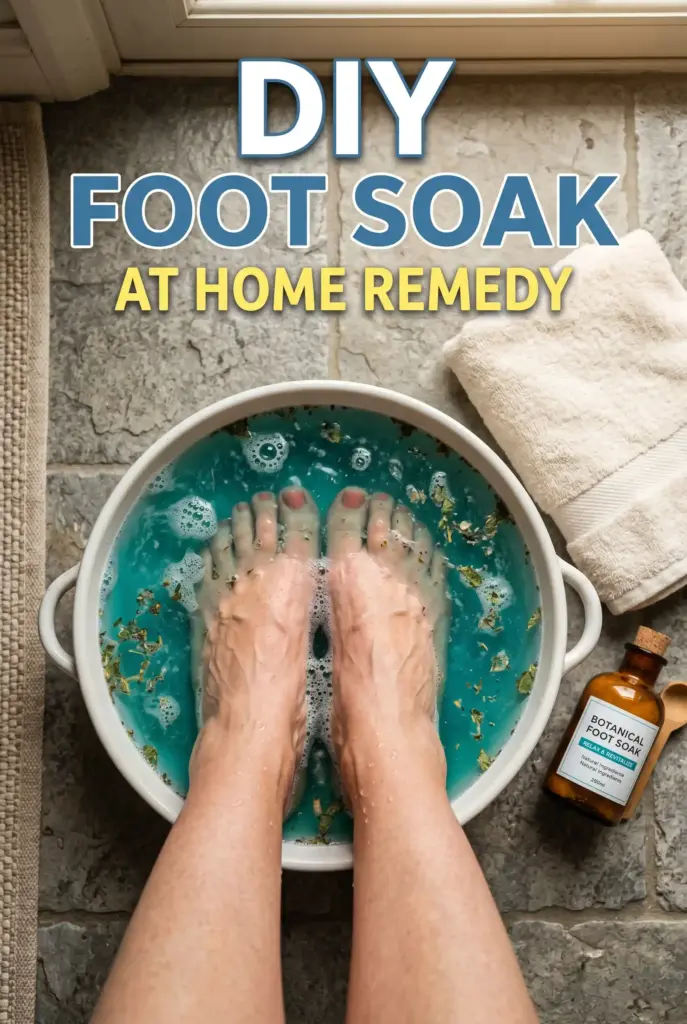
Ingredients: Half a cup of original Listerine (blue, amber, or green — the original formula contains all four active ingredients), half a cup of white vinegar, enough warm water to cover both feet.
Method: Mix Listerine and vinegar in the basin first, then fill with warm water. Soak both feet for 20 to 30 minutes. During the final five minutes, use a pumice stone or foot file to remove softened dead skin from the heels and ball of the foot while still submerged. After soaking, rinse feet with clean water, dry thoroughly (paying careful attention between every toe), and apply a generous layer of shea butter, coconut oil, or Vaseline to the heels while skin is still warm. Pull on cotton socks.
The pumice stone during the soak (not after, when skin has dried again) makes a significant difference to the exfoliation result — the combination of vinegar-softened keratin and the physical file produces dramatically smoother heels than filing before or after the soak. The immediate post-soak moisturiser and socks application is equally essential — the active ingredients have dried and cleaned the skin surface thoroughly, and without immediate moisture sealing the newly exposed skin hardens quickly.
Enhanced Recipe for Severely Cracked Heels
Ingredients: Half a cup Listerine, half a cup white vinegar, two tablespoons Epsom salt, one tablespoon baking soda, warm water.
Epsom salt adds magnesium that both relaxes foot muscles and contributes to callus softening through its ionic interaction with keratin proteins. Baking soda’s alkalinity provides a complementary softening action to vinegar’s acidity — the brief neutralisation reaction between the two produces a mildly bubbling soak that loosens surface debris and additional dead skin. Soak for 25 minutes, pumice stone generously during the soak, rinse thoroughly, then apply castor oil (whose ricinoleic acid penetrates cracked heel skin more deeply than most other oils) under cotton socks overnight.
Enhanced Recipe for Foot Odour
Ingredients: Three-quarters of a cup Listerine, half a cup apple cider vinegar, ten drops tea tree oil, warm water.
Apple cider vinegar contains additional acetic acid alongside malic acid and natural antimicrobial compounds. Tea tree oil reinforces the antifungal and antibacterial action of the Listerine ingredients, particularly against the bacterial species most responsible for persistent foot odour. This combination used three times weekly eliminates chronic foot odour in most people within two to three weeks of consistent use — because it addresses the bacterial cause rather than masking the odour with fragrance.
Enhanced Recipe for Fungal Nail Treatment
Ingredients: Half a cup Listerine, half a cup white vinegar, three tablespoons sea salt, ten drops oregano oil, warm water.
Oregano oil’s carvacrol adds the strongest natural antifungal action of any essential oil to the soak — with documented activity against Trichophyton species at concentrations achievable in a diluted soak. Sea salt creates a hypertonic environment around the nail that draws moisture from the fungal colonies and disrupts their cellular membrane integrity. This soak used daily for active fungal nail treatment and three times weekly for prevention produces measurably better antifungal outcomes than standard Listerine soaks alone.
How Often to Use Each Recipe
- Classic soak for cracked heels and maintenance: two to three times weekly during active treatment, weekly for maintenance
- Enhanced cracked heel recipe: three times weekly until heels are significantly improved, then transition to classic soak maintenance
- Foot odour recipe: three times weekly consistently — odour returns if frequency drops below twice weekly for persistent cases
- Fungal nail recipe: daily for active infection (combined with twice-daily tea tree oil application directly to affected nails), three times weekly for prevention
| Important: Do not use this soak on open, bleeding, or deeply infected heel cracks — the Listerine and vinegar combination causes stinging and potential irritation on broken skin. Deeply infected heel fissures with signs of spreading redness, warmth, or pus require medical evaluation. This soak is for intact skin treatment only. |
The DIY Listerine foot soak works because it addresses the real, biological causes of common foot problems rather than simply cleaning the surface. Make it a consistent twice-weekly ritual this week — 25 minutes, pumice stone during, shea butter and socks after. By the end of two weeks the difference in heel texture, freshness, and skin quality will make it a permanent part of your self-care routine.