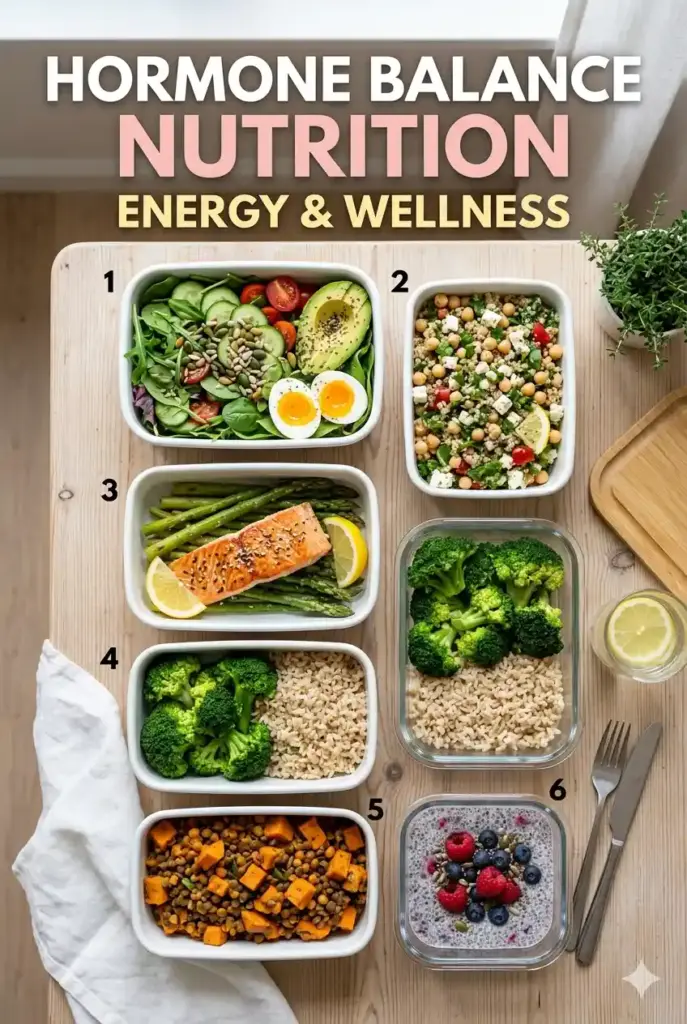
Hormones regulate virtually everything that matters in daily life — energy levels, mood stability, sleep quality, skin clarity, weight management, menstrual health, fertility, and metabolism. And while hormones are produced by glands and regulated by complex feedback systems, the raw materials they require and the nutritional environment in which they function come entirely from what you eat. This is not a minor influence — for many women, nutrition is the most impactful single factor in their hormonal health.
This practical hormone balance nutrition plan is organised around the specific foods, meal timing principles, and nutritional targets that most directly support the hormones affecting women’s daily wellbeing — oestrogen, progesterone, insulin, cortisol, and thyroid hormones. It is not a restrictive diet — it is a nourishment strategy built around what to add rather than what to eliminate.
| Science Says: Research published in the Journal of Clinical Endocrinology confirmed that dietary fat intake is the single strongest dietary predictor of sex hormone levels in women — women consuming adequate healthy fats had significantly higher progesterone, oestrogen, and testosterone levels than those restricting fat. Steroid hormones (including all sex hormones) are synthesised from cholesterol, making adequate dietary fat not optional for hormonal health. |
The Foundation Principles
Principle 1: Eat Enough — Especially Enough Fat
The most widespread nutritional cause of hormonal disruption in women is simply not eating enough — particularly not enough fat. Steroid hormones including oestrogen, progesterone, and testosterone are synthesised from cholesterol. Women who significantly restrict calories or fat intake limit the substrate from which the body manufactures these hormones. Include healthy fat at every meal: avocado, eggs, oily fish, nuts, seeds, olive oil, and full-fat dairy or coconut products. These are not indulgences — they are the building blocks of hormonal function.
Principle 2: Stabilise Blood Sugar at Every Meal
Insulin is the most powerful hormone in the body — and chronically elevated insulin from refined carbohydrate and sugar-heavy eating patterns disrupts virtually every other hormonal system. High insulin increases androgen production in women, drives belly fat accumulation, contributes to oestrogen dominance, and worsens PCOS symptoms. Building every meal around protein and fibre first — before carbohydrates — slows glucose absorption and prevents the insulin spikes that set this cascade in motion. Eat protein with every meal and snack, choose complex carbohydrates, and reduce added sugar as a non-negotiable hormonal nutrition foundation.
Principle 3: Eat at Consistent Times
Irregular meal timing disrupts the circadian hormone rhythm that governs cortisol, insulin, and sex hormone production. The body anticipates and synchronises hormone release with consistent meal times — eating unpredictably creates hormonal unpredictability. Three well-structured meals at consistent times daily is as important as what those meals contain for maintaining the stable hormonal environment that produces steady energy and mood.
The Hormone Balance Meal Plan
Breakfast — Within One Hour of Waking
Goal: Stabilise morning cortisol, activate metabolism, prevent mid-morning cravings.
What to eat: Protein plus healthy fat plus complex carbohydrate. Examples: two eggs with avocado on whole grain toast; Greek yogurt with berries, nuts, and seeds; a high-protein smoothie with nut butter, spinach, and fruit.
Eating protein within one hour of waking reduces the cortisol spike that peaks in the first 30 minutes after waking. High-protein breakfast reduces total daily calorie intake by an average of 400 calories without conscious restriction — because protein activates satiety hormones more powerfully than any other macronutrient.
Lunch — The Largest and Most Varied Meal
Goal: Support liver detoxification, provide DIM for oestrogen metabolism, sustain afternoon energy.
What to eat: Protein plus cruciferous vegetables plus complex carbohydrate plus healthy fat. Examples: grilled salmon with a large broccoli and kale salad dressed with olive oil and lemon; chicken with roasted cauliflower and sweet potato; a large grain bowl with legumes, mixed greens, avocado, and seeds.
Cruciferous vegetables — broccoli, cauliflower, kale, Brussels sprouts — contain DIM (diindolylmethane) that specifically supports the liver pathway that converts harmful oestrogen metabolites into safer forms for excretion. Two servings at lunch daily provides therapeutic DIM levels without supplementation.
Afternoon Snack — If Needed
Goal: Prevent the blood sugar drop that triggers cortisol and cravings in the late afternoon.
What to eat: Protein plus fat combination. Examples: a small handful of mixed nuts and seeds; apple with almond butter; yogurt with flaxseeds; hard-boiled eggs.
Dinner — Lighter Than Lunch
Goal: Support overnight repair, provide magnesium and tryptophan for sleep and hormone production.
What to eat: Protein plus vegetables plus moderate carbohydrate. Evening is the worst time metabolically for large carbohydrate loads — insulin sensitivity is lowest in the evening. Examples: baked fish with roasted vegetables and a small sweet potato; turkey or chicken with steamed greens; lentil soup with a side salad.
Key Hormone-Supporting Foods to Include Daily
- Flaxseeds — two tablespoons ground daily. The most potent dietary source of lignans that support oestrogen metabolism and are the foundational food of the follicular phase in seed cycling
- Pumpkin seeds — a small handful daily. The richest plant source of zinc, directly supporting progesterone production and follicle health
- Brazil nuts — just two per day provide the full recommended intake of selenium, essential for thyroid hormone conversion from T4 to active T3
- Dark leafy greens — two servings daily provide the magnesium, folate, and iron that directly support hormonal production and balance
- Oily fish — two to three times per week. Omega-3 EPA and DHA reduce the inflammation that drives hormonal disruption and support prostaglandin balance throughout the cycle
Foods to Reduce for Better Hormonal Health
- Added sugar and refined carbohydrates — the primary dietary drivers of insulin dysregulation and the hormonal cascade it creates
- Alcohol — the liver prioritises alcohol metabolism over oestrogen clearance, causing oestrogen to recirculate and contribute to oestrogen dominance symptoms
- Non-organic dairy and conventionally farmed meat — contain exogenous hormones that contribute to the overall hormonal load the liver must process
- Processed seed oils — soybean, corn, and sunflower oils in processed food are omega-6 heavy and drive the systemic inflammation that underlies hormonal disruption
| Pro Tip: Add one tablespoon of ground flaxseeds and one tablespoon of pumpkin seeds to your breakfast every morning — this is the foundation of the seed cycling practice for follicular phase hormonal support. These two seeds together provide lignans for oestrogen metabolism, zinc for progesterone, and magnesium for adrenal health in one simple daily addition that requires no recipe or preparation. |
Hormonal balance through nutrition is not about following a strict protocol — it is about consistently providing the building blocks, detoxification support, and blood sugar stability that your hormonal system needs to function at its best. Most women notice improvements in energy, mood, skin, and cycle symptoms within four to six weeks of consistent nutritional hormonal support. Your food is your most accessible and most powerful hormonal medicine.