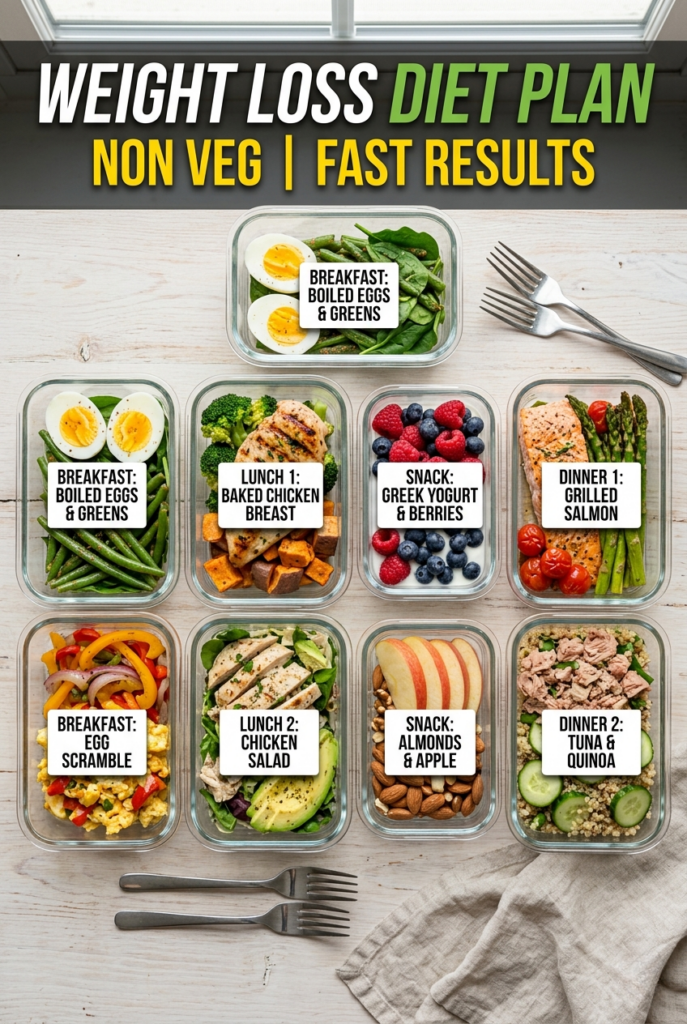
A well-planned non-vegetarian diet is one of the most effective tools for fat loss available — and the reason is straightforward. Animal proteins provide complete amino acid profiles that maximise muscle preservation during fat loss, produce the highest thermic effect of any macronutrient (your body burns 25 to 30% of protein calories just through digestion), and trigger satiety hormones more powerfully than carbohydrates or fat. When combined with the right vegetables, healthy fats, and smart meal timing, a non-vegetarian weight loss diet produces fast, sustainable results without the hunger and fatigue that plague most low-calorie approaches.
| Science Says: A meta-analysis published in the American Journal of Clinical Nutrition analysed 87 randomised controlled trials and concluded that higher-protein diets — regardless of whether protein came from animal or plant sources — consistently produced greater fat loss, better preservation of lean muscle mass, and longer-lasting weight maintenance than standard protein diets. The advantage was most pronounced when protein exceeded 25% of total daily calories. |
The Core Principles of This Diet Plan
This diet chart is built on four non-negotiable principles. First, adequate protein at every meal — this is the foundation of everything. Second, vegetables at every meal — they provide the fibre, vitamins, and volume that keep meals satisfying without excess calories. Third, controlled carbohydrates — not eliminated, but choosing complex over refined and timing them around activity. Fourth, healthy fats in moderate amounts — essential for hormone production, satiety, and nutrient absorption. No food group is completely eliminated. No meal is skipped. No calorie is obsessively counted.
The Daily Diet Chart
On Waking — Before Breakfast
Start every morning with two large glasses of water before anything else. This rehydrates after overnight fasting, suppresses morning hunger slightly, and kickstarts the metabolism. Add the juice of half a lemon for liver support and vitamin C. Wait 20 to 30 minutes before breakfast.
Breakfast — 7:00 to 8:30am
Option A: Three scrambled eggs with one cup of sauteed spinach and half an avocado. Two eggs provide 12 grams of complete protein, and adding the third egg keeps most people satisfied until lunch without any mid-morning cravings.
Option B: Two boiled eggs with one cup of Greek yogurt and a handful of mixed berries. The combination delivers approximately 25 grams of protein with probiotics and antioxidants.
Option C: Omelette with two to three eggs, diced chicken or turkey, onion, tomato, and bell pepper cooked in a small amount of olive oil. This is the most filling and protein-dense breakfast option.
Mid-Morning Snack — 10:30 to 11:00am (Only If Hungry)
A small handful of unsalted nuts — almonds, walnuts, or cashews — with a boiled egg or a small portion of plain yogurt. This snack bridge maintains blood sugar stability between breakfast and lunch. If breakfast was sufficiently protein-rich, many people find they are not hungry at this time and can skip it without effort.
Lunch — 12:30 to 1:30pm
Option A: 150 to 200 grams of grilled or baked chicken breast with a large mixed salad dressed with olive oil and lemon, plus one cup of steamed or roasted vegetables.
Option B: 150 to 200 grams of grilled fish (salmon, tuna, mackerel, or tilapia) with one cup of brown rice or quinoa and a generous portion of steamed vegetables.
Option C: Minced turkey or chicken stir-fry with mixed vegetables cooked in coconut oil, served over cauliflower rice for a lower-carbohydrate option on non-training days.
Afternoon Snack — 4:00 to 4:30pm
Two to three rice cakes with tuna or cottage cheese, or a small portion of leftover protein from lunch with raw vegetable sticks. This snack prevents the late-afternoon blood sugar drop that triggers cravings for sweet or processed food in the evening.
Dinner — 7:00 to 8:00pm
Option A: 150 to 200 grams of grilled salmon with roasted asparagus, broccoli, and a small sweet potato. Salmon’s omega-3s reduce inflammation that hinders fat loss.
Option B: 150 grams of grilled chicken or turkey with a large portion of roasted vegetables and a side salad. Keep dinner lighter on carbohydrates than lunch — insulin sensitivity is lower in the evening.
Option C: Egg-based dinner on lighter days: a three-egg omelette with lots of vegetables and a side salad provides complete protein with minimal calories — ideal for days when activity has been low.
Foods to Limit for Faster Results
- White rice, white bread, and refined pasta — replace with brown rice, whole grain bread, or cauliflower rice
- Fried non-veg options — choose grilled, baked, or steamed preparations of the same proteins
- Sugary sauces and marinades — many commercial sauces contain significant hidden sugar that adds calories without nutrition
- Processed meats like sausages, hot dogs, and deli meats — high in sodium, preservatives, and unhealthy fats that promote inflammation and water retention
- Alcohol — metabolised as priority fuel that prevents fat burning for the duration of its processing
Hydration and Timing Rules
- Drink two glasses of water before every meal — reduces meal calorie intake by an average of 13%
- Finish eating at least two hours before bed — late eating impairs fat burning during sleep
- Eat protein within 30 minutes of any workout for muscle repair and metabolic support
- Aim for six to eight glasses of water throughout the day — hydration directly affects metabolism and fat breakdown
| Pro Tip: Meal prep on Sunday for the week ahead — grill a batch of chicken breasts, boil a dozen eggs, and portion nuts and vegetables into containers. Having ready-made protein sources available eliminates the decision fatigue that leads to unhealthy meal choices on busy days. Fifteen minutes of Sunday prep prevents five days of poor food decisions. |
This non-vegetarian weight loss diet chart is not a starvation plan — it is a nourishment strategy that gives your body the protein and nutrients it needs to burn fat efficiently while preserving the muscle that keeps your metabolism elevated. Follow it consistently for four weeks and measure your results. The combination of high protein, vegetables at every meal, controlled carbohydrates, and smart timing produces results that feel sustainable because they genuinely are.