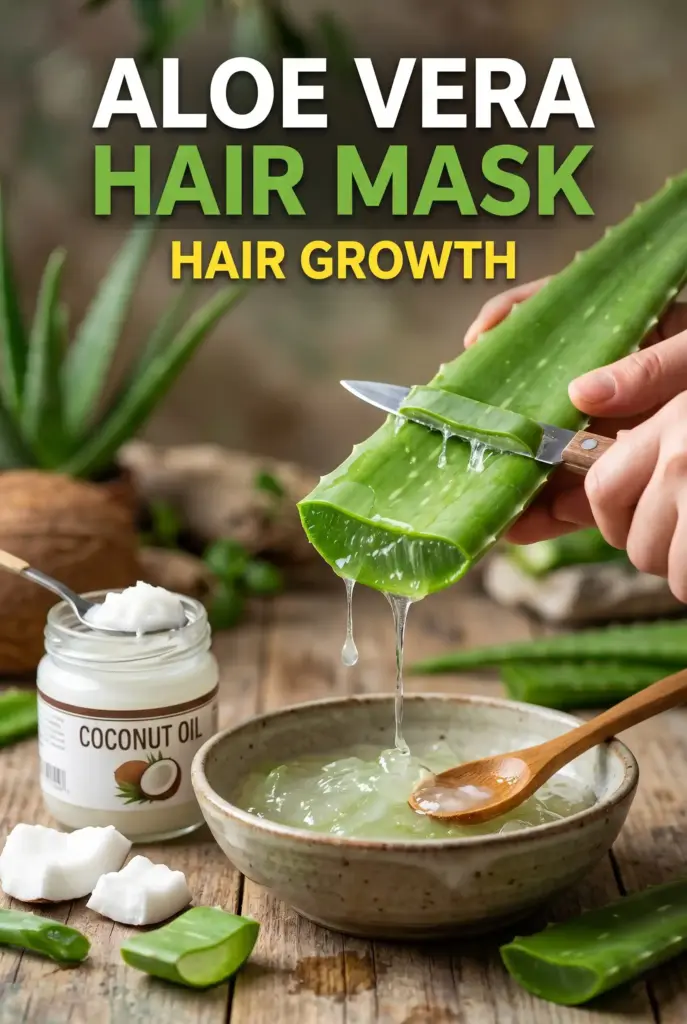
Aloe vera is one of the most versatile natural ingredients available for hair health — and its effectiveness for hair growth specifically is backed by a combination of traditional use across multiple cultures and emerging scientific research that has identified the specific compounds responsible for its documented effects on hair follicles and scalp health. Used as a weekly hair mask, aloe vera addresses the three primary drivers of poor hair growth simultaneously: scalp buildup that blocks follicle openings, scalp inflammation that shortens the active growth phase, and inadequate follicle cell activity that slows the rate of new hair production.
This guide covers exactly what aloe vera does at the follicle level, the best mask recipes for different hair concerns, the correct application technique that maximises results, and the weekly routine that produces the most noticeable improvements in hair growth and overall hair health over consistent months of use.
| Science Says: Research published in the journal Tropical Medicine & International Health identified proteolytic enzymes in aloe vera gel that specifically dissolve the keratin protein of dead skin cells accumulated around the follicle opening — one of the primary causes of restricted hair emergence and slowed growth. The same study confirmed that aloe vera’s alkalising effect balances the scalp’s pH to the slightly acidic range optimal for healthy hair growth, and that aloe’s acemannan compound stimulates the dermal papilla cells that drive the hair growth cycle. |
How Aloe Vera Promotes Hair Growth — The Active Mechanisms
Proteolytic Enzyme Activity
Fresh aloe vera gel contains proteolytic enzymes — specifically alliinase and bradykinase — that break down and dissolve the dead skin cell and sebum buildup that accumulates around and inside hair follicle openings. This buildup is a primary cause of restricted hair growth that many people never address. When follicle openings are clear, hair emerges more easily, the follicle environment is healthier, and the hair shaft produced is stronger because it has encountered less friction and obstruction during emergence.
Scalp pH Balancing
The healthy scalp pH is slightly acidic — between 4.5 and 5.5. Many shampoos, styling products, and even hard water shift the scalp’s pH toward alkaline, disrupting the cuticle layer of hair shafts and creating the environment in which Malassezia fungi (the primary cause of dandruff and seborrheic dermatitis) overgrow. Aloe vera has a natural pH of 4.5 — applying it to the scalp restores the optimal pH for both cuticle integrity and scalp microbiome balance, reducing the inflammation and fungal activity that shorten the hair growth phase.
Acemannan and Follicle Stimulation
Acemannan — the primary polysaccharide in aloe vera gel — has been specifically studied for its effect on hair follicle dermal papilla cells, which are the specialised cells responsible for driving the hair growth cycle. Research has found that acemannan promotes the proliferation of these cells, potentially extending the anagen (active growth) phase of the hair cycle. A longer anagen phase means more growth time before the follicle rests — producing greater total hair length and density over time.
Anti-Inflammatory and Antimicrobial Action
Aloe vera’s natural salicylates, anthraquinones, and flavonoids reduce scalp inflammation — the chronic low-grade immune activation that shortens the hair growth phase and contributes to the follicle miniaturisation behind hair thinning. Its antimicrobial compounds inhibit the bacteria and fungi that drive seborrheic dermatitis and dandruff — two of the most common scalp conditions impairing hair growth.
Basic Aloe Vera Hair Growth Mask
Ingredients: Three to four tablespoons of fresh aloe vera gel (scraped from a cut leaf for maximum potency, or store-bought pure gel with no additives), five drops of rosemary essential oil.
Method: Mix aloe gel and rosemary oil thoroughly. Section the hair and apply generously to the scalp using fingertips, massaging in firm circular motions for five full minutes. Work any excess through the hair lengths. Cover with a shower cap and leave for 45 minutes to one hour. Rinse with cool or lukewarm water and shampoo normally.
Rosemary essential oil is the single most evidence-supported natural hair growth addition to any mask — a 2023 study found rosemary oil as effective as 2% minoxidil for stimulating hair regrowth over six months of consistent application, with fewer side effects. The combination of aloe’s scalp-balancing, follicle-clearing action with rosemary’s proven growth stimulation through improved scalp blood flow creates a dual-action treatment that addresses both the scalp environment and the follicle activity simultaneously.
Enhanced Recipe for Thinning Hair and Hair Loss
Ingredients: Three tablespoons aloe vera gel, one tablespoon castor oil, one tablespoon coconut oil, ten drops rosemary oil, five drops peppermint oil.
Method: Mix all ingredients. Apply with firm five-minute scalp massage. Leave for one to two hours under a shower cap. Rinse and shampoo twice to remove the oils completely.
Castor oil’s ricinoleic acid specifically improves scalp circulation and has anti-inflammatory properties at the follicle. Peppermint oil increases scalp blood flow through vasodilation — a mechanism confirmed in a 2014 study that found peppermint oil produced more hair growth than minoxidil in the tested model. Coconut oil penetrates the hair shaft to prevent the protein loss that causes breakage. This recipe addresses thinning hair through four independent mechanisms and represents the most comprehensive single natural growth treatment in this guide.
Enhanced Recipe for Dry and Damaged Hair
Ingredients: Three tablespoons aloe vera gel, one egg yolk, one tablespoon argan oil, one tablespoon raw honey.
Method: Mix all ingredients. Apply to scalp and hair lengths. Leave for 45 minutes. Rinse with cool water (never hot — heat cooks the egg protein) and shampoo once.
The egg yolk provides biotin, protein, and lecithin that directly strengthen the hair shaft and provide intensive conditioning that makes dry, damaged hair noticeably smoother and more manageable. Argan oil adds vitamin E and essential fatty acids that complement the barrier-repair action. Honey adds humectant moisture and brightening enzymes. This recipe produces the most immediately transformative result for hair texture and manageability.
Your Weekly Aloe Vera Hair Mask Schedule
Weekly (every Sunday or chosen day): Basic aloe and rosemary growth mask — the foundational weekly treatment.
For thinning or significant hair loss: Enhanced thinning recipe twice weekly, alternating with basic recipe.
For dry or damaged hair: Egg yolk and argan recipe every other week, basic recipe on alternating weeks.
Daily (takes 60 seconds): Apply a small amount of pure aloe vera gel to the scalp after washing as a leave-in scalp treatment — not rinsed out. The daily acemannan delivery provides continuous follicle-stimulating and scalp-balancing benefit between the weekly masks.
| Pro Tip: Always use fresh aloe vera gel scraped directly from a cut leaf when possible — the enzyme activity and acemannan content of fresh gel is significantly higher than store-bought gel, which is processed in ways that reduce active compound concentration. If using store-bought gel, choose a product with aloe vera as the first ingredient and no artificial colours, fragrances, or alcohol. Refrigerate leftover fresh gel in an airtight container and use within two to three days for maximum potency. |
Aloe vera is one of the few natural ingredients whose hair growth benefits are grounded in specific, identified biological mechanisms rather than tradition alone. Consistent weekly use of the right aloe mask — with rosemary oil for growth stimulation, the five-minute scalp massage for circulation, and the daily leave-in scalp treatment for ongoing follicle support — produces the cumulative scalp health and hair growth improvements that compound week after week. Start this weekend with the basic recipe and let two months of consistent practice show you what genuine natural hair growth support achieves.