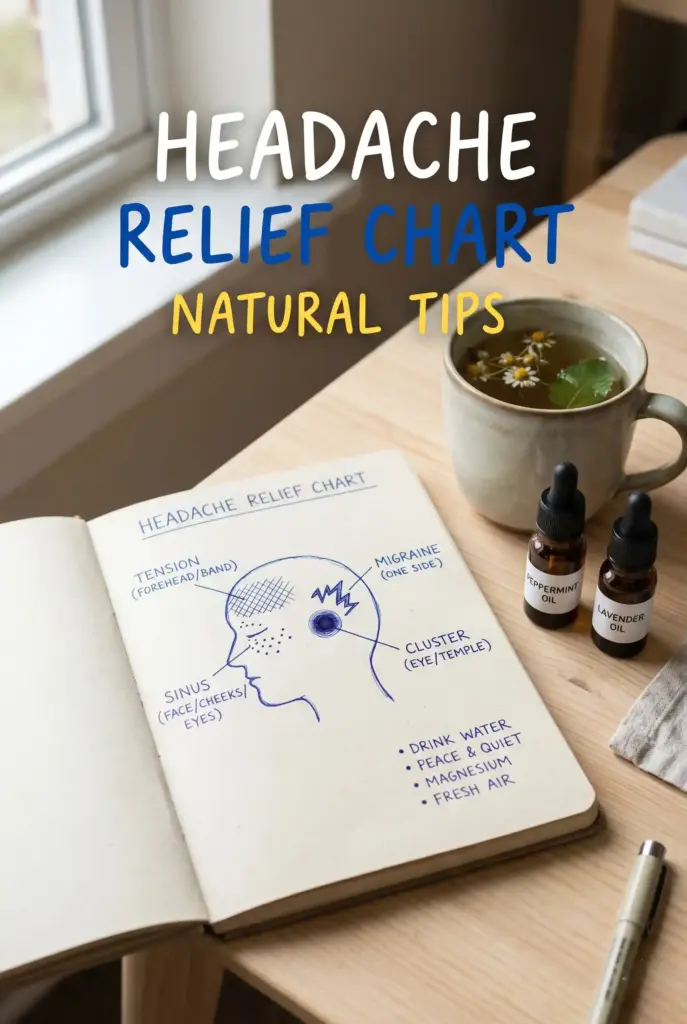
Headaches are one of the most common health complaints worldwide — and one of the most frequently self-treated incorrectly. The reason many people find their headache remedies inconsistently effective is straightforward: different types of headaches have different causes, and remedies that work brilliantly for one type may do nothing for another. Treating a dehydration headache with peppermint oil works poorly. Treating a tension headache with steam inhalation misses the point. Understanding which type of headache you are experiencing — identified by its location, quality, timing, and associated symptoms — is the first step toward choosing the natural remedy that addresses the actual cause.
This practical guide maps the most common headache types to their identifying characteristics and pairs each one with the specific natural remedies that match its underlying mechanism.
| Did You Know? Research from the Global Burden of Disease Study found that tension-type headache affects approximately 42% of the global adult population at any given time, making it the most prevalent neurological disorder worldwide. Migraine affects approximately 15%, cluster headaches approximately 0.1%, and secondary headaches (including sinus, dehydration, and cervicogenic) account for the majority of remaining cases. Understanding which category a headache falls into dramatically improves the success rate of natural treatment. |
Headache Type 1: Tension Headache
Location: Both sides of the head, described as a band or vice-like pressure around the forehead and temples. May extend to the back of the head and neck.
Quality: Dull, pressing, constant ache — not throbbing. Mild to moderate intensity.
Timing: Develops during or after periods of stress, prolonged screen use, poor posture, or muscle tension. Worsens through the day.
Associated symptoms: Neck and shoulder stiffness, sensitivity to light or noise (mild), no nausea.
Primary causes: Sustained contraction of the frontalis, temporalis, and trapezius muscles. Often triggered by stress, dehydration, eye strain, or poor neck posture.
Best natural relief: Peppermint oil applied to the temples and back of the neck (clinical evidence for equivalent pain relief to paracetamol 1000mg). Warm compress to the back of the neck to relax contracted muscles. Two large glasses of water immediately — dehydration is a frequent trigger. Pressure point massage at the temples, BL2 points (inner eyebrow corners), and LI-4 (web between thumb and index finger). Magnesium glycinate 300mg if headaches recur frequently — deficiency is a primary underlying cause of tension headache susceptibility.
Headache Type 2: Migraine
Location: Usually one side of the head, though can be bilateral. Most commonly temporal or behind one eye.
Quality: Throbbing, pulsating pain. Moderate to severe intensity. Significantly worse with movement.
Timing: Builds over 30 to 60 minutes. Lasts four to 72 hours. May be preceded by visual disturbances, light sensitivity, or unusual smells (aura in approximately 30% of cases).
Associated symptoms: Nausea or vomiting, photophobia (severe light sensitivity), phonophobia (sound sensitivity), visual disturbances during aura.
Primary causes: Neurological event involving cortical spreading depression and trigeminovascular activation. Triggers include hormonal fluctuations, certain foods, disrupted sleep, bright lights, strong smells, and stress.
Best natural relief: Act at the very first sign — natural remedies are significantly less effective once a migraine is fully established. Ginger tea (evidence for comparable effectiveness to sumatriptan in one RCT). Dark, quiet room with cold compress to the forehead. Magnesium supplementation daily reduces migraine frequency by 41% in deficient individuals. Lavender oil inhalation during an episode has clinical evidence for reducing migraine severity. Riboflavin (vitamin B2) at 400mg daily is the strongest evidence-based nutritional migraine preventive available.
Headache Type 3: Sinus Headache
Location: Forehead, cheekbones, bridge of the nose, and behind the eyes. Often asymmetric — one side of the face more affected.
Quality: Deep, constant, dull aching pressure. Worse on bending forward or leaning the head down.
Timing: Often worst in the morning (mucus pools overnight). Worsens with head position changes. Associated with colds, allergies, or damp weather.
Associated symptoms: Nasal congestion, post-nasal drip, facial tenderness on pressing sinus areas, possible fever if infection is present.
Primary causes: Inflammation and fluid accumulation in the ethmoidal, frontal, maxillary, or sphenoidal sinus cavities causing pressure against surrounding nerves.
Best natural relief: Steam inhalation with eucalyptus oil for 10 minutes — the most directly targeted treatment for sinus pressure, opening blocked passages and thinning mucus. Warm compress over sinus areas. Saline nasal rinse using a neti pot or squeeze bottle — physically removes mucus and allergens from nasal passages. Staying well hydrated to keep mucus thin and flowing. Quercetin-rich foods daily during allergy season (capers, red onions, apples) for natural antihistamine support.
Headache Type 4: Dehydration Headache
Location: Generalised across the entire head — often described as a dull ache felt throughout the cranium.
Quality: Constant, dull, may throb. Worsens when standing up (postural component from low blood volume).
Timing: Develops after insufficient fluid intake, exercise without rehydration, alcohol consumption, or time in heat.
Associated symptoms: Dark urine, dry mouth, dizziness on standing, fatigue.
Primary causes: Intracranial volume reduction from dehydration causes the meninges (brain coverings) to pull slightly on pain-sensitive structures.
Best natural relief: Two large glasses of water immediately, then consistent sipping over the next 30 to 60 minutes. Adding a pinch of Himalayan salt and a squeeze of lemon creates a natural electrolyte solution that rehydrates cells faster than plain water. Most dehydration headaches resolve within 30 minutes of adequate rehydration. Coconut water is particularly effective post-exercise as it replaces both fluid and electrolytes. Prevention: drink six to eight glasses of water daily consistently, never letting thirst develop as a signal.
Headache Type 5: Cervicogenic Headache (Neck-Originated)
Location: Starts at the base of the skull and radiates forward to the forehead, eye, or temple on one side.
Quality: Dull, deep, referred pain. Non-throbbing. May feel like pressure behind one eye.
Timing: Worse after prolonged sitting, screen use, or sleeping in poor position. Triggered by neck movement.
Associated symptoms: Reduced neck range of motion, tenderness at the base of the skull, shoulder tension on the same side.
Primary causes: Muscle tension or joint restriction in the upper cervical vertebrae referring pain forward through the greater and lesser occipital nerves.
Best natural relief: Suboccipital massage — firm circular pressure applied with both thumbs at the base of the skull where the neck meets the cranium, held for 30 seconds and repeated. Heat to the back of the neck and upper shoulders. Gentle cervical stretching — slow side-to-side head rotation within a comfortable range. Posture correction — screen at eye level eliminates the forward head position that chronically loads the upper cervical joints. Magnesium for muscle relaxation. If cervicogenic headaches are frequent, physiotherapy assessment of cervical joint restriction produces the most lasting resolution.
Universal Natural Headache Prevention
- Drink six to eight glasses of water daily — dehydration is a contributing factor in all headache types
- Take a five-minute break from screens every 45 to 60 minutes — prevents the eye strain and neck tension behind most workplace headaches
- Supplement with magnesium glycinate 300mg daily — deficiency is the most common nutritional driver of headache susceptibility across all types
- Maintain consistent sleep and wake times — sleep disruption is a major trigger for both tension headaches and migraines
- Eat regular meals with protein — blood sugar drops trigger cortisol release and inflammatory signalling that contribute to headache onset
| Pro Tip: Keep a simple headache diary for two weeks — noting location, quality, timing, intensity, and what you had eaten and drunk in the previous three hours. This brief tracking almost always reveals the primary personal trigger pattern within two weeks. Individual headache triggers are highly specific — common ones include nitrates in processed meat, tyramine in aged cheese, MSG, skipped meals, alcohol (especially red wine and beer), specific weather changes, and hormonal timing. Identifying your personal trigger allows targeted prevention rather than reactive treatment. |
Headaches respond dramatically better to treatment when you match the remedy to the type. Identify your pattern from this chart, apply the matched natural remedy at the first sign rather than waiting until the pain is severe, and address the underlying causes through consistent daily habits. The combination of correct identification, early natural treatment, and trigger avoidance produces a reliably better outcome than reaching for the same painkiller for every headache regardless of its origin.