Hair removal is one of the most universal and most expensive beauty routines — and for many people the commercial options feel like a constant cycle of cost, irritation, and rapid regrowth. Natural hair removal methods offer an alternative that uses simple, affordable ingredients, causes less skin irritation than many chemical and mechanical commercial methods, and in some cases produces longer-lasting results than shaving. Here are the most effective natural methods and exactly how to use each one.
| Did You Know? Sugaring — one of the oldest hair removal methods in the world — dates back to ancient Egypt and Persia where it was used as a standard beauty practice. Unlike modern wax, sugar paste only adheres to hair and dead skin cells, not to the live skin beneath — making it significantly less painful and irritating than conventional waxing. It removes hair in the direction of growth, which reduces ingrown hair formation compared to waxing against the grain. |
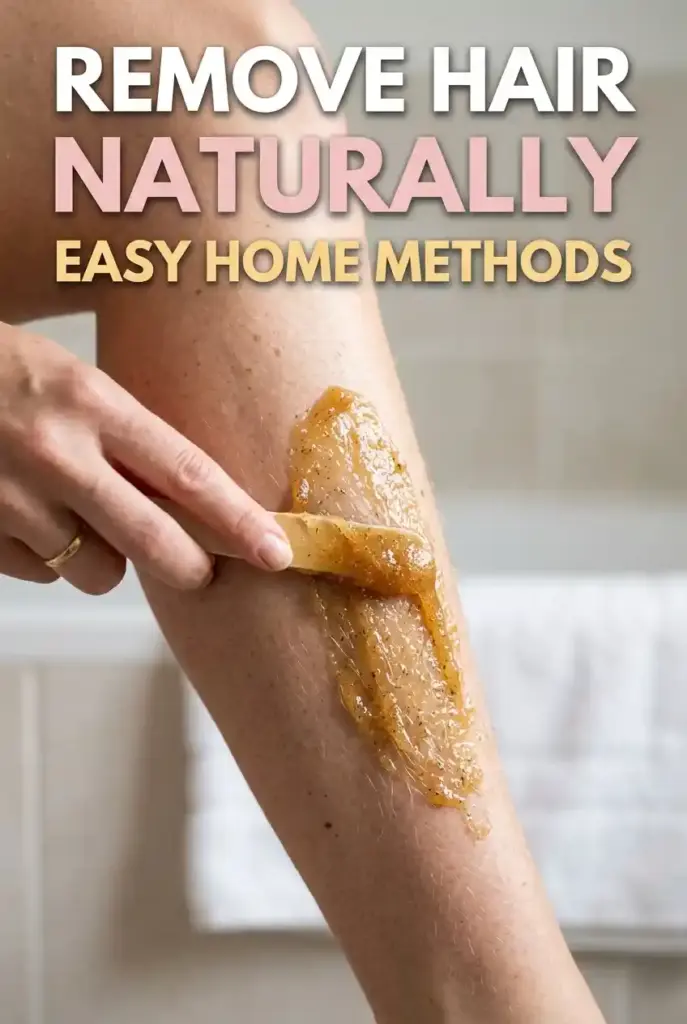
Method 1: Sugaring — The Most Effective Natural Alternative to Waxing
Ingredients: Two cups of white sugar, quarter cup of fresh lemon juice, quarter cup of water.
Method: Combine all ingredients in a small saucepan over medium heat, stirring constantly. Heat until the mixture reaches a deep amber, honey-like colour — approximately 10 to 15 minutes. Allow to cool until warm but comfortable to the touch. Apply a thin layer in the direction of hair growth using a spatula or clean fingers. Apply a cloth strip on top, press firmly, and pull quickly in the direction of hair growth — not against it. Rinse skin with warm water after all areas are treated and apply a soothing moisturiser.
Sugaring removes hair from the root with results lasting two to four weeks — the same duration as conventional waxing. Because sugar only adheres to hair and dead skin cells rather than live skin tissue, it is significantly less painful and causes less redness and post-removal irritation than waxing. With consistent sugaring over months, hair regrowth gradually becomes finer and sparser as repeated root removal weakens the follicle over time.
Method 2: Turmeric Hair Removal Paste
Ingredients: Two tablespoons turmeric powder, enough milk or rose water to form a thick paste.
Method: Mix to a thick paste and apply generously in the direction of hair growth to the target area. Leave until completely dry — approximately 20 minutes. Rub off using firm circular motions against the direction of hair growth. Rinse with warm water.
Turmeric paste is a traditional South Asian hair removal method used for generations as a part of pre-wedding beauty rituals. Regular use of turmeric paste on the same area is believed to gradually weaken the hair follicle over time, producing finer and sparser regrowth with consistent use. It is most effective for fine facial hair and soft body hair rather than coarse hair. The curcumin in turmeric also provides skin-brightening and anti-inflammatory benefits during the treatment — leaving skin visibly smoother and more even-toned after each application.
Method 3: Egg White Peel-Off Facial Hair Remover
Ingredients: One egg white, one tablespoon cornflour, one teaspoon sugar.
Method: Whisk all ingredients together to form a smooth paste. Apply a thin, even layer to areas of facial hair and press a tissue or paper towel strip firmly on top while still wet. Allow to dry completely — approximately 15 minutes. Peel off firmly in one swift motion against the direction of hair growth.
This method works similarly to a peel-off mask — the egg white and cornflour mixture dries to a firm film that adheres to the fine facial hair. When peeled, it removes the hair along with the dead skin cell layer beneath — providing exfoliation alongside hair removal. It is most suitable for fine facial hair such as upper lip fuzz and peach fuzz on the cheeks, and produces a visibly smoother, brighter skin surface after each treatment. Use once every two weeks.
Method 4: Raw Papaya Paste for Hair Growth Inhibition
Ingredients: Two tablespoons raw papaya paste (from unripe green papaya), half a teaspoon turmeric.
Method: Blend raw papaya to a smooth paste. Mix with turmeric. Apply to the area of unwanted hair and massage in for five minutes. Leave for 15 minutes then rinse off. Use two to three times per week consistently.
Raw papaya contains papain — a proteolytic enzyme that breaks down the keratin protein structure of the hair shaft and is believed to weaken the hair follicle with repeated application, gradually reducing regrowth density over weeks to months of consistent use. This is not an instant hair removal method — it is a long-term hair growth inhibiting treatment that works progressively. Results are most noticeable on fine hair with four to six weeks of consistent twice-weekly application.
Method 5: Spearmint Tea for Hormonal Hair Growth
For women who experience excess facial or body hair as a result of elevated androgens — a condition called hirsutism often associated with PCOS — spearmint tea consumed twice daily has demonstrated in clinical research to reduce circulating androgen levels measurably over four to eight weeks, which in turn reduces the hormonal stimulus driving excess hair growth. A study published in Phytotherapy Research found that women who drank two cups of spearmint tea daily for 30 days showed significant reductions in free testosterone and measurable improvement in hirsutism scores. This internal approach addresses the hormonal driver of excessive hair growth rather than just treating the surface symptom.
Aftercare for All Natural Hair Removal Methods
- Apply a cold compress or chilled aloe vera gel immediately after any mechanical hair removal to soothe the skin and reduce redness
- Avoid sun exposure for 24 hours after hair removal — freshly treated skin is temporarily more UV-sensitive
- Exfoliate the treated area gently two to three days after removal to prevent ingrown hairs as regrowth begins
- Moisturise daily with a non-comedogenic moisturiser — hydrated skin reduces the friction and dryness that contribute to ingrown hair development
| Pro Tip: Exfoliate the area two to three days before sugaring or any root-removal method. This removes the dead skin cell layer that can trap hair at the surface and cause hairs to break rather than pull cleanly from the root — the primary cause of ingrown hairs after hair removal. Pre-exfoliation significantly improves the cleanliness of hair removal and reduces ingrown hair occurrence. |
Natural hair removal methods require a little more preparation than reaching for a razor — but they reward that effort with less irritation, longer-lasting results, and in some cases progressive reduction in regrowth over time. Start with sugaring for the most immediate and satisfying results, and add turmeric paste as a regular secondary treatment for ongoing follicle-weakening benefit.