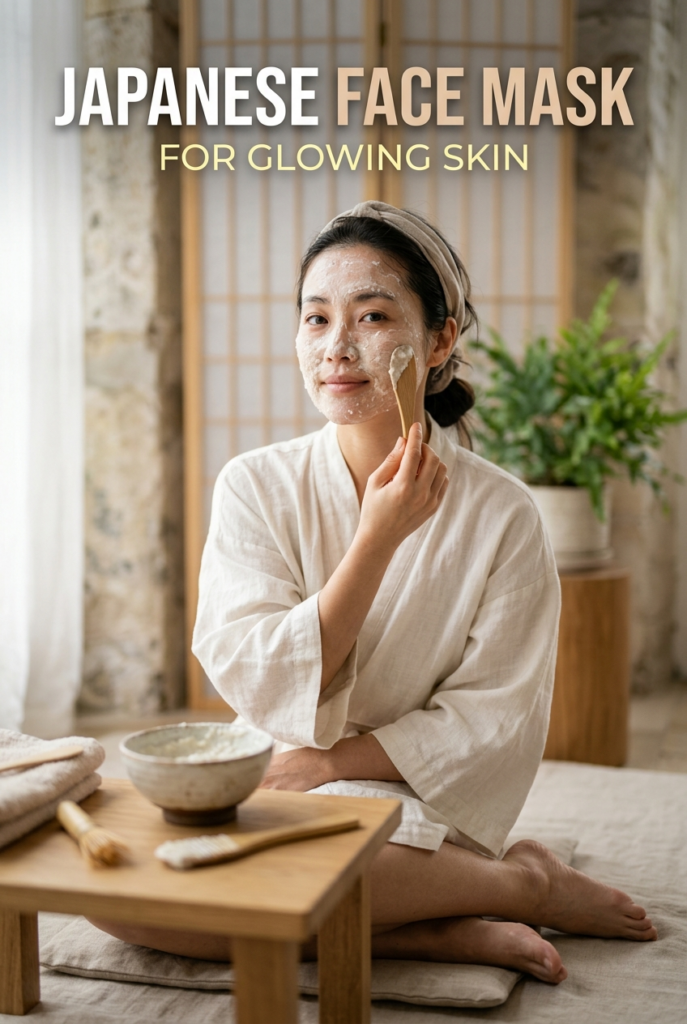
Japan consistently produces some of the highest life expectancy and some of the most remarkably well-preserved skin in the world. Japanese women are frequently cited in global beauty research as having skin that looks significantly younger than their chronological age — and while genetics plays a role, the traditional skincare philosophy and specific natural ingredients used in Japanese beauty culture are central to this reputation. Japanese skincare prioritises gentle nourishment, deep hydration, and prevention over correction — an approach that produces the luminous, smooth, clear complexion that Japanese beauty is celebrated for.
The traditional Japanese face mask ingredients at the heart of this guide have been used for centuries in Japan — many long before Western skincare science confirmed the mechanisms behind their effectiveness. Here is how to incorporate them into simple, powerful face masks that deliver genuine Japanese-inspired glowing skin results.
| Did You Know? The concept of mochi-hada — skin so smooth and elastic it resembles the surface of mochi rice cake — is the foundational Japanese beauty ideal. Unlike the Western focus on coverage and correction, mochi-hada is achieved through deep hydration, consistent gentle exfoliation, and barrier nourishment that produces an intrinsically smooth, bouncy skin texture. Every Japanese face mask tradition is oriented toward this quality. |
The Key Japanese Skincare Philosophy
Before the mask recipes, understanding the Japanese approach to skincare clarifies why these ingredients work so consistently. Japanese skincare is built on three principles: thorough but gentle cleansing that never strips the skin barrier, layering of lightweight hydrating ingredients rather than one heavy moisturiser, and consistent long-term protection from UV and oxidative damage. The face masks in this guide reflect these principles — every recipe combines cleansing, hydration, and skin nourishment in a single treatment, using traditional Japanese ingredients with documented activity on skin health.
Japanese Face Mask Ingredient 1: Rice Water and Rice Flour
Rice has been central to Japanese beauty culture for centuries. Japanese court women known as geisha were renowned for their porcelain-smooth skin, and rice water — the starchy water left after washing or soaking rice — was a key part of their beauty ritual. Rice water contains inositol (a carbohydrate that penetrates damaged hair and skin to repair it from within), ferulic acid (a powerful antioxidant that brightens skin tone), and allantoin (a compound that soothes skin and promotes cell renewal). Rice flour provides gentle physical exfoliation when used in a mask. Multiple clinical studies have confirmed that inositol in rice water improves skin elasticity and reduces the appearance of fine lines with consistent use.
Basic Rice Water Brightening Mask: Soak two tablespoons of Japanese short-grain rice in a cup of water for 30 minutes. Strain the rice and use the milky water. Mix three tablespoons of rice water with two tablespoons of rice flour to form a smooth paste. Apply to clean skin and leave for 15 minutes. Rinse thoroughly with cool water. The immediate result is brighter, softer, more even-toned skin — the effect of allantoin and ferulic acid on the surface skin cells. Use twice weekly.
Japanese Face Mask Ingredient 2: Matcha Green Tea
Matcha — finely ground powdered green tea — is one of the most antioxidant-rich substances available in any form. Because it is consumed as the whole leaf rather than steeped water, matcha contains significantly more EGCG catechins per gram than brewed green tea — including when applied topically. These catechins neutralise the free radicals that break down collagen and accelerate skin ageing, reduce the inflammation that causes redness and acne, inhibit excess sebum production, and provide natural UV-protective antioxidant activity. In Japan, matcha is used both in skincare and as a daily dietary ritual — delivering antioxidant benefits to the skin from both inside and outside simultaneously.
Matcha Anti-Aging Glow Mask: Mix one teaspoon of ceremonial or culinary grade matcha powder with one tablespoon of raw honey and one teaspoon of plain yogurt. Apply to clean skin and leave for 15 to 20 minutes. Rinse with lukewarm water. The combination of matcha’s antioxidants, honey’s antimicrobial hydration, and yogurt’s lactic acid brightening produces the most comprehensive anti-aging and brightening effect of any recipe in this guide. Use once or twice weekly.
Japanese Face Mask Ingredient 3: Sake (Japanese Rice Wine)
Sake — Japanese rice wine — has been used as a facial treatment by Japanese women for generations, particularly by sake brewery workers known as toji, who were observed to have remarkably youthful, smooth hands despite performing physical labour. The connection to skin health is now well-understood: sake contains kojic acid — a byproduct of rice fermentation that is one of the most effective natural skin brightening compounds known, inhibiting tyrosinase (the melanin-producing enzyme) to fade dark spots and even skin tone. It also contains ferulic acid, amino acids, and natural alpha hydroxy acids that gently exfoliate and hydrate the skin surface.
Sake Brightening Mask: Mix two tablespoons of sake with one tablespoon of plain Greek yogurt and one teaspoon of raw honey. Apply to clean skin, leave for 12 minutes, then rinse thoroughly. The kojic acid from the sake and lactic acid from the yogurt provide a dual-acid brightening treatment that fades pigmentation and improves skin clarity with regular twice-weekly use. Ensure the sake you use is plain — no flavourings or additions.
Japanese Face Mask Ingredient 4: Azuki Beans
Azuki bean powder — made from finely ground red azuki beans — has been used as a gentle facial cleanser and exfoliant in Japan for centuries. Japanese women traditionally stored azuki bean powder in small bags and used it to gently cleanse and polish the skin surface. Azuki beans contain saponins — natural cleansing agents that remove sebum and dead skin cells gently — as well as antioxidants and skin-softening compounds. The gentle mechanical exfoliation from fine azuki bean powder produces a noticeably smoother, brighter skin surface with regular use.
Azuki Bean Exfoliating Mask: Mix two tablespoons of finely ground azuki bean powder (available at Asian grocery stores or online) with enough water or rose water to form a smooth paste. Massage gently onto damp skin in small circular motions for two minutes, then leave as a mask for five additional minutes before rinsing. This gentle polishing mask improves skin texture and radiance noticeably from the very first use. Use once or twice per week in place of your regular exfoliant.
Your Japanese Glow Weekly Mask Schedule
Monday: Rice water and rice flour brightening mask — weekly foundation treatment
Thursday: Matcha and honey anti-aging mask — midweek antioxidant boost
Saturday: Sake brightening mask or azuki bean exfoliating mask — weekend glow treatment
| Pro Tip: After every Japanese face mask, apply a hydrating toner while skin is still slightly damp — this is the essence of the Japanese layering technique called ‘nuresae’ or moist layering. Damp skin after a mask is at its most permeable and absorbs subsequent products three to four times more effectively than completely dry skin. This one step after every mask dramatically amplifies the glow result. |
Japanese skincare wisdom has produced some of the most genuinely beautiful skin in the world — and these traditional ingredients, backed now by modern science, are accessible to everyone. Start with the rice water mask this week — it is the simplest and one of the most consistent producers of visible brightening and skin smoothing. Give it six weeks of twice-weekly use and let your skin show you what centuries of Japanese beauty tradition has known all along.
Disclaimer: This article is for informational purposes only. Patch test all new ingredients before applying to the full face. Consult a dermatologist for specific skin conditions or concerns.