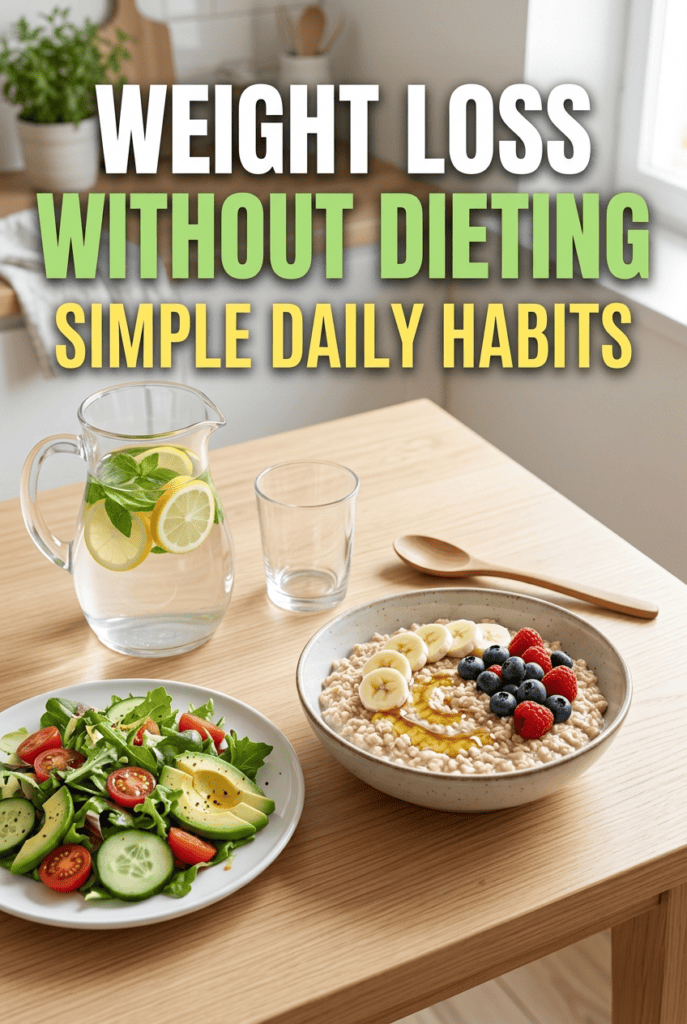
The diet industry is worth hundreds of billions of dollars globally — and yet the overwhelming majority of people who go on diets regain the weight within one to five years, often ending up heavier than when they started. The reason is simple: diets are temporary interventions that require sustained willpower to maintain. When the willpower runs out — and it always does — the eating patterns that caused the weight gain return, and with them the weight.
The alternative is not finding a better diet. It is building the daily behaviours that make healthy weight a natural, effortless outcome of how you live — rather than a constant battle against hunger, restriction, and food rules. These simple, evidence-based habits produce real, lasting weight loss without a single day of dieting.
| Science Says: A 20-year study from the Harvard T.H. Chan School of Public Health tracking over 120,000 adults found that the foods and behaviours most strongly associated with long-term weight loss were not those found in any specific diet — they were daily habits including adequate sleep, stress management, regular movement, reduced processed food, and consistent meal timing. Sustainable weight loss is a lifestyle outcome, not a dietary intervention outcome. |
Tip 1: Eat Slowly and Stop When You Are Satisfied
The single most powerful non-dietary weight loss behaviour change — and the one that requires zero food restriction — is simply eating more slowly. The satiety signal that tells your brain you have eaten enough takes approximately 20 minutes to travel from the stomach after food arrives. People who eat quickly consume significantly more food than their body needs before the signal arrives. Eating slowly — putting your fork down between bites, chewing thoroughly, pausing mid-meal to check your hunger level, and stopping when you feel satisfied rather than full — naturally reduces meal calorie intake by 15 to 20% without any change to what you eat. Research from Cornell University found that people who eat slowly consistently weigh less than fast eaters regardless of diet composition.
Tip 2: Drink Water Before Every Meal
Drinking 500ml of water 20 to 30 minutes before every meal reduces the calorie intake of that meal by an average of 13% — an effect confirmed in multiple clinical trials. The water occupies stomach volume, stimulates stretch receptors that reduce appetite, and prevents the common confusion between thirst and hunger that causes many people to eat when their body is actually asking for hydration. Two glasses before breakfast, lunch, and dinner requires no dietary change and no willpower — just the habit of reaching for water before food. Over a week this simple habit creates a meaningful calorie reduction that compounds into real weight loss over months.
Tip 3: Use Smaller Plates
This sounds almost too simple to be effective — and yet the research behind it is consistent and robust. People naturally portion food to fill their plate, regardless of plate size, and eat approximately what they serve themselves. Switching from a 30cm dinner plate to a 25cm plate reduces typical portion size by 22% without any conscious awareness of eating less. The brain perceives a full smaller plate as a full meal and triggers satiety signals accordingly. This is not a trick — it is a deliberate use of environmental design to align your eating behaviour with your health goals without any exercise of willpower.
Tip 4: Sleep Seven to Nine Hours Every Night
Chronic sleep restriction is one of the most powerful and most overlooked drivers of weight gain — and improving sleep is therefore one of the most powerful weight loss interventions available without changing a single food. Just one night of four to five hours of sleep increases ghrelin (the hunger hormone) by 15%, decreases leptin (the satiety hormone) by 15%, and specifically increases cravings for high-calorie, high-sugar foods the following day. People who consistently sleep fewer than six hours weigh an average of five kilograms more than adequate sleepers of the same age and activity level. Prioritising seven to nine hours of quality sleep does not feel like a weight loss strategy — but the hormonal normalisation it produces makes every other healthy behaviour more effective and more effortless.
Tip 5: Walk After Every Meal
A 10 to 15 minute walk after each meal — particularly after the largest meal of the day — produces a specific and significant metabolic benefit that no dietary change can replicate: it reduces post-meal blood glucose spikes by up to 30%. Lower blood glucose spikes mean lower insulin release, which means less of the meal’s energy is directed into fat storage. Over three meals daily, the cumulative reduction in fat storage signalling from consistent post-meal walking produces meaningful changes in body composition over weeks and months — without a single calorie being counted or a single food being avoided.
Tip 6: Stop Eating After 8pm
The body’s metabolic processing of food follows a circadian rhythm — insulin sensitivity is highest in the morning and lowest in the evening. The same meal produces a larger blood sugar spike and greater fat storage at 9pm than at 9am, independent of activity level. Late-night eating also disrupts the overnight fasting period during which the body naturally shifts to burning stored fat for fuel. Setting a consistent food cutoff of 8pm (or two to three hours before bed) respects both the circadian metabolic rhythm and the overnight fat-burning window. Most people who implement this single rule without changing anything else lose between one and two kilograms within the first month from the combined effect of fewer evening calories and improved overnight fat metabolism.
Tip 7: Build Muscle With Simple Strength Training
Muscle tissue burns three times more calories at rest than fat tissue. Every additional pound of muscle added to the body permanently raises your baseline daily calorie burn — meaning you lose weight at the same food intake rather than needing to eat less. Three 20-minute sessions of simple bodyweight strength training per week — squats, lunges, push-ups, and glute bridges — builds lean muscle while burning calories, produces visible body composition changes within six to eight weeks, and raises resting metabolism permanently. This is the closest thing to a metabolic shortcut available — building muscle means your body works harder for you around the clock, even while you sleep.
| Pro Tip: Identify the one habit from this list that feels most achievable and start with that one alone for two weeks. Make it completely automatic before adding a second habit. This progressive building approach produces far better long-term adherence than attempting all seven simultaneously and burning out within a week. Weight loss without dieting is built one sustainable habit at a time. |
Sustainable weight loss is not the result of finding the perfect diet — it is the result of building the daily behaviours that align your lifestyle with your goals without requiring constant willpower. These seven simple habits, built gradually into your daily life, produce the lasting body composition change that decades of dieting rarely achieve. Start with the habit that feels most natural and let it lead you to the rest.