Pregnancy brings extraordinary changes to the body — and the skin is no exception. Hormonal shifts cause everything from the pregnancy glow to melasma, acne flares, stretch marks, and heightened sensitivity. The instinct to reach for your usual skincare products to manage these changes is completely natural. But during pregnancy, some of the most commonly used skincare ingredients cross the skin barrier and enter the bloodstream in ways that can affect fetal development. Knowing which ones to avoid — and what to use instead — is one of the most important things an expectant mother can do for both her skin and her baby.
| Important: This guide is for general informational purposes only. Every pregnancy is different. Always consult your obstetrician, midwife, or dermatologist before making changes to your skincare routine during pregnancy. When in doubt about any specific product or ingredient, ask your healthcare provider. |
Ingredients to Avoid During Pregnancy
1. Retinoids and Vitamin A Derivatives
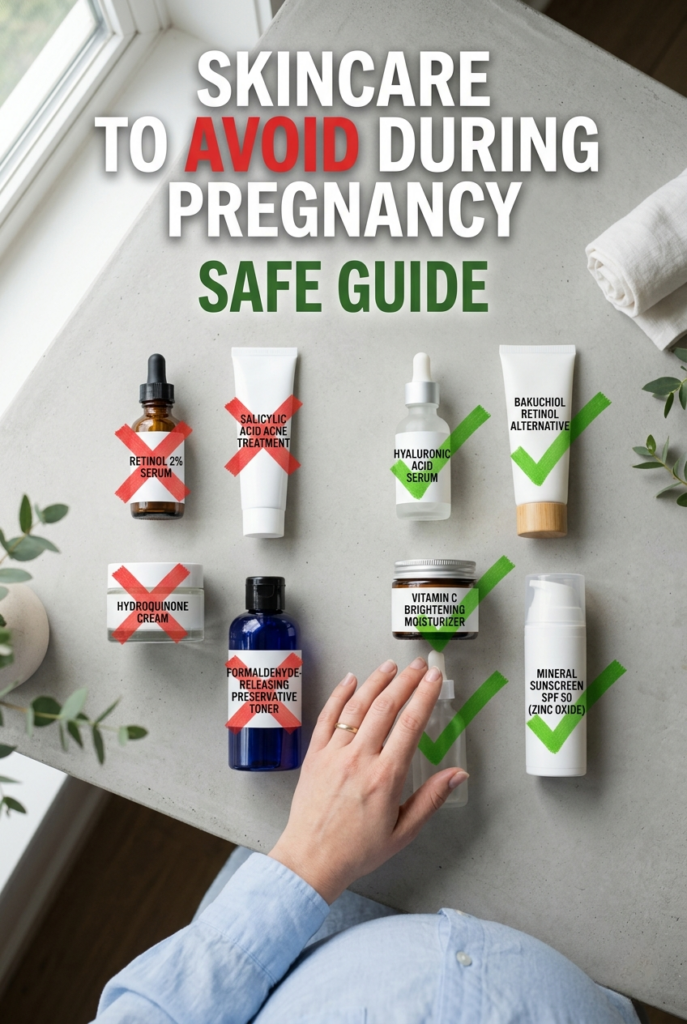
This is the most critical category to avoid. Retinoids — including tretinoin, retinol, retinaldehyde, adapalene, and all synthetic vitamin A derivatives — are among the most teratogenic (fetal-harming) substances identified in dermatological research. High-dose oral vitamin A is definitively linked to severe birth defects, and while topical retinoids deliver far smaller amounts systemically, dermatologists and obstetricians universally recommend complete avoidance throughout pregnancy as a precaution. This includes prescription retinoid creams, over-the-counter retinol serums, and products containing retinyl palmitate or retinyl acetate. Check every skincare product label for any ingredient beginning with ‘retin’ or ‘retinyl’ and set them aside for the duration of your pregnancy.
2. Salicylic Acid in High Concentrations
Salicylic acid is one of the most effective acne-fighting ingredients available, which makes its pregnancy restrictions particularly frustrating for those experiencing pregnancy-related breakouts. In high concentrations — found in chemical peels, some toners, and dedicated acne treatments — salicylic acid has been linked to complications when used systemically during pregnancy. Low-concentration salicylic acid (below 2%) in leave-on products is generally considered lower risk by many dermatologists, but the safe approach during pregnancy is to replace salicylic acid entirely with the safer alternatives listed below. Always discuss with your doctor.
3. Hydroquinone
Hydroquinone is a skin-bleaching ingredient commonly used for melasma and hyperpigmentation — both of which are more common during pregnancy due to hormonal-driven melanin overproduction. However, hydroquinone has one of the highest absorption rates of any topical skincare ingredient, with studies showing that 35 to 45% of applied hydroquinone enters systemic circulation. Until more comprehensive safety research is available, avoiding it during pregnancy is the recommended approach. Pregnancy melasma is better managed with safe alternatives and typically resolves or improves after delivery.
4. Chemical Sunscreen Filters
Several chemical UV filters — specifically oxybenzone, avobenzone, octinoxate, and homosalate — have raised safety questions due to their systemic absorption and potential hormonal activity. While the evidence is not definitive, many dermatologists recommend switching to mineral sunscreens containing zinc oxide or titanium dioxide during pregnancy. Mineral sunscreens sit on the skin surface and physically deflect UV rays rather than absorbing them — providing equivalent UV protection without systemic absorption concerns.
5. Certain Essential Oils
Not all essential oils are safe during pregnancy. Clary sage, rosemary, jasmine, juniper, and cedarwood essential oils are associated with uterine stimulation and should be avoided particularly in the first trimester. Even oils generally considered safe should be used at very low dilutions during pregnancy as the heightened skin sensitivity of pregnancy increases both absorption and reaction potential. Check any aromatherapy, facial oil, or natural beauty product ingredient list for essential oil content and research each one or consult your midwife.
6. Formaldehyde-Releasing Preservatives
Several common cosmetic preservatives release small amounts of formaldehyde as they break down — including DMDM hydantoin, imidazolidinyl urea, diazolidinyl urea, and quaternium-15. These are found in many mainstream shampoos, conditioners, nail polishes, and some skincare products. Formaldehyde is a known carcinogen and should be minimised during pregnancy. Check ingredient lists for these preservative names and choose formaldehyde-free alternatives.
Safe Alternatives That Work Beautifully During Pregnancy
For anti-ageing: Vitamin C serums (natural ascorbic acid is safe and effective), bakuchiol (a plant-derived retinol alternative proven to produce similar cell-turnover results without safety concerns), and rosehip oil applied to damp skin.
For acne: Gentle cleansing twice daily, azelaic acid (generally considered safe during pregnancy and effective for both acne and melasma), and diluted tea tree oil spot treatment.
For melasma: Broad-spectrum mineral SPF every morning without exception is the single most effective melasma management tool during pregnancy — preventing UV-triggered melanin production that darkens existing patches.
For stretch marks: Pure shea butter, pure coconut oil, or pure rosehip oil massaged daily into areas prone to stretching — abdomen, hips, and breasts — from the second trimester onwards.
For sunscreen: Zinc oxide or titanium dioxide mineral sunscreen, SPF 30 or higher, every single morning.
| Pro Tip: Read ingredient labels on every product — including products you have been using for years — not just new ones. Many familiar skincare products contain ingredients from the avoid list. Keep a simple note on your phone of the ingredient names to watch for so you can check labels quickly while shopping. |
Pregnancy is a time to simplify your skincare routine and focus on the safest, gentlest options. Mineral SPF every morning, gentle cleansing, a safe moisturiser, and possibly azelaic acid or vitamin C — that is genuinely all most pregnant women need for healthy, well-cared-for skin. Your skin will thank you and so will your baby.