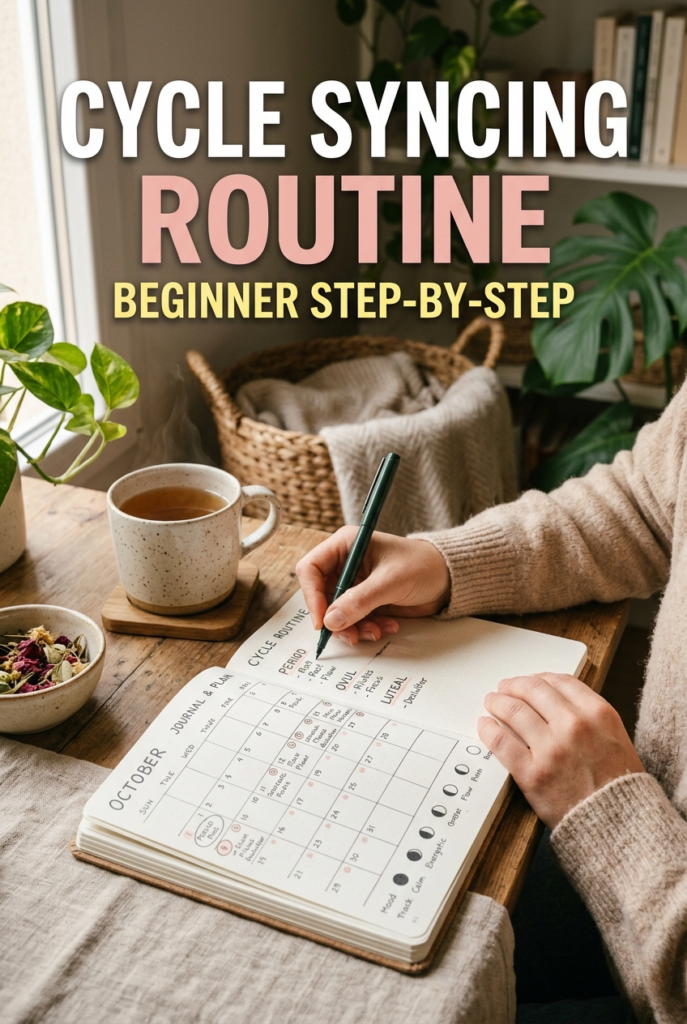
Cycle syncing is the practice of aligning your diet, exercise, work habits, and self-care with the four phases of your menstrual cycle — working with your hormones rather than against them. It sounds complex but the concept is beautifully simple: your hormone levels change predictably throughout the month, and so does your energy, strength, focus, appetite, and emotional state. When you understand these natural shifts and adapt your lifestyle to match them, everything — from workouts to productivity to skin health — improves.
This beginner guide covers everything you need to start cycle syncing today, including what each phase involves, exactly what to eat and how to exercise in each one, and the simple daily habits that make the most difference. No apps required. No complicated protocols. Just a deeper understanding of your own body.
| Science Says: Research published in the Journal of Physiology found that women perform differently across their menstrual cycle — strength is highest in the follicular phase when oestrogen peaks, while endurance and fat oxidation are enhanced in the luteal phase when progesterone rises. Adapting training to match these hormonal shifts improves performance, reduces injury risk, and accelerates results compared to training the same way every day. |
Step 1: Track Your Cycle and Identify Your Phases
Before you can sync with your cycle, you need to know where you are in it. The menstrual cycle has four phases, each lasting approximately one week for a typical 28-day cycle (though cycles vary between 24 and 38 days and both are normal). Download a free cycle tracking app — Clue, Flo, or Natural Cycles — and log the first day of your period as Day 1. Track your period start and end, and note any symptoms, energy levels, and mood changes daily. After two to three months of tracking, patterns will emerge that make each phase predictable and plannable.
Phase 1: Menstrual Phase (Days 1 to 5) — Rest and Restore
What Is Happening Hormonally
Oestrogen and progesterone are at their lowest levels. The uterine lining sheds. Energy is naturally low and the body is focused internally on renewal.
What to Eat
Focus on iron-rich foods to replace what is lost through bleeding — red meat, lentils, spinach, and pumpkin seeds. Eat warming, easily digestible foods: soups, stews, cooked vegetables rather than raw. Reduce caffeine if you notice it worsens cramps. Increase omega-3 foods — salmon, walnuts, flaxseeds — to reduce prostaglandins that cause cramping.
How to Exercise
This is your rest phase. Gentle movement only — walking, restorative yoga, light stretching. Forcing intense exercise during menstruation increases cortisol and worsens inflammation. Honour the body’s need to slow down. This is not laziness — it is intelligent self-management.
Self-Care Focus
Prioritise sleep and warmth. Use a hot water bottle for cramps. Reduce your social and professional commitments where possible. This is the week for rest, reflection, and gentle nourishment.
Phase 2: Follicular Phase (Days 6 to 13) — Energy Rising
What Is Happening Hormonally
Oestrogen rises steadily as follicles develop in the ovaries. Energy, mood, confidence, and cognitive sharpness all improve. This is the most productive and energetic week of the cycle for most women.
What to Eat
Focus on lighter, fresh foods — salads, lean proteins, fermented foods for gut health. Seeds: flaxseeds and pumpkin seeds specifically support oestrogen metabolism in this phase (the first phase of seed cycling). Increase complex carbohydrates for the energy demands of this active phase.
How to Exercise
This is your strongest phase — perfect for high-intensity exercise, strength training, HIIT, and trying new physical challenges. Your body recovers faster and performs better in the follicular phase than any other. Push yourself here.
Self-Care Focus
Use this high-energy, clear-minded phase for creative projects, social plans, and tasks that require concentration and motivation. Brain function is sharp — schedule important meetings, difficult conversations, and creative work in this window.
Phase 3: Ovulatory Phase (Days 14 to 16) — Peak Power
What Is Happening Hormonally
Oestrogen peaks and LH surges to trigger ovulation. This is the highest-energy, most socially confident, most communicative phase of the cycle. Testosterone also rises briefly, increasing libido, drive, and assertiveness.
What to Eat
Anti-inflammatory foods to support the brief post-ovulation inflammatory response: berries, leafy greens, and cruciferous vegetables. Lighter meals — the body is at peak efficiency and does not need heavy food to feel energised.
How to Exercise
Your peak performance window. Strength is highest, pain tolerance is highest, and motivation is naturally elevated. This is the week for personal bests, challenging group classes, and your most demanding workouts.
Phase 4: Luteal Phase (Days 17 to 28) — Wind Down
What Is Happening Hormonally
Progesterone rises after ovulation and then falls sharply toward the end of this phase. This hormonal shift drives PMS symptoms — mood changes, bloating, food cravings, fatigue, and skin breakouts — in women with significant hormonal fluctuations.
What to Eat
This is the most important phase for dietary management of PMS. Increase magnesium-rich foods — dark chocolate, pumpkin seeds, leafy greens — to reduce cramping and mood changes. Reduce salt to manage bloating. Increase complex carbohydrates as progesterone raises energy needs. Sunflower and sesame seeds support progesterone metabolism in this phase (second phase of seed cycling). Reduce caffeine and alcohol, which worsen PMS symptoms significantly.
How to Exercise
Moderate intensity exercise works best in the luteal phase — yoga, Pilates, moderate strength training, and long walks. The early luteal phase (days 17 to 22) still has reasonable energy. The late luteal phase (days 23 to 28) calls for gentler movement and more rest as the body prepares for menstruation.
Self-Care Focus
Reduce commitments in the late luteal phase. This is not the week for major decisions, high-pressure events, or social overextension. Turn inward — journaling, nesting, quiet activities. Managing this phase well determines how smoothly the next menstrual phase feels.
| Pro Tip: Start cycle syncing with just one change — your exercise. For one full cycle, simply adjust your workout intensity to match your phase: rest in the menstrual phase, build in the follicular phase, push in the ovulatory phase, and reduce in the late luteal phase. Most women notice a dramatic difference in how their body responds to the same exercises at different points in the cycle — and this one change alone makes the concept of cycle syncing real and motivating. |
Cycle syncing is one of the most empowering health practices available to women — not because it adds more to your plate but because it helps you understand and work with the rhythms that are already governing your energy, mood, and body every month. Start tracking today. Make one change this cycle. The insight you gain will change how you relate to your body permanently.