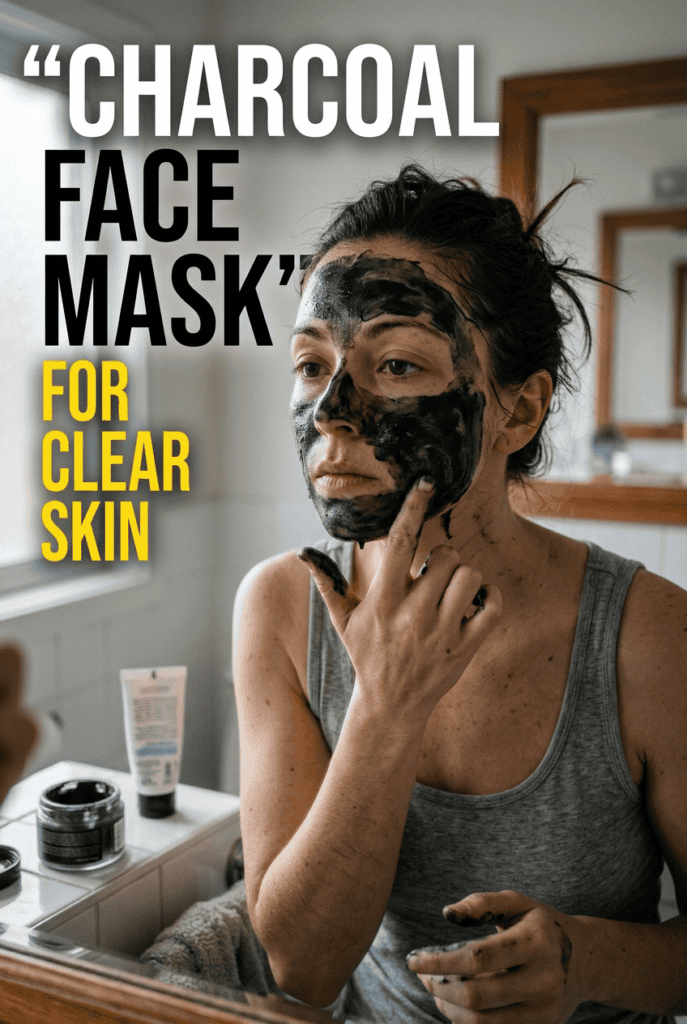
Activated charcoal face masks have become one of the most popular skincare treatments worldwide — and unlike many beauty trends, this one has genuine science behind it. Activated charcoal’s extraordinary pore structure — one gram has a surface area of up to 1500 square metres — gives it a remarkable capacity to adsorb (bind to) impurities, excess sebum, bacteria, and environmental pollutants from the skin surface and pore openings. For congested, oily, or combination skin, a properly made and correctly used charcoal mask is one of the most effective deep-cleansing treatments available without a professional facial.
The key words are properly made and correctly used. Many commercial charcoal masks contain the wrong supporting ingredients, and most people use them too frequently, leave them on too long, or follow them with the wrong products. Here is the complete guide to getting genuine clear-skin results from charcoal masks.
| Did You Know? Activated charcoal is produced by heating carbon-rich materials — coconut shells, wood, or bamboo — to extremely high temperatures in the presence of gas, creating a highly porous material. The activation process creates millions of microscopic pores within the charcoal structure, producing the enormous surface area that enables it to physically bind to compounds many times its own weight. Cosmetic-grade activated charcoal is the same material used medically to treat poisoning — for the same adsorption reason. |
What Activated Charcoal Actually Does on Skin
When applied to the skin as a mask, activated charcoal adsorbs — physically binds to — sebum, dead skin cells, surface bacteria, makeup residue, environmental pollution particles, and the oxidised sebum plugs that create blackheads. As the mask dries, it pulls these materials from the pore surface and upper pore lining toward the surface of the mask, where they are rinsed away when the mask is removed. This is a surface and shallow-pore cleansing action rather than a deep extraction — it does not reach the deep sebaceous glands that produce sebum, but it effectively removes what has already accumulated at the pore opening and in the upper portion of the pore. This is why charcoal masks improve skin clarity and reduce blackhead appearance without permanently eliminating them.
DIY Charcoal Mask Recipe 1 — Basic Deep Clean Mask
Ingredients: One teaspoon of food-grade or cosmetic-grade activated charcoal powder, one tablespoon of bentonite clay, two teaspoons of apple cider vinegar or water, three drops of tea tree oil.
Method: Mix charcoal and clay together dry, then add the ACV or water a little at a time to form a smooth, spreadable paste. Add tea tree oil and mix well. Apply to clean skin avoiding the eye and lip area. Leave for 10 to 12 minutes — until just before completely dry. Rinse thoroughly with warm water followed by a cool rinse.
This combination delivers charcoal’s adsorption, clay’s deep drawing action, ACV’s pH restoration and mild exfoliation, and tea tree oil’s antibacterial properties simultaneously. It is the most comprehensive deep-cleansing combination available for oily and congested skin.
DIY Charcoal Mask Recipe 2 — Sensitive Skin Version
Ingredients: One teaspoon activated charcoal, two tablespoons aloe vera gel, one teaspoon raw honey, two drops of lavender essential oil.
Method: Mix all ingredients to a smooth paste and apply to clean skin. Leave for 10 minutes then rinse with lukewarm water.
For skin that finds clay masks too drying or tea tree oil too stimulating, this gentler formula uses aloe vera’s anti-inflammatory and hydrating properties as the base, with honey adding antimicrobial action and lavender providing soothing benefit. The charcoal still provides its full adsorption cleansing effect in this gentler carrier.
DIY Charcoal Mask Recipe 3 — Brightening Version
Ingredients: One teaspoon activated charcoal, one tablespoon plain Greek yogurt, one teaspoon turmeric, one teaspoon raw honey.
Method: Mix all ingredients to a smooth paste. Apply and leave for 12 minutes then rinse thoroughly.
This formula combines charcoal’s deep-cleansing with yogurt’s lactic acid brightening, turmeric’s melanin-inhibiting and anti-inflammatory curcumin, and honey’s antimicrobial action. The result addresses both congestion and uneven tone simultaneously — ideal for skin that has both blackheads and post-acne pigmentation.
How to Use a Charcoal Mask Correctly
Before the Mask — Steam First
For maximum effectiveness, steam your face for five minutes before applying the mask. Hold your face over a bowl of hot water with a towel draped over your head, or simply apply the mask immediately after a shower while pores are still warm and open. The heat softens the hardened sebum inside pores and opens pore openings, allowing the charcoal to reach further into the pore lining and adsorb more of the built-up debris.
During the Mask — Timing Matters
Leave the mask on for 10 to 15 minutes — until it is just beginning to dry but not completely rigid. The most effective adsorption occurs while the mask is still slightly moist and in contact with the skin. Leaving a clay-charcoal mask until it is completely hard and dry draws moisture from the skin itself rather than just impurities, causing over-drying that triggers reactive sebum overproduction — the opposite of what you want.
After the Mask — Essential Follow-Up Steps
Rinse with warm water thoroughly, then finish with a cool rinse to close pores. Apply your toner immediately to restore pH, then your moisturiser to prevent the transient dryness that follows any deep cleansing treatment. This follow-up is not optional — unmoisteurised skin after a charcoal mask overproduces sebum in response to surface dryness, clogging the very pores the mask just cleaned.
How Often to Use a Charcoal Mask
- Oily and congested skin: once per week maximum
- Combination skin: once every ten to fourteen days on oily zones only
- Normal skin: once every two weeks
- Dry or sensitive skin: once per month or avoid entirely — charcoal masks are designed for oily and congested skin types and can over-dry sensitive skin
| Important: Never use peel-off charcoal masks that require ripping from the skin — these remove not just impurities but the fine facial hairs and the natural beneficial skin oils that protect the skin barrier, causing micro-trauma and increased sensitivity. Rinse-off charcoal masks are gentler, safer, and produce better long-term pore health outcomes. |
A properly made charcoal mask used correctly once per week produces genuinely noticeable improvements in skin clarity, reduced blackhead visibility, and cleaner-feeling pores within two to three weeks of consistent use. Start with Recipe 1 if you have oily or congested skin, Recipe 2 if you have sensitivity, and always follow with toner and moisturiser for the best possible results.