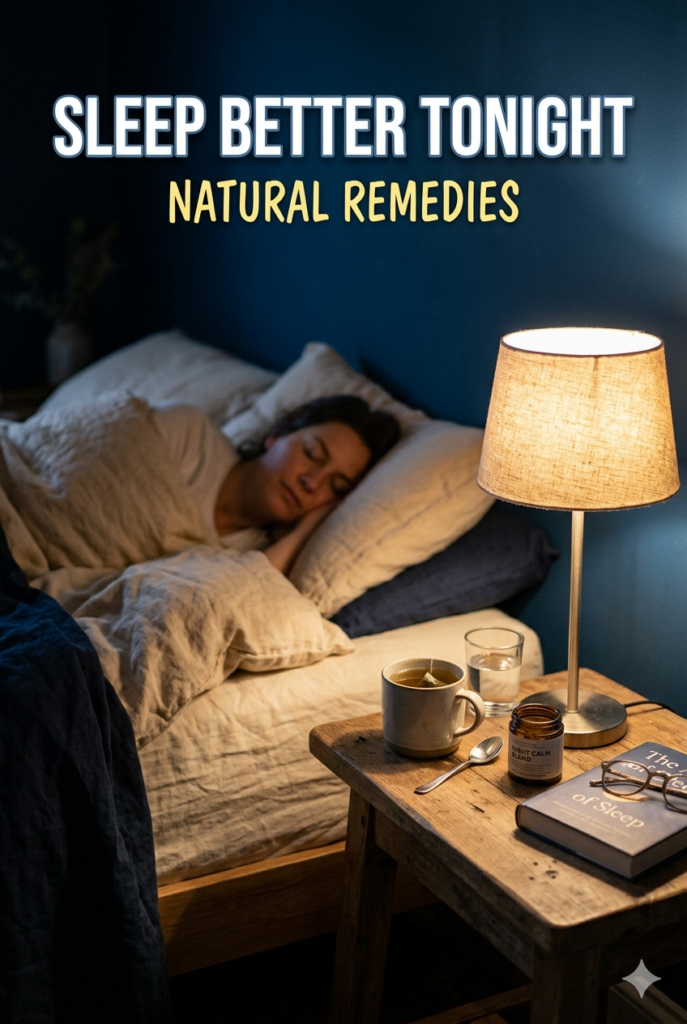
Quality sleep is one of the foundations of health — affecting immunity, metabolism, hormonal balance, mental clarity, skin health, mood, and virtually every other aspect of physical and psychological wellbeing. Yet poor sleep affects a significant proportion of the population, and for many people the first instinct is to reach for sleeping medication that disrupts natural sleep architecture, creates dependency, and produces a grogginess the following morning that compounds the original problem.
Natural sleep remedies work differently — they support the physiological conditions that the body needs to enter and maintain deep, restorative sleep rather than chemically inducing unconsciousness. These remedies are safe, non-habit-forming, and produce their best results with consistent nightly use rather than occasional application.
| Science Says: Research from the National Sleep Foundation confirms that the two most powerful physiological conditions for deep sleep are a slight drop in core body temperature and rising melatonin levels in the absence of bright light. Every effective natural sleep remedy — whether it acts through nutrition, temperature, or nervous system calming — facilitates one or both of these conditions. |
Remedy 1: Magnesium Glycinate Before Bed
Magnesium is the most important mineral for sleep quality — and deficiency in it is one of the most common and most overlooked causes of insomnia and poor sleep. Magnesium activates GABA (gamma-aminobutyric acid) receptors in the brain — the same inhibitory neurotransmitter pathway targeted by benzodiazepine sleep medications, but gently and without dependency risk. It relaxes tense muscles, reduces cortisol, regulates melatonin production, and calms the overactive nervous system that keeps many people lying awake despite feeling tired. Magnesium glycinate — the most bioavailable and most stomach-gentle form — taken at 300 to 400mg thirty minutes before bed produces noticeable improvement in sleep onset and sleep depth for most people within three to five nights of consistent use.
Remedy 2: Chamomile and Passionflower Tea
Chamomile contains apigenin — a flavonoid that binds to GABA-A receptors and produces a mild sedative and anxiolytic effect. Multiple clinical trials confirm that chamomile tea and extract reduce the time it takes to fall asleep and improve overall sleep quality in people with mild to moderate insomnia. Passionflower — less commonly used but with even stronger clinical evidence for sleep — contains compounds that increase GABA levels in the brain, reducing racing thoughts and mental agitation that prevent sleep onset. Brew a tea using both herbs together, steep covered for five minutes to preserve volatile active compounds, and drink slowly 45 to 60 minutes before bed. This combination addresses both physical tension and mental restlessness simultaneously.
Remedy 3: Lavender Essential Oil
Lavender is the most researched aromatherapy ingredient for sleep — and its effectiveness goes beyond pleasant scent. Inhaling lavender activates the olfactory system in ways that reach the limbic brain directly, producing documented reductions in heart rate, blood pressure, and cortisol. Its active compounds linalool and linalyl acetate have been shown to produce measurably deeper slow-wave sleep in clinical studies. Place two drops of pure lavender essential oil on your pillow or apply to the inside of your wrists before lying down. Alternatively, use a diffuser in the bedroom for 30 minutes before sleep. Consistent nightly use produces progressive improvement in sleep quality as the brain begins to associate the scent with the sleep state — a form of behavioural conditioning that enhances the physiological effect.
Remedy 4: A Warm Bath or Shower 90 Minutes Before Bed
This remedy works through elegant physiology rather than any active ingredient. A warm bath or shower raises the body’s core temperature by one to two degrees. As you cool down afterwards, core temperature drops below baseline — mimicking the natural temperature decrease that the body uses as a primary sleep-onset signal. Research shows that a warm bath taken 90 minutes before bed reduces the time it takes to fall asleep by an average of ten minutes and increases the proportion of time spent in deep sleep. Adding a few drops of lavender or chamomile essential oil to the bath amplifies the effect by combining the temperature-drop mechanism with the aromatherapy benefits described above.
Remedy 5: Screen-Free Wind-Down — The Non-Negotiable Habit
Blue light from screens — smartphones, tablets, computers, and televisions — suppresses melatonin production by up to 90% for up to three hours after exposure by mimicking the wavelength of daylight that signals the brain to stay awake. This is not a minor inconvenience — it is a direct biological disruption of the melatonin pathway that governs sleep onset. Stopping all screen use 60 minutes before the intended sleep time allows melatonin to rise naturally and the nervous system to begin its natural wind-down. Replace screen time with reading a physical book, gentle conversation, light stretching, or any relaxing non-screen activity. Most people find they fall asleep significantly faster after just three nights of screen-free evenings — even without any other changes.
Remedy 6: Write Down Your Worries Before Closing Your Eyes
One of the most consistent causes of lying awake is the brain’s determination to hold onto unresolved thoughts, incomplete tasks, and tomorrow’s worries to prevent them from being forgotten during sleep. Research from Baylor University found that spending five minutes writing a to-do list for the following day before bed reduced time to fall asleep more effectively than writing about tasks completed — because it transferred the mental holding responsibility from working memory to the page, giving the brain permission to release the thoughts. Keep a small notebook beside the bed and write down every worry, task, and concern before lying down. Close the notebook physically as a ritual signal that these thoughts have been dealt with for the night.
Creating Your Nightly Sleep Ritual
90 minutes before bed: Warm bath or shower
60 minutes before bed: All screens away. Chamomile and passionflower tea. Lavender oil on pillow.
30 minutes before bed: Magnesium glycinate. Five-minute worry journal. Light stretching or reading.
Bedtime: Cool, dark room. Consistent time every night.
| Pro Tip: Consistency of bedtime matters more than any individual remedy. Your brain produces melatonin in anticipation of your habitual sleep time — when sleep time is irregular, this anticipatory melatonin release does not occur reliably. Going to bed at the same time every night, including weekends, is the single most powerful long-term sleep improvement available and amplifies the effectiveness of every other remedy in this guide. |
Better sleep tonight is genuinely achievable with these simple natural remedies — and better sleep every night is achievable with consistent application of two or three of them as part of a regular pre-bed routine. Start with magnesium glycinate and the screen-free hour tonight. Add chamomile tea and the warm shower this week. Build the full ritual over the next two weeks and give your sleep the consistent, gentle support it has been waiting for.