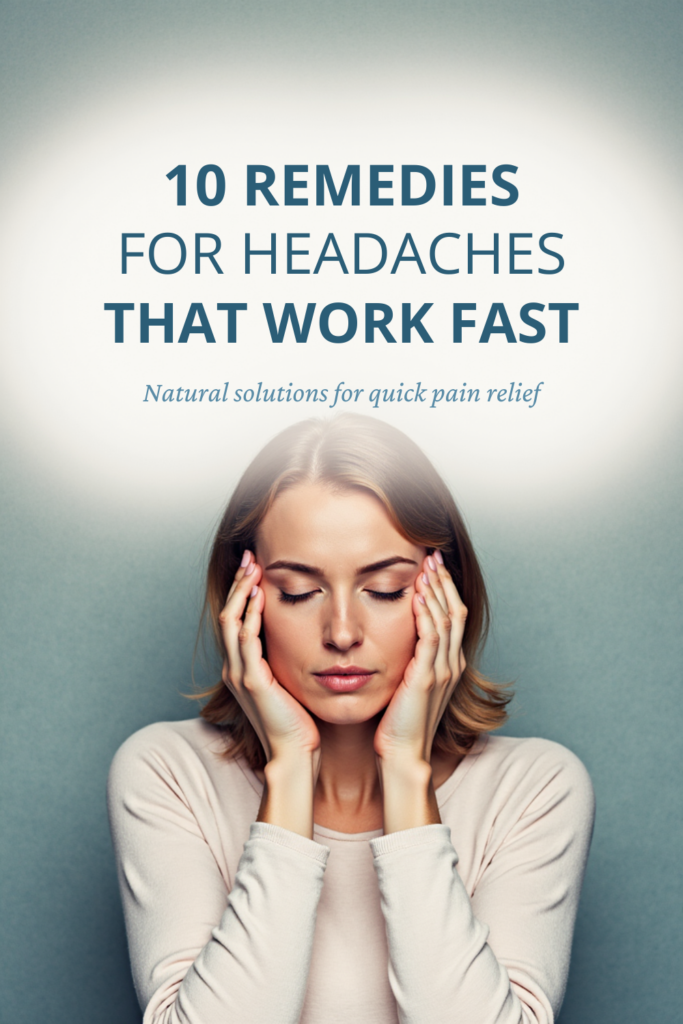
Headaches are one of the most common complaints worldwide, affecting people of all ages. Whether it’s a tension headache after a long day at work, a migraine triggered by stress, or a dull throb from dehydration, the desire for fast relief is universal.
The good news? You don’t always need to reach for a pill bottle. Many effective remedies are already within reach. Here are 10 remedies that can help you get relief — fast.
1. Drink Water Immediate
Dehydration is one of the most overlooked causes of headaches. Even mild dehydration can trigger or intensify head pain. The fix? Simple: drink a large glass of water as soon as your headache begins.
How to do it: Drink 1–2 glasses of water right away, then continue sipping throughout the day. Aim for at least 8 glasses (2 liters) daily to prevent dehydration headaches from recurring.
2. Apply a Cold or Warm Compress
Temperature therapy is a time-tested remedy that works for different types of headaches.
- Cold compress – Best for migraines and throbbing headaches. Apply an ice pack or a cold, damp cloth to your forehead or the back of your neck for 15–20 minutes. Cold constricts blood vessels and numbs the area, reducing pain.
- Warm compress – Best for tension headaches caused by muscle tightness. Apply a warm towel or heating pad to your neck and shoulders to relax tight muscles.
3. Try Caffeine (In Moderation)
Caffeine has natural pain-relieving properties and is actually an ingredient in many over-the-counter headache medications. A small cup of coffee or tea can help constrict blood vessels and reduce headache intensity.
Important: This works best for people who don’t consume caffeine regularly. If you’re a daily coffee drinker, skipping your usual cup can cause a caffeine-withdrawal headache — so consistency is key.
4. Practice Deep Breathing or Meditation
Stress is a major headache trigger, and relaxation techniques can provide surprisingly fast relief. Deep breathing activates the parasympathetic nervous system, reducing tension throughout the body — including in your head and neck.
Try this simple technique:
- Sit or lie down in a quiet place.
- Inhale slowly through your nose for 4 counts.
- Hold for 4 counts.
- Exhale through your mouth for 6 counts.
- Repeat for 5–10 minutes.
5. Use Peppermint Oil
Peppermint oil contains menthol, which has a natural cooling and analgesic effect. Studies suggest it can be as effective as acetaminophen for tension headaches.
How to use it: Dilute a few drops of peppermint essential oil in a carrier oil (like coconut oil) and gently massage it into your temples, forehead, and the back of your neck. Avoid contact with eyes.
6. Take an Over-the-Counter Pain Reliever
When you need fast relief, an OTC medication like ibuprofen (Advil), acetaminophen (Tylenol), or aspirin can be highly effective. These are widely available and work within 30–60 minutes for most people.
Tips for safe use:
- Always follow the recommended dosage on the label.
- Avoid taking pain relievers more than 2–3 times per week, as overuse can lead to “rebound headaches.”
- If you have any medical conditions or take other medications, consult your doctor first.
7. Massage Your Temples and Neck
Gentle self-massage can relieve muscle tension that contributes to tension headaches. It also improves circulation to the area, which can ease pain.
Where to massage:
- Temples – Use your fingertips and apply gentle circular pressure.
- Base of the skull – Press gently at the two points where your neck meets your skull.
- Shoulders and neck – Roll your neck slowly and knead tight shoulder muscles.
Even just 5 minutes of massage can make a noticeable difference.
8. Rest in a Dark, Quiet Room
Light and sound sensitivity can amplify headache pain — especially with migraines. Removing these stimuli gives your nervous system a chance to calm down.
What to do: Lie down in a darkened room, close your eyes, and try to rest or sleep for 20–60 minutes. Even a short nap can significantly reduce headache intensity. Use an eye mask and earplugs if needed.
9. Try Acupressure
Acupressure is an ancient technique that targets specific pressure points to relieve pain. One of the most well-known points for headaches is the LI-4 point (Hegu), located in the webbing between your thumb and index finger.
How to do it:
- Use your opposite thumb and index finger to pinch the fleshy area between your thumb and index finger.
- Apply firm, circular pressure for 4–5 minutes.
- Switch hands and repeat.
This technique can be done anywhere and costs nothing.
10. Eat Something If You Haven’t
Low blood sugar (hypoglycemia) is a common but often forgotten headache trigger. If you’ve skipped a meal or gone several hours without eating, your blood sugar may have dropped — and your head is letting you know.
What to eat: Opt for a balanced snack that combines complex carbohydrates and protein, such as:
- Whole grain crackers with peanut butter
- A banana with yogurt
- A handful of mixed nuts
Avoid sugary snacks, which can cause a blood sugar spike followed by another crash.
When to See a Doctor
While most headaches are benign and respond well to the remedies above, some headaches require medical attention. Seek immediate care if your headache:
- Is sudden and severely intense (“thunderclap” headache)
- Is accompanied by fever, stiff neck, confusion, or vision changes
- Follows a head injury
- Is progressively worsening over days or weeks
- Does not respond to any treatment
Final Thoughts
Headaches don’t have to derail your day. Whether you choose to hydrate, apply a compress, use essential oils, or simply rest, the key is acting quickly. Many of these remedies work best when used at the first sign of a headache — don’t wait for the pain to peak.
Bookmark this list so you’re always ready the next time a headache strikes.