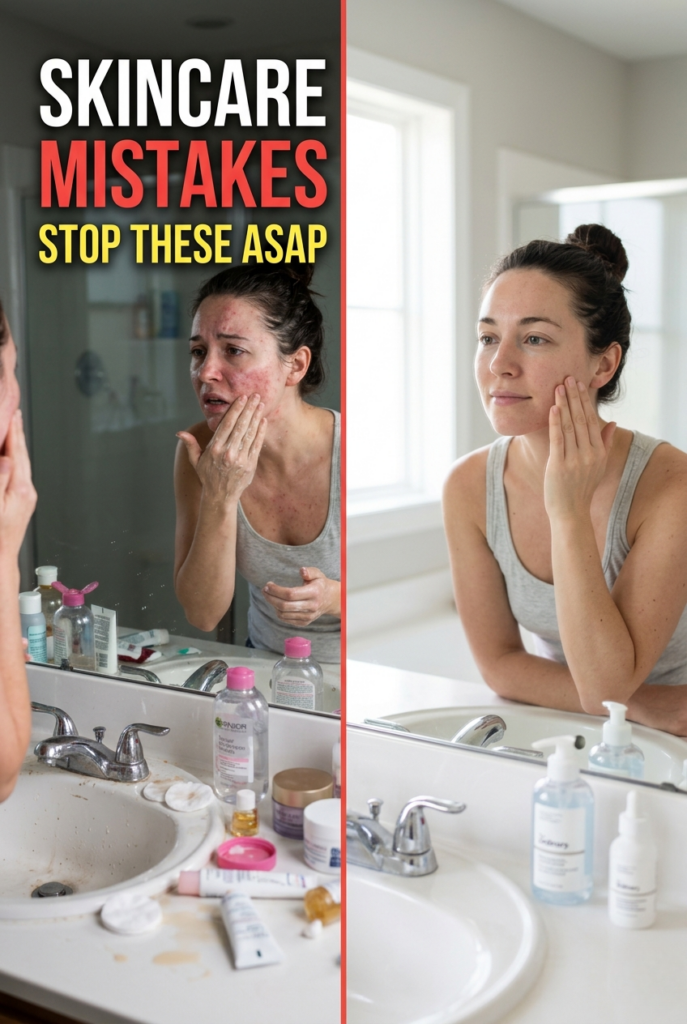
Most people who struggle with their skin are not using the wrong products — they are making a handful of simple routine mistakes that quietly undo every good thing they do. The frustrating part is that these mistakes are easy to make, widely shared as normal practice, and almost never identified as the real reason skin is not improving. Here are the most common skincare routine mistakes — and the simple fixes that make an immediate difference.
| Did You Know? A study published in the British Journal of Dermatology found that incorrect skincare application habits — wrong order, wrong technique, wrong timing — reduced the effectiveness of active skincare ingredients by up to 50%. Doing the right things in the right way matters as much as choosing the right products. |
Mistake 1: Applying Products in the Wrong Order
Skincare products need to be applied from thinnest to thickest consistency to absorb correctly. The correct order is: cleanser, toner, serum, eye cream, moisturiser, and then SPF (morning only) or facial oil (evening). Applying a thick moisturiser before a lightweight serum creates a physical barrier that prevents the serum from reaching the skin at all — making it useless. If you have been applying your products in the wrong order, correcting this single thing can make products you already own work significantly better immediately.
Mistake 2: Using Too Much Product
More product does not mean better results — for most skincare steps, the opposite is true. Applying too much cleanser strips the skin more aggressively than needed. Too much serum can overwhelm the skin and cause breakouts from ingredient buildup. Too much SPF applied thickly often leads to white cast and clogged pores that make people give up on SPF altogether. The correct amounts are smaller than most people use: a pea-sized amount of cleanser, two to three drops of serum, and a nickel-sized amount of moisturiser for the full face.
Mistake 3: Not Waiting Between Product Steps
Applying the next product immediately on top of a still-wet previous one dilutes both products and reduces their absorption. After your toner, wait 30 seconds before applying serum. After serum, wait 60 seconds before moisturiser. After moisturiser, wait two minutes before SPF. These pauses allow each product to absorb partially before the next is applied on top, maximising the effectiveness of every step. This is particularly important with active ingredients like vitamin C, retinol, and AHA acids that need direct skin contact to work.
Mistake 4: Exfoliating Too Often
Exfoliation is one of the most beneficial skincare steps — and one of the most over-done. The skin’s protective barrier takes three to five days to recover from exfoliation, during which time it is more susceptible to irritation, UV damage, and moisture loss. Exfoliating daily or even every other day chronically weakens the barrier, causes sensitivity and redness that many people then try to treat with more products, and makes acne worse rather than better. Two to three times per week maximum, with at least one rest day between sessions, is the right frequency for most skin types.
Mistake 5: Skipping SPF on Cloudy Days or Indoors
UV radiation that causes skin ageing, hyperpigmentation, and increased acne inflammation does not stop on cloudy days — up to 80% of UV rays penetrate cloud cover. It does not stop indoors — UVA rays penetrate standard glass windows fully. Every day you skip SPF is a day of UV damage accumulating on the skin. The dark spots, fine lines, and redness that skincare products work to address are being actively created by unprotected daily UV exposure. SPF every single morning is the most important and most skipped step in skincare routines.
Mistake 6: Touching and Picking at Your Skin
Picking at pimples forces bacteria deeper into the pore, causes post-inflammatory hyperpigmentation that lasts months, and creates scarring. But the less obvious touching problem is the constant unconscious face-touching that happens throughout the day — resting chin in hand, rubbing forehead, scrolling and touching your phone then your face. Every touch transfers oil and bacteria to skin that you just cleansed. Being conscious of this habit and stopping it reduces new breakout frequency more than many active treatments.
Mistake 7: Using Expired or Degraded Products
Skincare products expire — and many active ingredients degrade significantly before their printed expiry date once opened and exposed to air and light. Vitamin C serum that has turned orange or brown has oxidised and is no longer active. Retinol exposed to too much light has lost its potency. SPF past its expiry date may not provide its stated protection. Check the open-jar symbol on packaging (the number indicates months after opening) and store actives in cool, dark conditions. Using degraded products gives you the illusion of a skincare routine without the actual results.
| Pro Tip: Do a skincare routine audit: line up every product you use and check the expiry dates, the correct application order, and the amounts you are using. Most people discover at least two or three things they have been doing incorrectly — and fixing them produces immediate improvement in how their current products perform. |
You do not necessarily need new products — you may just need to use your current ones correctly. Stop these seven mistakes, apply products in the right order, give each step the right amount of time, and protect your skin with SPF every day. The results from what you already have will surprise you.