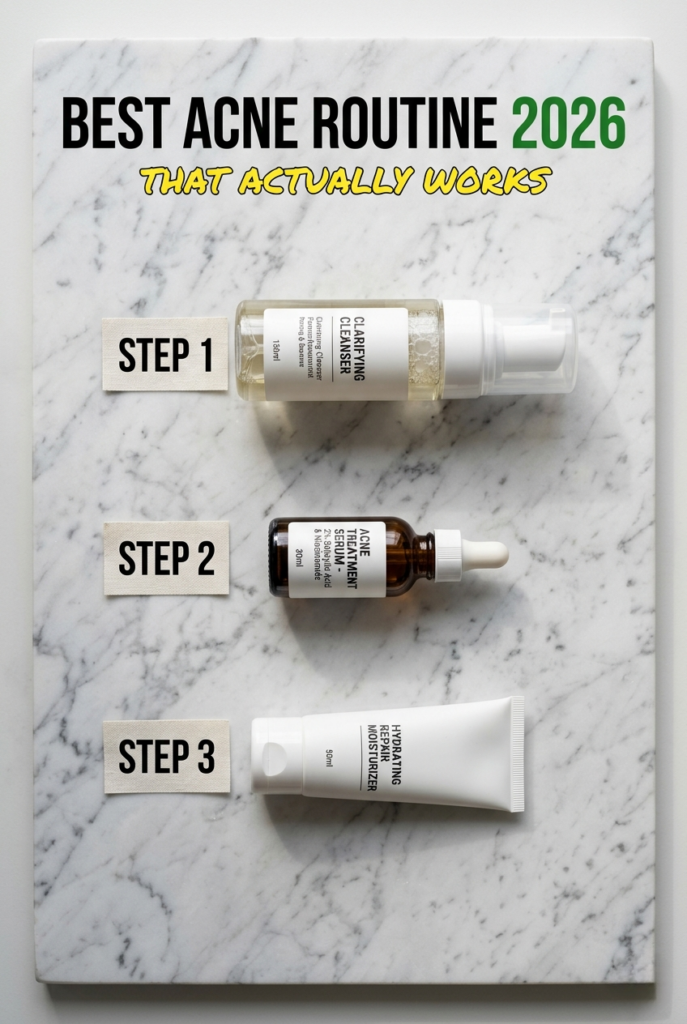
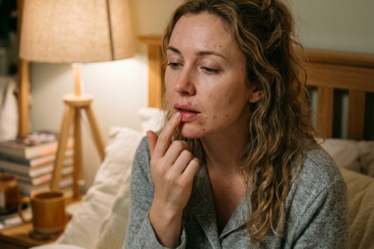
With new skincare trends appearing every few months and social media flooded with product recommendations, it can feel impossible to know which acne routine actually works. The answer, in 2026 as always, is not the newest ingredient or the most expensive product — it is the right combination of proven steps, done consistently. Here is the best acne skincare routine that actually clears skin, built on ingredients with real evidence behind them and real results for real people.
| Science Says: Dermatology research from 2024 and 2025 consistently confirms that the most effective acne routines combine three core elements: a barrier-protecting cleanser, a targeted antibacterial or anti-inflammatory treatment, and consistent SPF. The addition of niacinamide has emerged as one of the strongest evidence-backed ingredients for reducing acne, oil production, and post-acne marks simultaneously. |
What Makes an Acne Routine Actually Work in 2026
The biggest shift in acne skincare thinking over the past few years has been away from aggressive stripping and toward barrier-supportive care. Older acne routines focused on drying out the skin as much as possible — high-alcohol toners, strong benzoyl peroxide, harsh scrubs. The result was chronically irritated, over-sensitised skin that produced even more oil as a defence response. The best 2026 approach treats acne while protecting the skin barrier, keeping the skin calm, hydrated, and resilient.
The Complete Routine
Morning — Step by Step
Cleanser: A gentle gel cleanser — CeraVe Foaming, La Roche-Posay Toleriane, or a natural castile soap diluted 1:5 with water. 60 seconds, lukewarm water, pat dry.
Niacinamide Serum: Apply a 5 to 10% niacinamide serum to the full face. Niacinamide reduces sebum production, minimises pores, fades post-acne marks, and calms inflammation — making it the single most versatile acne ingredient available without a prescription. Apply before moisturiser.
Moisturiser: A lightweight gel moisturiser — non-comedogenic and fragrance-free. Neutrogena Hydro Boost, Paula’s Choice Skin Balancing, or pure aloe vera gel are all excellent options.
SPF: A lightweight mineral SPF 30 or higher. EltaMD UV Clear contains niacinamide and is formulated specifically for acne-prone skin. Apply as the final morning step.
Evening — Step by Step
Oil Cleanser: Massage a small amount of micellar water or a gentle oil cleanser into dry skin to dissolve sunscreen and pollution. Rinse well.
Gel Cleanser: Follow with your regular gentle gel cleanser for a thorough clean. Pat dry.
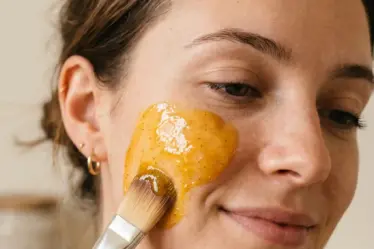
Treatment: Alternate nights: benzoyl peroxide 2.5% on one night, salicylic acid 1 to 2% the next. Or use a retinol or retinoid (start with the lowest concentration) three nights per week for cell turnover and pore clearing. Beginners: tea tree oil diluted in jojoba oil applied to spots only is a gentler starting point.
Moisturiser: A slightly richer cream than morning — skin regenerates overnight and benefits from more nourishment during this time.
The Ingredients That Actually Work in 2026
- Niacinamide (5 to 10%) — reduces oil, fades marks, calms inflammation. Daily use, morning or evening
- Salicylic acid (0.5 to 2%) — dissolves inside pore lining, prevents and treats blackheads and whiteheads
- Benzoyl peroxide (2.5%) — kills acne bacteria effectively at low concentrations without excess irritation
- Retinol or retinoids — accelerates cell turnover, prevents pore clogging, fades post-acne marks over time
- Azelaic acid (10 to 20%) — reduces inflammation, kills bacteria, fades hyperpigmentation. Safe for sensitive skin
What to Avoid in Your Acne Routine
- High-alcohol toners that strip the skin and trigger oil overproduction
- Heavy oils (coconut oil, olive oil) on acne-prone facial skin — highly comedogenic
- Physical scrubs on active breakouts — spread bacteria and cause micro-trauma
- Mixing retinol and AHA or BHA on the same night until your skin is used to each individually
- Changing products every two weeks before giving them time to work
| Pro Tip: The 2026 skincare approach for acne is all about skin barrier health. If your skin is perpetually red, tight, or reacting to everything, stop all actives for two weeks and use only cleanser, moisturiser, and SPF. Once the barrier recovers, reintroduce one product at a time. A healthy barrier responds to acne treatments far better than a compromised one. |
The best acne skincare routine in 2026 is not the most complicated one — it is the most consistent one. Gentle cleansing, niacinamide, a targeted treatment, and SPF every single day. That is genuinely all you need. Start simple, stay consistent, and give it six weeks.