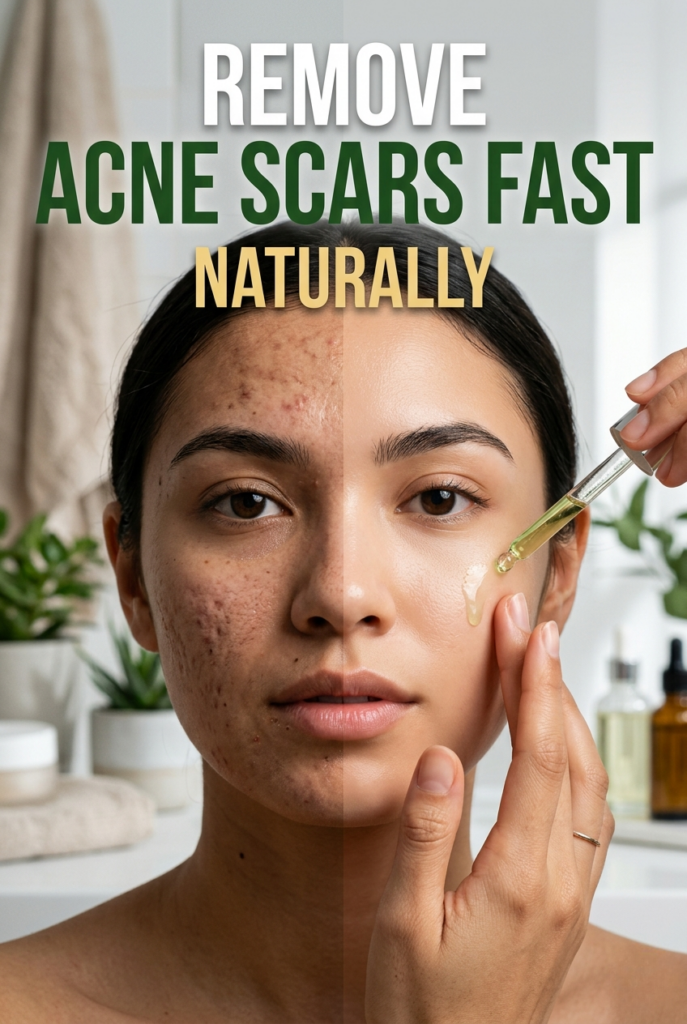
Acne scars are the frustrating legacy of breakouts that have healed — but left their mark. The two most common types are post-inflammatory hyperpigmentation (PIH) — the flat dark or red marks left when inflammation triggers excess melanin production in healing skin — and atrophic scars — the pitted, depressed marks caused by collagen loss during severe acne. Understanding which type you are dealing with determines which treatments will be most effective.
PIH marks are not true scars — they are discoloration in the skin surface that fades with time and can be significantly accelerated with targeted brightening treatments. Atrophic scars involve structural skin changes and require treatments that stimulate new collagen production to fill the depressed areas. Many people have both types simultaneously. The natural remedies in this guide address both — brightening hyperpigmentation and stimulating the collagen repair needed for textural improvement.
| Science Says: Post-inflammatory hyperpigmentation is caused by melanocytes overproducing melanin in response to inflammation — the same protective response that produces a suntan. Because it is a pigmentation response rather than structural damage, it is significantly more responsive to topical treatment than atrophic scarring. Consistent treatment for six to twelve weeks produces the most visible results. |
Remedy 1: Vitamin C Serum — The Gold Standard Brightener
Vitamin C is the most evidence-backed topical brightening ingredient available — both in pharmaceutical products and natural form. It inhibits tyrosinase (the melanin-producing enzyme), breaks down existing melanin deposits, and stimulates collagen synthesis that improves skin texture over atrophic scars. For a natural vitamin C treatment, mix two teaspoons of fresh lemon juice with one teaspoon of aloe vera gel and half a teaspoon of rose water. Apply to acne scars with a cotton pad, leave for 10 minutes, then rinse. Use daily in the evening. Results in brightening of PIH marks are visible within three to four weeks of consistent daily use.
Remedy 2: Rosehip Oil — The Scar-Fading Oil
Rosehip oil is arguably the most effective natural oil for acne scar treatment. It is extraordinarily rich in vitamin A (as all-trans retinoic acid and beta-carotene), vitamin C, and essential fatty acids that collectively stimulate skin cell renewal, inhibit melanin production, and support the collagen synthesis needed to improve atrophic scar texture. Clinical studies have confirmed that rosehip oil applied twice daily significantly reduces the appearance of both PIH and atrophic acne scars within eight to twelve weeks. Apply two to three drops to clean skin and massage into scar areas each morning and evening.
Remedy 3: Aloe Vera Gel — Daily Healing Treatment
Aloe vera contains aloesin — a compound specifically shown to inhibit hyperpigmentation by directly reducing melanin overproduction in healing skin — alongside growth factors that accelerate new skin cell production and collagen-stimulating acemannan. Applied daily and left on without rinsing, aloe vera gel delivers continuous scar-healing compounds to affected areas throughout the day or overnight. For maximum effect, apply a generous layer of pure aloe vera gel to acne scars before bed every night and allow to absorb without rinsing. This gentle overnight treatment is safe for all skin types and produces measurable improvement in both PIH and scar texture over six to eight weeks.
Remedy 4: Honey and Cinnamon Mask
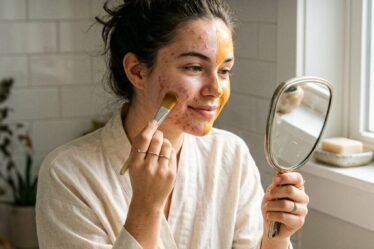
Raw honey contains hydrogen peroxide, gluconic acid, and enzymes that gently lighten hyperpigmented scars while simultaneously fighting the residual bacteria that cause new breakouts in healing skin. Cinnamon adds cinnamaldehyde — a compound that stimulates collagen production and improves circulation to scar tissue, accelerating the healing and remodeling process. Mix two tablespoons of raw honey with half a teaspoon of ground cinnamon. Apply to acne scars and leave for 20 minutes before rinsing. Use three times per week. Results in both brightening and texture improvement are visible within four to six weeks of consistent use.
Remedy 5: Turmeric and Coconut Oil Treatment
Turmeric’s curcumin is a powerful tyrosinase inhibitor — blocking melanin production at the enzymatic level — and a potent anti-inflammatory that reduces the ongoing inflammation in healing acne scars that perpetuates PIH formation. Coconut oil provides deep moisturization that improves skin texture over scar areas and enhances the absorption of curcumin into the deeper skin layers where it needs to act. Mix half a teaspoon of turmeric powder with one tablespoon of coconut oil. Apply to scars every evening and leave overnight. Rinse in the morning. Consistent nightly use produces visible lightening of dark scars within four to six weeks.
Remedy 6: Apple Cider Vinegar Spot Treatment
ACV’s acetic acid, malic acid, and lactic acid work together as a natural chemical exfoliant that accelerates the turnover of darkened scar cells and brings fresh, unaffected skin cells to the surface more quickly. Dilute one part raw ACV with three parts water and apply to individual acne scars using a cotton swab. Leave for five minutes (reduce to two minutes if any stinging occurs) then rinse thoroughly. Do not apply to active breakouts or broken skin — only to healed scars. Use daily in the evening. This gentle daily exfoliation accelerates PIH fading more rapidly than most other natural treatments.
Remedy 7: Daily Exfoliation — Accelerate Cell Turnover
The fastest way to fade surface PIH marks is to accelerate the removal of the darkened skin cells that carry the pigment. Consistent gentle exfoliation two to three times per week removes these cells more rapidly, bringing unpigmented fresh cells to the surface and visibly lightening scars with each treatment. Use a gentle sugar and honey scrub — mix one tablespoon of brown sugar with one teaspoon of raw honey and massage in circular motions for 60 seconds. Rinse thoroughly and follow immediately with a brightening serum while skin is maximally receptive. Results of consistent exfoliation on PIH are visible within two to three weeks.
Remedy 8: Protect Scars From Sun — The Non-Negotiable
UV exposure is the single most powerful darkener of acne scars — it triggers additional melanin production in already hyperpigmented areas, undoing every brightening treatment you apply. Without daily SPF application to acne-scarred areas, every other remedy in this guide will be working against a constant tide of UV-driven re-darkening. Apply broad-spectrum SPF 30 or higher to all scar areas every single morning without exception. This is not optional — it is the foundation that allows every other natural treatment to achieve its full potential.
| Pro Tip: Consistency is the most important factor in acne scar treatment — more important than which specific remedy you use. Any two or three of the methods in this guide, applied consistently every day for eight to twelve weeks, will produce more visible results than the most expensive clinical treatment used irregularly. Photograph scars monthly in consistent lighting to track your progress. |
Acne scars are not permanent sentences on your skin. With the right combination of natural brightening, exfoliation, collagen stimulation, and daily sun protection, even established scars respond over time. Choose two to three remedies from this guide, combine them into a consistent daily and weekly routine, protect everything with SPF, and give it twelve weeks of genuine, uninterrupted effort. Your clearest skin is ahead of you.