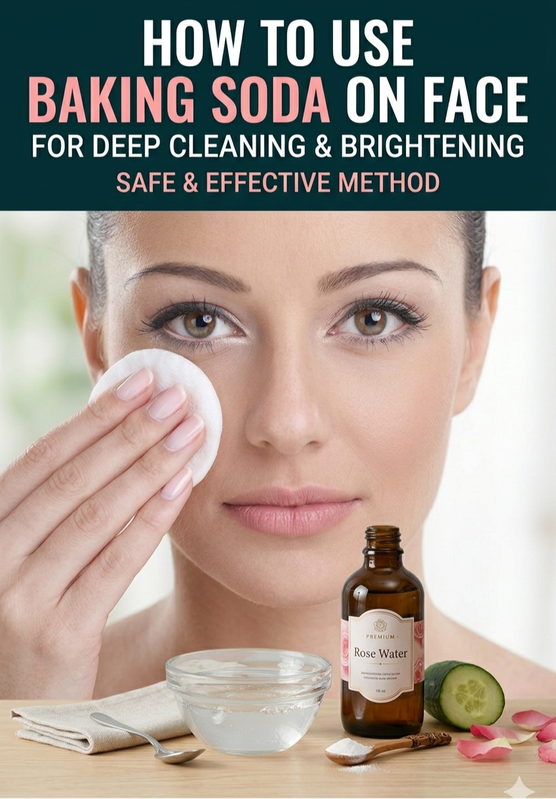
Baking soda — sodium bicarbonate — is already sitting in almost every kitchen and bathroom in the world. But most people have no idea it is also one of the most versatile, affordable, and genuinely effective skincare ingredients available. From deep-cleaning pores and banishing blackheads to fading dark spots and calming acne breakouts, baking soda works on a range of skin concerns that expensive cleansers and treatments often fail to address.
The key is knowing how to use it correctly. Applied the right way and at the right frequency, baking soda transforms skin. Applied carelessly, it can cause irritation. This guide covers seven proven, safe methods for using baking soda on your face — complete with recipes, step-by-step instructions, and everything you need to get real results without damaging your skin.
| Did You Know? Baking soda has been used in personal care for over 170 years. Its Relative Dentin Abrasivity (RDA) score is just 7 — one of the gentlest abrasive scores of any personal care ingredient — making it effective at physical exfoliation while being gentle enough for sensitive skin when used in correct dilutions. |
Why Baking Soda Works on Skin
Baking soda is a multi-action skincare ingredient that works through several simultaneous mechanisms:
Mild physical exfoliation: Its fine crystalline texture gently scrubs away dead skin cells, unclogging pores and revealing fresher, brighter skin underneath without the harshness of many commercial scrubs.
Alkaline pH adjustment: With a pH of 8.3, baking soda neutralizes the acidic environment that acne-causing bacteria thrive in — making it genuinely antibacterial as a topical treatment.
Oil and sebum control: Baking soda absorbs excess sebum from the skin surface and from within pores, reducing shine and preventing the oil buildup that leads to blackheads and breakouts.
Gentle chemical exfoliation: Baking soda’s alkalinity breaks down the bonds between dead skin cells, lifting them from the surface for a combined physical and chemical exfoliating effect.
Anti-inflammatory action: Baking soda has mild anti-inflammatory properties that reduce the redness and swelling around active pimples and irritated skin.
| Science Says: A study published in PLOS ONE found that sodium bicarbonate solution effectively inhibits Cutibacterium acnes — the primary bacterium responsible for acne — at concentrations as low as 1%. This provides direct scientific support for baking soda’s long-standing reputation as a natural acne treatment. |
7 Ways to Use Baking Soda on Your Face
| Method 1: The Classic Baking Soda Facial Scrub
Best for: Normal, oily, and combination skin Ingredients: • 1 teaspoon baking soda • Enough water to form a smooth paste (approximately half a teaspoon) • Optional: 1 drop tea tree essential oil for acne-prone skin Steps: 1. Mix baking soda with water in your palm until you have a smooth, thick paste. It should be spreadable but not watery. 2. Dampen your face with lukewarm water. 3. Apply the paste to your face using your fingertips. 4. Massage gently in small circular motions for 60 to 90 seconds. Use very light pressure — the baking soda does the work, not your fingers. 5. Pay extra attention to the T-zone, nose, and any areas prone to congestion. 6. Rinse thoroughly with cool water and pat dry. 7. Follow with your regular moisturizer immediately. Frequency: 2 to 3 times per week maximum. Never use daily as even gentle abrasion can disrupt the skin barrier over time. |
| Method 2: Deep Pore-Cleansing and Anti-Blackhead Mask
Best for: Oily, combination, and acne-prone skin Ingredients: • 1 teaspoon baking soda • 1 teaspoon raw honey • Half teaspoon fresh lemon juice • Enough water to form a thick paste Steps: 1. Mix all ingredients together until smooth and well combined. 2. Cleanse your face first to remove surface makeup and dirt. 3. Apply the mask to your face, focusing on blackhead-prone areas — nose, chin, and forehead. 4. Leave on for 10 minutes. You may feel a mild tingling — this is normal. If burning occurs, rinse immediately. 5. Rinse thoroughly with lukewarm water using gentle circular motions as you wash it off for extra exfoliation. 6. Tone and moisturize immediately after. Frequency: Once per week. Always follow with moisturizer as this mask is highly clarifying. |
| Method 3: Brightening and Spot-Fading Treatment
Best for: Dull skin, hyperpigmentation, uneven tone, post-acne marks Ingredients: • 1 teaspoon baking soda • Half teaspoon turmeric powder • 1 teaspoon raw honey • A few drops of rose water to achieve paste consistency Steps: 1. Mix baking soda, turmeric, and honey together. Add rose water gradually until a smooth paste forms. 2. Apply to clean, dry skin — focusing on dark spots and dull areas. 3. Leave on for 8 to 10 minutes. 4. Rinse very thoroughly — turmeric can stain. Wash multiple times if needed. 5. Moisturize immediately after. 6. Note: do a small patch test before first use as turmeric can temporarily stain very fair skin. Frequency: Twice per week. Results in brighter, more even tone within 3 to 4 weeks of consistent use. |
| Method 4: Overnight Acne Spot Treatment
Best for: Active pimples, cysts, and inflamed breakouts Ingredients: • Half teaspoon baking soda • Enough water to form a thick paste • Optional: 1 drop tea tree oil for enhanced antibacterial action Steps: 1. Mix baking soda with just enough water to form a very thick, clay-like paste. 2. Cleanse face as normal and allow to dry completely. 3. Using a clean cotton swab, apply a small dab of paste directly onto each pimple only — do not apply to surrounding healthy skin. 4. Leave on overnight. The paste will dry into a crust that draws out impurities. 5. Rinse off gently in the morning with cool water. 6. Apply your regular moisturizer — skin will be dry after this treatment. Frequency: As needed for individual breakouts. Not for daily use across the whole face. |
| Method 5: Baking Soda and Coconut Oil Nourishing Scrub
Best for: Dry, sensitive, and mature skin Ingredients: • 1 teaspoon baking soda • 1 teaspoon virgin coconut oil (slightly warmed to liquid) • 2 drops lavender essential oil • A tiny pinch of fine sea salt (optional — for extra exfoliation) Steps: 1. Mix baking soda and melted coconut oil together until combined. 2. Add lavender oil and sea salt if using. 3. Apply to damp face and massage very gently in light circular motions for 60 seconds. 4. Leave as a mask for an additional 3 minutes to allow the coconut oil to nourish. 5. Rinse thoroughly with warm water. 6. This recipe leaves skin moisturized enough that additional moisturizer may not be needed. Frequency: Twice per week. The coconut oil offsets baking soda’s drying tendency — ideal for drier skin types. |
| Method 6: Baking Soda and Aloe Vera Calming Face Mask
Best for: Sensitive, redness-prone, or sun-irritated skin Ingredients: • Half teaspoon baking soda (reduced amount for sensitivity) • 2 tablespoons pure aloe vera gel • Half teaspoon cucumber juice or rose water • 2 drops chamomile essential oil Steps: 1. Mix all ingredients together until a smooth, slightly runny gel forms. 2. Apply to clean face with fingertips or a soft brush. 3. Leave on for 8 to 10 minutes. Ideal for use after sun exposure or on stressed skin. 4. Rinse gently with cool water. 5. Pat dry and apply a light moisturizer or serum. Frequency: Once to twice per week. The gentlest recipe in this guide — suitable for those who find straight baking soda too strong. |
| Method 7: Baking Soda Apple Cider Vinegar Clarifying Treatment
Best for: Oily skin, enlarged pores, congested complexion Ingredients: • 1 teaspoon baking soda • 1 teaspoon raw apple cider vinegar • 1 teaspoon water Steps: 1. Mix baking soda and water first, then slowly add the apple cider vinegar — it will fizz as the acid and alkali react. This is normal and expected. 2. Apply immediately to clean, damp face before the fizzing subsides. 3. Massage gently for 60 seconds. 4. Leave for 2 minutes maximum. 5. Rinse thoroughly with cool water and tone immediately to restore pH. 6. Moisturize well after. Frequency: Once per week only. The most clarifying and pH-active recipe — most powerful for oily and congested skin but also most likely to cause sensitivity if overused. |
All 7 Methods at a Glance
| Use | Skin Type | How Often | Leave On |
| Gentle face scrub | Normal / oily | 2x per week | Rinse off |
| Pore-cleansing mask | Oily / acne-prone | Once per week | 5-10 min |
| Brightening treatment | Dull / uneven tone | 2x per week | 3-5 min |
| Acne spot treatment | Acne-prone | As needed | 10-15 min |
| Exfoliating face wash | Normal / combo | 2-3x per week | Rinse off |
| Anti-blackhead mask | Oily / combo | Once per week | 10 min |
| Soothing sunburn paste | Any (mild sunburn) | As needed | 5-10 min |
Which Method is Right for Your Skin Type?
Oily or acne-prone skin: Start with Method 1 (classic scrub) or Method 2 (pore-cleansing mask). For individual breakouts, use Method 4 as a targeted overnight treatment.
Dry or sensitive skin: Method 5 (coconut oil scrub) or Method 6 (aloe vera mask) are the most nourishing and gentle. Always use the reduced baking soda amount and moisturize well after.
Combination skin: Method 1 for general use, Method 2 once per week for T-zone congestion, and Method 4 for occasional breakouts.
Dull or uneven skin tone: Method 3 (brightening treatment) delivers the most visible brightening and dark spot improvement. Combine with Method 1 for comprehensive results.
Mature or aging skin: Method 5 or Method 6 for gentle exfoliation with added nourishment. Always follow with a rich moisturizer or face oil.
The Golden Rules for Using Baking Soda on Your Face
- Always patch test before first use — apply a small amount to your inner wrist and wait 24 hours for any reaction
- Never use baking soda on your face more than three times per week in total across all methods
- Always moisturize immediately after — baking soda is alkaline and temporarily disrupts the skin moisture barrier
- Always use lukewarm or cool water to rinse — hot water opens pores too aggressively and strips more moisture
- Never apply undiluted baking soda without a carrier ingredient — always mix with water, oil, honey, or aloe vera
- Apply sunscreen the next morning, especially after brightening treatments — freshly exfoliated skin is more UV-sensitive
- Stop using immediately if you experience burning, stinging that does not subside, or persistent redness
- Do not use on broken skin, open wounds, active cysts, or eczema flares
| Important Warning: People with rosacea, psoriasis, eczema, or any active inflammatory skin condition should not use baking soda on the face without first consulting a dermatologist. Baking soda’s alkaline pH can exacerbate these conditions. If you have chronically sensitive or reactive skin, start with the half-teaspoon reduced-amount recipes and assess your skin’s response over two weeks before increasing. |
What Results to Expect and When
After first use: Skin feels noticeably smoother and appears more matte. Pores look temporarily smaller. The face has a clean, fresh quality that most cleansers cannot match.
After 1 week: Fewer surface blackheads and congestion. Any active breakouts treated with Method 4 should be visibly smaller.
After 2-3 weeks: Clearer, more even skin tone. Oiliness between washes is reduced. Post-acne marks begin to fade.
After 4-6 weeks: Significant improvement in overall skin clarity, brightness, and texture with consistent use two to three times per week.
| Pro Tip: Photograph your skin in consistent natural lighting every two weeks — front-facing and at a slight angle. Changes in pore size, clarity, and tone are gradual and much easier to appreciate in side-by-side comparisons than day to day. Most people are genuinely surprised by their results when they see the photos together. |
Your Clearest Skin Starts in the Kitchen
Baking soda is not glamorous. It does not come in a frosted glass bottle with a gold pump. But it works — genuinely, measurably, and at virtually zero cost — on a range of skin concerns that expensive branded products often fail to address as effectively.
Choose the method that matches your skin type and primary concern. Be consistent but not excessive. Always moisturize after. Give it four to six weeks of proper use before evaluating your results. And take photos — because the transformation in your skin’s clarity and evenness will make you very glad you started.
Clear, bright, healthy skin has been waiting for you in the kitchen cupboard all along.