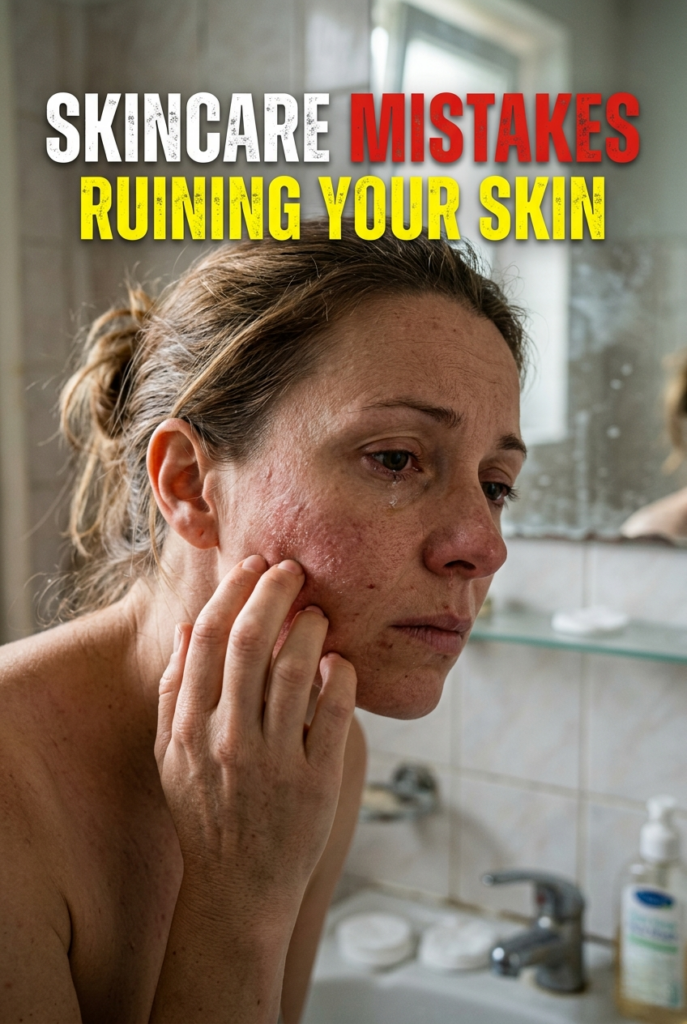
Most people who struggle with their skin are not using the wrong products — they are making routine mistakes that actively damage skin health while trying to improve it. These mistakes are surprisingly common, often recommended in outdated skincare advice, and produce exactly the opposite of what you are trying to achieve. Here are the most impactful skincare mistakes that are quietly ruining your skin — and the simple corrections that make an immediate difference.
| Did You Know? The skin barrier — the outermost layer of the epidermis — is your skin’s most important protective feature. It prevents moisture loss, blocks environmental pollutants and bacteria, and maintains the slightly acidic pH that keeps harmful microorganisms from colonising the skin surface. Every mistake in this guide damages this barrier in ways that lead directly to dryness, sensitivity, breakouts, and accelerated ageing. |
Mistake 1: Washing Your Face with Hot Water
Hot water is one of the most common and most underestimated sources of skin barrier damage. It strips the natural oils and proteins that hold the skin barrier together, dissolves the ceramides that seal moisture into skin cells, and triggers inflammation that worsens redness, sensitivity, and acne. People who wash with hot water daily often develop what feels like sensitive skin — tight, reactive, quick to redden — that resolves completely when water temperature is reduced. Always wash with comfortably lukewarm water and finish with a brief cool rinse. This single change improves skin barrier health and reduces redness within one week for most people.
Mistake 2: Over-Exfoliating
Exfoliation is beneficial — but daily or near-daily exfoliation is one of the fastest ways to destroy your skin barrier. The barrier needs three to five days to regenerate after exfoliation. Over-exfoliating chronically keeps it in a state of partial breakdown — unable to retain moisture, hyper-reactive to products that were previously tolerated, and prone to the inflammation that drives breakouts and accelerates ageing. Signs you are over-exfoliating: skin that stings when you apply moisturiser, persistent redness that does not settle, skin that feels tight immediately after washing. The fix: reduce to two times per week maximum, with at least two rest days between sessions.
Mistake 3: Skipping Moisturiser Because Skin Is Oily
Oil and moisture are not the same thing. Oily skin can be dehydrated — it produces excess oil as a compensatory response to surface dehydration. When oily skin types skip moisturiser, the skin surface loses water, sensors detect dehydration, and sebum production increases further in response. This reactive sebum overproduction clogs pores and worsens both oiliness and breakouts. The solution is a lightweight, oil-free, non-comedogenic gel moisturiser that provides water-based hydration without adding oil. Consistently moisturising oily skin actually reduces oil production over time as the compensatory response is no longer triggered.
Mistake 4: Mixing Incompatible Active Ingredients
Certain skincare actives should never be used together in the same routine because they either cancel each other out or cause significant irritation when combined. The most common problematic combinations are retinol and AHA or BHA acids used on the same evening — together they cause peeling, redness, and barrier damage that can take weeks to resolve. Vitamin C and niacinamide used together can reduce the effectiveness of both. Benzoyl peroxide and retinol used simultaneously oxidise each other into less effective forms. The rule for beginners: introduce one active at a time, allow four to six weeks to assess its effect, and research compatibility before combining any two actives.
Mistake 5: Not Removing Makeup Fully Before Bed
Sleeping in makeup — even once — leaves a layer of product, oil, bacteria, and the day’s pollution particles in direct contact with your skin for eight hours overnight. This mixture clogs pores, impairs the skin’s natural overnight regeneration process, and causes the kind of overnight inflammation that produces new breakouts by morning. A single night of sleeping in makeup produces measurable increases in skin oxidative stress and collagen breakdown. The fix is non-negotiable: always remove makeup completely before bed. Double cleansing — an oil-based cleanser first, followed by a gentle gel cleanser — is the most thorough and gentle method.
Mistake 6: Using Too Many Products at Once
More products does not mean better skin. It often means the opposite. When you apply multiple actives simultaneously — multiple acids, retinol, vitamin C, and various other treatments in the same routine — the skin becomes overwhelmed and irritated in ways that mimic sensitivity and worsened acne. You also lose the ability to identify which product is causing any reaction. Effective skincare routines for healthy skin need only three to five products: cleanser, one treatment, moisturiser, and SPF. Start there and add only if a clear need arises.
Mistake 7: Skipping SPF Indoors or on Cloudy Days
UVA rays — the rays responsible for premature skin ageing, hyperpigmentation, and the worsening of post-acne marks — penetrate both standard window glass and cloud cover. They reach your skin whether you are outdoors or sitting by a window, whether the sun is visible or hidden behind clouds. Every day without SPF is a day of cumulative UV damage adding to the fine lines, dark spots, and loss of elasticity that skincare products work so hard to reverse. The most effective anti-ageing, anti-pigmentation routine in the world produces half the results when daily SPF is skipped.
| Pro Tip: Do a one-week skin barrier reset if you suspect your routine has been damaging your skin: strip everything back to cleanser, plain moisturiser, and SPF only. No actives, no exfoliation, no treatments. After seven days of barrier recovery, most people notice significantly calmer, less reactive, more comfortable skin — and are able to reintroduce one product at a time to identify exactly what their skin can tolerate. |
Every mistake on this list is easily fixed — and fixing even two or three of them can produce a noticeable improvement in your skin within weeks without changing a single product. Start with the water temperature tonight and the SPF tomorrow morning. Build from there. The best skincare routine is not the most complicated one — it is the one that stops doing harm and consistently does the right simple things.
Disclaimer: This article is for informational purposes only. Persistent skin concerns or reactions to skincare products should be evaluated by a qualified dermatologist.