Acne is the most common skin condition in the world — affecting up to 85% of people at some point in their lives. Yet despite its prevalence, it remains one of the most misunderstood and mistreated conditions. Harsh chemical treatments strip the skin’s protective barrier, trigger reactive oil production, and create a cycle of dependency. Expensive prescription treatments carry side effects. And the acne keeps coming back.
Natural ingredients offer something different: they target the root causes of acne — excess sebum production, bacterial overgrowth, inflammation, and hormonal triggers — while working with rather than against the skin’s biology. Used consistently and correctly over seven days, these ingredients produce visible, lasting improvement that addresses the problem rather than simply masking it.
| Did You Know? Acne forms when a hair follicle becomes clogged with dead skin cells and sebum. The bacteria Cutibacterium acnes (formerly P. acnes) multiplies within this blocked follicle, triggering the immune response that creates the redness, swelling, and pus of an active pimple. Effective treatment must address all three factors simultaneously: the clog, the bacteria, and the inflammation. |
Day 1 to 2: Deep Cleanse and Reset
Apple Cider Vinegar Toner
Begin your protocol with an ACV toner applied after every cleanse. Mix one part raw apple cider vinegar with three parts water. Apply with a cotton pad to clean skin, focusing on acne-prone areas. ACV’s acetic acid dissolves sebum and dead cell buildup inside pores, its antibacterial properties kill C. acnes bacteria on contact, and it restores the skin’s natural acidic pH that prevents bacterial overgrowth. Most people notice reduced redness and inflammation within the first two days of consistent twice-daily use.
Tea Tree Oil Spot Treatment
Dilute two to three drops of tea tree oil in one teaspoon of jojoba oil. Apply directly to each active pimple using a clean cotton swab before bed. Tea tree oil contains terpinen-4-ol — a compound clinically proven to kill acne-causing bacteria as effectively as 5% benzoyl peroxide in a landmark comparative study, with significantly less dryness, irritation, and redness. Leave overnight. By morning, most active pimples will be noticeably smaller and less inflamed.
Day 3 to 4: Anti-Inflammatory Intensive
Turmeric and Honey Mask
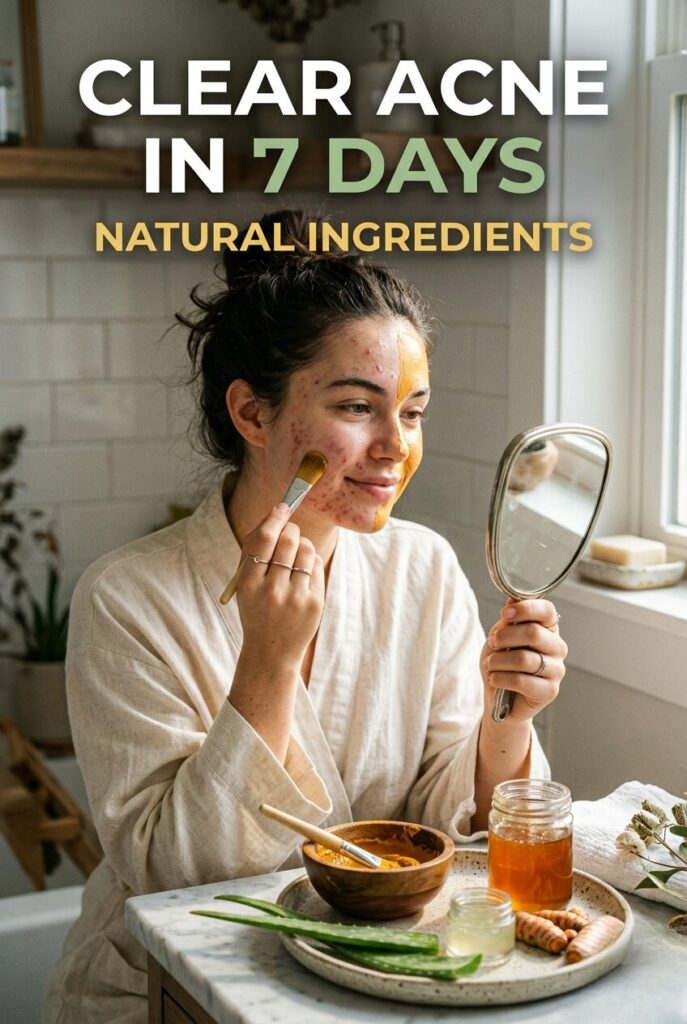
Mix half a teaspoon of turmeric with one tablespoon of raw honey and apply as a full-face mask for 15 minutes, three times during this week. Turmeric’s curcumin is one of nature’s most powerful anti-inflammatory compounds, directly reducing the inflammatory response that makes pimples red, swollen, and painful. Raw honey provides antimicrobial hydrogen peroxide, gluconic acid, and enzymes that kill bacteria in active breakouts while simultaneously moisturizing and healing the skin barrier damaged by previous outbreaks. This combination addresses both active acne and the post-inflammatory hyperpigmentation that lingers after pimples heal.
Green Tea Facial Rinse
Brew a strong cup of green tea, allow to cool completely, and use it as a final rinse after cleansing or spray from a misting bottle throughout the day. Green tea’s EGCG reduces sebum production at the cellular level — one study found it reduced sebum production by 70% with topical application. Its catechin antioxidants also kill acne bacteria and reduce the skin inflammation that drives breakouts. People with oily, acne-prone skin notice significantly reduced shine and fewer new breakouts within three to four days of consistent use.
Day 5 to 7: Heal, Fade, and Prevent
Aloe Vera Overnight Treatment
Apply a generous layer of pure aloe vera gel to the entire face as the final step in your nighttime routine every evening this week. Aloe contains aloenin, acemannan, and salicylic acid that collectively reduce breakout frequency, speed healing of active pimples, fade post-acne marks, and strengthen the skin barrier that chronic acne compromises. The overnight application delivers maximum absorption and repair while the skin’s regeneration rate peaks during sleep. By day seven, skin texture, redness, and overall clarity will show meaningful improvement.
The Diet Connection You Cannot Ignore
No topical treatment fully works if the diet is constantly triggering new breakouts internally. The most acne-aggravating foods are high-glycemic foods that spike insulin (white bread, sugar, processed snacks), dairy products in people sensitive to the IGF-1 hormones in milk, and omega-6 heavy processed oils that drive systemic inflammation. Replacing these with low-glycemic whole foods, reducing dairy for one week, and increasing anti-inflammatory omega-3 foods (walnuts, flaxseeds, fatty fish) will accelerate your seven-day results significantly.
Your 7-Day Clear Skin Routine
- Morning: Gentle cleanser, ACV toner (diluted), light moisturizer, SPF
- Daytime: Green tea spray, hands away from face
- Evening: Double cleanse, ACV toner, turmeric-honey mask (3 times this week), aloe vera gel
- Spot treatment: Tea tree oil on individual pimples before bed every night
- Diet: Reduce sugar, dairy, and processed food — increase water to 8 glasses daily
| Important: Always patch test natural ingredients on your inner wrist 24 hours before applying to your face. If you experience severe or cystic acne, persistent hormonal breakouts, or acne with significant scarring, consult a dermatologist — these cases benefit from professional guidance alongside natural treatments. |
Seven days of consistency with the right natural ingredients can transform your skin in ways that years of harsh chemical treatments sometimes cannot. The difference is that these methods work with your skin’s biology — reducing the root causes rather than aggressively stripping the surface. Start tonight and let your skin show you what it can do.
Disclaimer: This article is for informational purposes only. Results vary by individual skin type. Consult a dermatologist for severe or persistent acne.