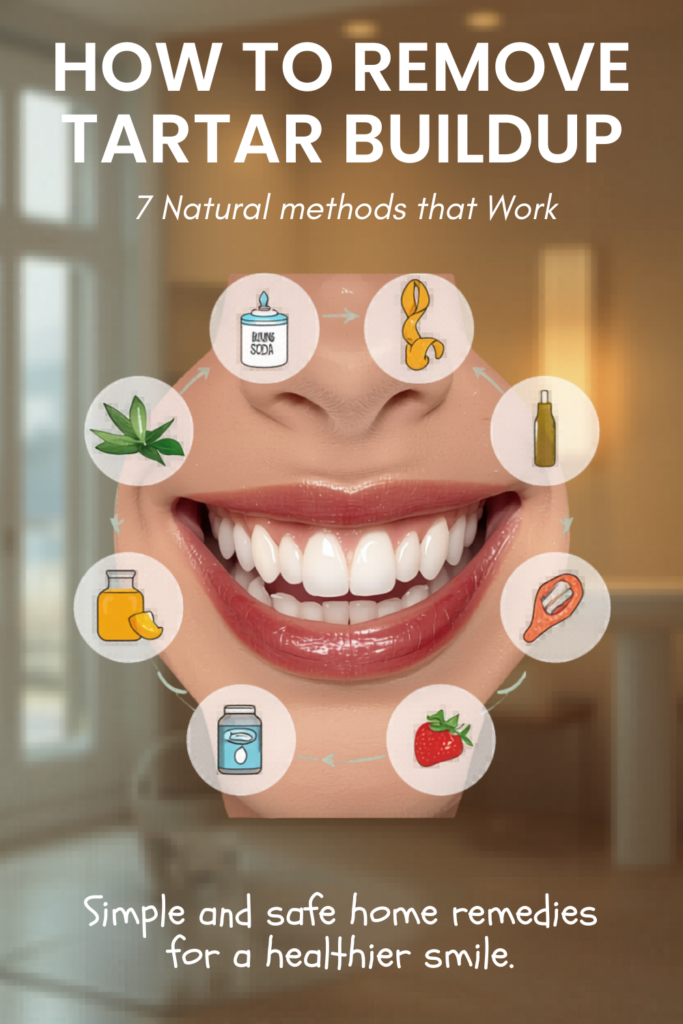
You brush your teeth every day. You might even floss regularly. But no matter how diligent your routine, that stubborn yellow-brown crust keeps building up along your gumline and between your teeth. That crust is tartar — and once it forms, most people believe a dentist is the only way to get rid of it.
The truth is more nuanced. While only a dentist can completely remove hardened tartar with professional scaling tools, there is a great deal you can do at home to soften existing buildup, remove early-stage deposits, and — most importantly — prevent new tartar from forming in the first place. This guide covers everything you need to know.
What Is Tartar and Why Does It Form?
Tartar — also called dental calculus — is hardened dental plaque. Here is how it develops:
Your mouth is naturally home to hundreds of bacteria. When you eat, these bacteria feed on sugars and carbohydrates and produce a soft, sticky film called plaque that coats your teeth and gumline. If plaque is not thoroughly removed within 24 to 72 hours through brushing and flossing, it begins to absorb minerals from saliva — primarily calcium and phosphate — and hardens into tartar.
Unlike soft plaque, which you can remove with a toothbrush, tartar is rock-hard and bonds firmly to tooth enamel and the surfaces below the gumline. It is porous and rough, which makes it a perfect surface for even more bacteria and plaque to accumulate — creating a damaging cycle that accelerates tooth decay and gum disease.
| Did You Know? Plaque can begin turning into tartar in as little as 24 to 48 hours if not removed. Once fully hardened, tartar can only be completely removed with professional dental tools. This is why daily brushing and flossing is the single most important thing you can do for your oral health. |
Signs You Have Tartar Buildup
How do you know if what you are seeing is tartar? Look for these telltale signs:
- A rough, gritty texture when you run your tongue along your teeth near the gumline
- Yellow, brown, or dark deposits visible along the gumline — especially on the inside surfaces of lower front teeth
- Persistent bad breath that does not improve with brushing
- Swollen, red, or bleeding gums when you brush or floss — a sign that tartar is irritating gum tissue
- Teeth that look longer than usual — a sign that tartar-related gum disease may be causing gum recession
- Visible black or dark brown deposits in more severe cases of long-term buildup
| 7 NATURAL METHODS TO REDUCE TARTAR AT HOME |
1. 🧂 Baking Soda — The Most Effective Home Treatment
Baking soda is the most scientifically supported home remedy for reducing tartar and plaque. Its mild alkalinity neutralizes the acidic environment that bacteria thrive in, while its gentle abrasive texture physically scrubs away soft deposits before they can harden. Multiple clinical studies confirm that toothpastes containing baking soda significantly outperform regular toothpastes at plaque and early tartar removal.
How to Use It
- Mix one teaspoon of baking soda with enough water to form a thick paste.
- Apply to your toothbrush and brush all tooth surfaces — paying special attention to the gumline and the backs of your lower front teeth where tartar most commonly forms.
- Brush gently for two full minutes using small circular motions.
- Spit out and rinse thoroughly with water.
- Follow with your regular fluoride toothpaste.
Frequency: Two to three times per week. Daily use over long periods can gradually wear enamel.
Results: Softer, reduced early-stage deposits within two to four weeks of consistent use.
| Pro Tip: For even greater effectiveness, add a drop of tea tree essential oil to your baking soda paste. Tea tree oil has powerful antibacterial properties that target the specific bacteria responsible for plaque formation and tartar development. |
2. 🫖 Oil Pulling — The Ancient Daily Practice
Oil pulling is a traditional Ayurvedic practice with a growing body of modern research behind it. The process involves swishing oil around the mouth for an extended period, which pulls bacteria, toxins, and loosely attached plaque from between teeth, along the gumline, and from difficult-to-reach surfaces that a toothbrush simply cannot access. Over time, this reduces the bacterial load in the mouth that leads to plaque and tartar formation.
How to Use It
- Take one tablespoon of virgin coconut oil or sesame oil into your mouth first thing in the morning, before eating, drinking, or brushing.
- Swish the oil gently around your entire mouth — between teeth, along gums, and under your tongue — for 10 to 15 minutes. The oil will gradually thin and turn milky white as it collects bacteria and debris.
- Spit the used oil into a bin — never into the sink or toilet as it can solidify in pipes.
- Rinse your mouth thoroughly with warm water, then brush as normal.
Frequency: Daily use is safe and beneficial. Morning is the ideal time.
Results: Reduced plaque and bacteria within two to four weeks. Fresher breath often noticeable within the first week.
3. 🧪 Hydrogen Peroxide Rinse — The Science-Backed Rinse
Hydrogen peroxide is the active whitening and antibacterial ingredient in many professional dental products. As an oral rinse, it kills the bacteria that produce plaque, helps loosen early tartar deposits, and reduces gum inflammation simultaneously. It is one of the most effective over-the-counter tools available for home oral care.
How to Use It
- Mix equal parts 3% hydrogen peroxide solution (standard drugstore strength) with equal parts water to create a 1.5% rinse.
- Swish thoroughly around your mouth for 60 seconds, making sure to reach all surfaces.
- Spit out completely — do not swallow.
- Rinse well with plain water afterward.
- Do not eat or drink for 30 minutes after use.
Frequency: Once per week maximum for ongoing use.
| Important Warning: Use only 3% hydrogen peroxide — the standard pharmacy concentration. Never use stronger concentrations such as 6%, 12%, or 35% food-grade versions in your mouth. These can cause serious chemical burns to gum tissue and oral mucosa. Stop use immediately if you experience any irritation or sensitivity. |
4. 🥛 White Vinegar Rinse — The Mineral Dissolver
White vinegar contains acetic acid, which can help soften the mineral deposits that make tartar so hard. Used as a rinse, it creates a temporarily acidic environment that breaks down the calcium-based structure of early tartar deposits, making them easier to dislodge with brushing. It also has mild antibacterial properties that reduce the overall bacterial load in the mouth.
How to Use It
- Mix two teaspoons of white vinegar with one cup of warm water and a pinch of salt.
- Swish thoroughly around your mouth for 30 to 60 seconds.
- Spit out and rinse well with plain water.
- Wait at least 30 minutes before brushing — the acid temporarily softens enamel and brushing immediately afterward can cause micro-abrasion.
Frequency: Once per week only. Overuse can erode enamel due to the acidic nature of vinegar.
5. 🍊 Orange Peel Rub — The Gentle Daily Polisher
This simple, overlooked remedy has been used in folk medicine for generations. The inside of an orange peel contains d-limonene and vitamin C, both of which have antimicrobial properties and can help gently break down soft plaque deposits. The slightly textured surface of the peel also provides a very gentle polishing action on tooth surfaces. While not powerful enough to tackle significant tartar, it is an excellent gentle daily maintenance tool.
How to Use It
- Peel a fresh orange and use the inside of the peel — the white spongy part — directly on your teeth.
- Rub gently along all tooth surfaces and the gumline for two to three minutes.
- Leave the juice on your teeth for five minutes before rinsing.
- Rinse with water and brush as normal.
Frequency: Two to three times per week as a gentle daily complement to brushing.
Results: Best used for prevention and maintenance rather than removing established tartar.
6. 🌿 Clove Paste — The Antibacterial Powerhouse
Cloves have been used in dental medicine for centuries, and for good reason. Eugenol — the active compound in cloves — is one of the most powerful natural antibacterial and anti-inflammatory agents known. It directly targets oral bacteria responsible for plaque formation, reduces gum inflammation caused by tartar, and provides significant pain relief for any gum soreness caused by tartar irritation. Many commercial dental products still use synthetic eugenol precisely because of its proven effectiveness.
How to Use It
- Grind one teaspoon of whole cloves into a fine powder using a spice grinder or mortar and pestle.
- Mix with enough olive oil or coconut oil to form a thick paste.
- Apply the paste to your teeth and gums using your finger or a toothbrush.
- Leave for three to five minutes, then rinse thoroughly.
Frequency: Two times per week.
Results: Noticeable reduction in gum inflammation and bacteria within two to three weeks.
7. 🌵 Aloe Vera Gel — The Gentle Gum Healer
Pure aloe vera gel is one of the gentlest yet surprisingly effective oral health remedies available. Research published in the Journal of Indian Society of Periodontology found that aloe vera gel was as effective as chlorhexidine mouthwash — the gold standard prescription antibacterial rinse — at reducing plaque and gum disease symptoms. Its anti-inflammatory compounds reduce gum irritation caused by tartar while its antibacterial properties reduce the bacteria that produce plaque in the first place.
How to Use It
- Use pure, food-grade aloe vera gel — not the kind with added colors, fragrances, or alcohol used for skin burns.
- Apply a small amount directly to your teeth and gumline.
- Gently massage into the gums with a clean finger for two minutes.
- Leave for ten minutes before rinsing with water.
Frequency: Daily use is safe and beneficial.
Results: Healthier, less inflamed gums within one to two weeks. Gradual plaque reduction over four weeks.
All 7 Methods at a Glance
| Method | Effectiveness | Safety | How Often |
| Baking soda paste | High | Very Safe | 2-3x per week |
| Oil pulling | Moderate | Very Safe | Daily |
| White vinegar rinse | Moderate | Use Caution | Once per week |
| Hydrogen peroxide rinse | High | Safe (3%) | Once per week |
| Orange peel rub | Mild | Very Safe | 2-3x per week |
| Clove paste | Moderate | Very Safe | 2x per week |
| Aloe vera gel | Mild-Moderate | Very Safe | Daily |
The Complete Daily Routine for Tartar Prevention
The most effective approach is not any single remedy — it is building a consistent daily routine that prevents plaque from hardening into tartar in the first place. Here is the ideal daily oral hygiene routine:
Morning
- Oil pull with coconut oil for 10 to 15 minutes before anything else
- Brush teeth for two full minutes with a soft-bristled toothbrush and fluoride toothpaste
- Floss between every tooth — tartar loves to form in the tight spaces a brush cannot reach
- Use an antibacterial mouthwash or aloe vera gel rinse
After Meals
- Rinse your mouth with water after eating — this removes food particles and dilutes mouth acidity before bacteria can feed on them
- If possible, chew sugar-free gum containing xylitol — xylitol actively inhibits the bacteria that produce plaque
Evening
- Brush again for two full minutes — this is the most important brushing session of the day
- Floss thoroughly before bed — saliva production decreases at night, making the mouth more vulnerable to bacterial activity
- Use your weekly baking soda treatment two to three evenings per week
| Pro Tip: Electric toothbrushes remove significantly more plaque than manual brushing — some studies show up to 21% more plaque reduction after three months of use. If tartar buildup is a persistent problem for you, switching to an electric toothbrush is one of the single most impactful changes you can make. |
Foods That Fight Tartar — and Foods That Feed It
Foods that help prevent tartar: Crunchy raw vegetables like celery, carrots, and apples act as natural tooth scrubbers. Cheese stimulates saliva and contains calcium that helps remineralize enamel. Green and black tea contain polyphenols that inhibit bacterial growth. Water — especially fluoridated tap water — is the single best drink for oral health.
Foods that accelerate tartar formation: Sugary drinks and snacks are the primary fuel for plaque-producing bacteria. Sticky foods like dried fruit, candy, and crackers cling to teeth for extended periods. Starchy foods like white bread and chips break down into sugars rapidly in the mouth. Coffee and tea stain the porous surface of existing tartar, making it more visible.
When Home Remedies Are Not Enough
Home remedies are genuinely effective for reducing early plaque deposits, softening mild tartar, and preventing further buildup. However, there are situations where professional dental care is essential and cannot be substituted:
- Significant established tartar deposits — especially below the gumline — require professional scaling to remove completely and safely
- Bleeding, swollen, or receding gums that do not improve with improved oral hygiene within two weeks
- Persistent bad breath despite thorough brushing, flossing, and rinsing
- Tooth pain or sensitivity that may indicate decay that has developed alongside tartar buildup
- Dark brown or black tartar deposits, which indicate advanced buildup requiring professional treatment
- Any loose teeth or changes in bite — these can be signs of advanced gum disease
The American Dental Association recommends professional dental cleanings every six months for most adults. People with a history of heavy tartar buildup, gum disease, or other risk factors may benefit from visits every three to four months. No home remedy replaces this.
Final Thoughts
Tartar buildup is something almost everyone deals with — but it does not have to be something you simply accept between dental visits. The natural methods in this guide are proven to soften early deposits, kill the bacteria that create them, and dramatically slow the rate at which new tartar forms.
Start with the baking soda treatment and oil pulling — together, they form the most powerful and safe home combination available. Add the others based on your specific needs. Stay consistent with your daily brushing, flossing, and rinsing routine. And continue to see your dentist regularly for professional cleanings that your at-home routine cannot fully replace.
Your healthiest, cleanest smile is achievable — and most of the tools to get there are already in your kitchen.
Disclaimer: This article is for informational purposes only and does not constitute professional dental or medical advice. Home remedies can complement but not replace professional dental care. If you have concerns about tartar buildup, gum disease, or oral health, please consult a licensed dentist.