Magnesium is one of the most essential minerals in the human body — involved in over 300 biochemical reactions that keep you alive and functioning at your best. It regulates muscle and nerve function, controls blood sugar, supports healthy blood pressure, and is critical for building protein and strong bones.
Yet despite its incredible importance, magnesium deficiency is one of the most widespread nutritional shortfalls in the modern world. Studies suggest that up to 50% of people in developed countries do not get enough magnesium from their diet. Processed food, depleted soil, chronic stress, alcohol, and certain medications all deplete magnesium levels — often without people realizing it.
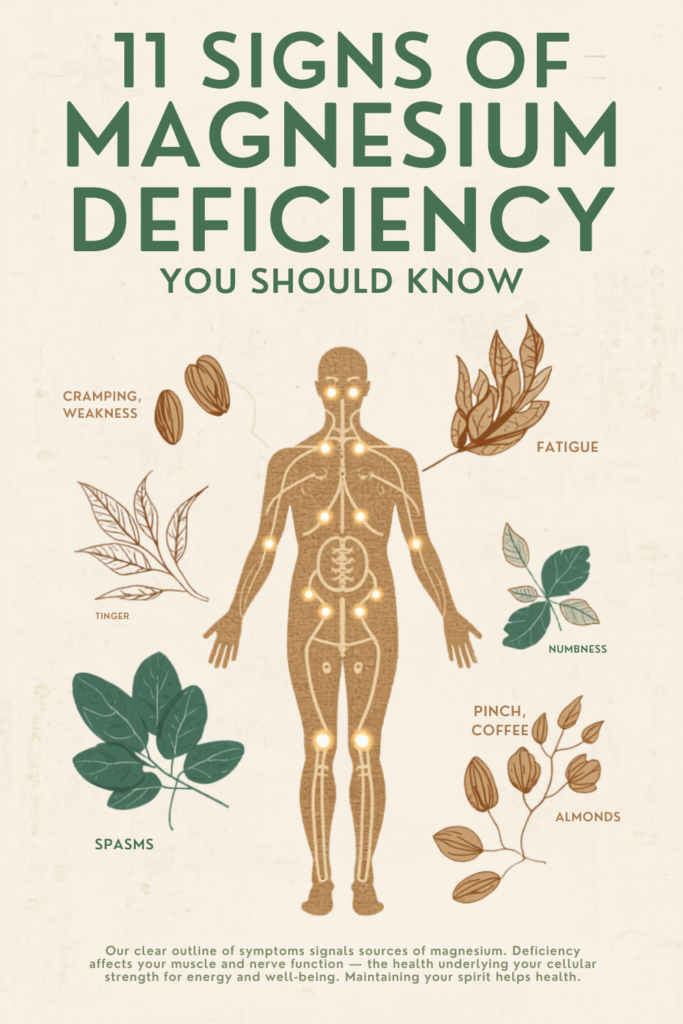
The tricky part? The symptoms of deficiency are so varied and seemingly unrelated that most people never connect them to a single missing mineral. Here are 11 warning signs that your body may be desperately low on magnesium.
1. 💪 Muscle Cramps and Spasms
This is the most classic and recognizable sign of magnesium deficiency. Magnesium plays a direct role in muscle contraction and relaxation — when levels are low, muscles can contract involuntarily and stay contracted, causing painful cramps. Nighttime leg cramps that jolt you awake are a particularly telling sign. Athletes and active people are especially vulnerable due to magnesium loss through sweat.
2. 😴 Chronic Fatigue and Low Energy
Feeling exhausted no matter how much you sleep? Magnesium is essential for the production of ATP — the molecule your cells use for energy. Without adequate magnesium, your body literally cannot produce energy efficiently at the cellular level. If tiredness is persistent, unexplained, and does not improve with rest, low magnesium could be the root cause.
3. 🧠 Anxiety, Irritability, and Mood Changes
Magnesium has a profound calming effect on the nervous system. It regulates neurotransmitters and controls the activity of the hypothalamic-pituitary-adrenal (HPA) axis — your body’s central stress response system. Low magnesium levels are strongly linked to heightened anxiety, irritability, mood swings, and even depression. If you feel on edge without a clear reason, your magnesium levels deserve attention.
4. 😵💫 Difficulty Sleeping and Insomnia
Magnesium regulates melatonin — the hormone that controls your sleep-wake cycle — and activates the parasympathetic nervous system that allows your body to relax and unwind. Low magnesium makes it harder to fall asleep, stay asleep, and achieve deep, restorative sleep. This creates a vicious cycle, as poor sleep further depletes magnesium stores.
5. 🥴 Frequent Headaches and Migraines
Research consistently shows a strong link between low magnesium levels and both tension headaches and migraines. Magnesium helps relax blood vessels in the brain and regulates neurotransmitters involved in pain signaling. Studies have found that people who suffer from frequent migraines have significantly lower magnesium levels than those who do not — and magnesium supplementation has been shown to reduce migraine frequency.
6. 💓 Heart Palpitations and Irregular Heartbeat
Magnesium is absolutely critical for healthy heart rhythm. It works alongside potassium and calcium to regulate the electrical signals that control each heartbeat. When magnesium is deficient, these signals can become irregular, causing heart palpitations — the sensation of your heart fluttering, skipping beats, or beating too fast. While palpitations have many causes, magnesium deficiency is one of the most overlooked.
7. 🥴 Numbness and Tingling Sensations
Pins and needles sensations — particularly in the hands, feet, and face — are a neurological sign of magnesium deficiency. Magnesium is essential for healthy nerve function and transmission. When levels fall too low, nerve signaling becomes erratic, resulting in unexplained numbness, tingling, or even a feeling of electric shocks in the extremities.
8. 🗛️ Poor Memory and Difficulty Concentrating
Brain fog, forgetfulness, and difficulty focusing are increasingly common complaints — and magnesium deficiency is a frequently missed culprit. Magnesium supports healthy brain function by protecting neurons, supporting synaptic plasticity, and regulating glutamate — a neurotransmitter involved in learning and memory. Low levels are associated with reduced cognitive performance and an increased risk of age-related mental decline.
9. 🦴 Weak or Brittle Bones
Most people think of calcium when it comes to bone health — but magnesium is equally essential. Nearly 60% of the body’s magnesium is stored in the bones. Magnesium is needed to activate vitamin D, which in turn regulates calcium absorption. Without enough magnesium, calcium cannot be properly deposited into bone tissue regardless of how much calcium you consume. Low magnesium is a significant contributor to osteoporosis and bone fragility.
10. 🤮 Nausea and Loss of Appetite
In the early stages of deficiency, the body often signals distress through the digestive system. Nausea, loss of appetite, and general digestive discomfort are common early warning signs that magnesium levels are falling. These symptoms are easy to dismiss or attribute to other causes, which is why magnesium deficiency so often goes undetected until it becomes more severe.
11. 🤩 High Blood Pressure
Magnesium acts as a natural calcium channel blocker — it relaxes and dilates blood vessels, which naturally lowers blood pressure. Multiple large-scale studies have found a direct link between low magnesium intake and hypertension. People with chronically low magnesium levels are significantly more likely to develop high blood pressure, increasing their risk of heart disease and stroke over time.
| Did You Know? Magnesium is involved in more than 300 enzyme reactions in the body — more than almost any other mineral. It is needed for DNA synthesis, protein production, nerve transmission, blood glucose regulation, and energy metabolism. It is genuinely one of the most critical nutrients for overall health. |
Top Magnesium-Rich Foods to Add to Your Diet
The best way to address magnesium deficiency is through food first. Here are the most magnesium-dense foods you can eat:
| Food | Serving Size | Magnesium |
| Pumpkin seeds | 1 oz (28g) | 156 mg |
| Dark chocolate | 1 oz (28g) | 64 mg |
| Almonds | 1 oz (28g) | 80 mg |
| Spinach (cooked) | 1/2 cup | 78 mg |
| Black beans | 1/2 cup | 60 mg |
| Avocado | 1 medium | 58 mg |
| Banana | 1 medium | 32 mg |
| Salmon | 3 oz (85g) | 26 mg |
The recommended daily intake of magnesium is 400-420 mg for men and 310-320 mg for women. Most adults fall significantly short of this through diet alone.
Should You Consider a Supplement?
If you recognize several of the signs above, a magnesium supplement may be worth discussing with your doctor. The most bioavailable and well-tolerated forms include:
- Magnesium glycinate — best for sleep, anxiety, and muscle relaxation; very gentle on the stomach
- Magnesium citrate — good general-purpose form with high absorption
- Magnesium malate — excellent for energy and fatigue
- Magnesium threonate — specifically researched for brain and cognitive function
| Important: Always consult your doctor before starting magnesium supplementation, especially if you have kidney disease, heart conditions, or take prescription medications. A simple blood test can confirm whether your levels are low. |
The Bottom Line
Magnesium deficiency is far more common than most people — and even many doctors — realize. Its symptoms are wide-ranging, easy to dismiss, and frequently mistaken for other conditions. If you regularly experience muscle cramps, poor sleep, anxiety, fatigue, or headaches, your magnesium levels are absolutely worth investigating.
Start with your diet. Add pumpkin seeds, dark leafy greens, almonds, and dark chocolate to your daily meals. If symptoms persist, speak to your doctor about testing and supplementation. This one mineral could make a genuinely life-changing difference to how you feel every single day.
Disclaimer: This article is for informational purposes only and does not constitute medical advice. If you suspect a nutritional deficiency or experience any of the symptoms described, please consult a qualified healthcare professional for proper diagnosis and treatment.