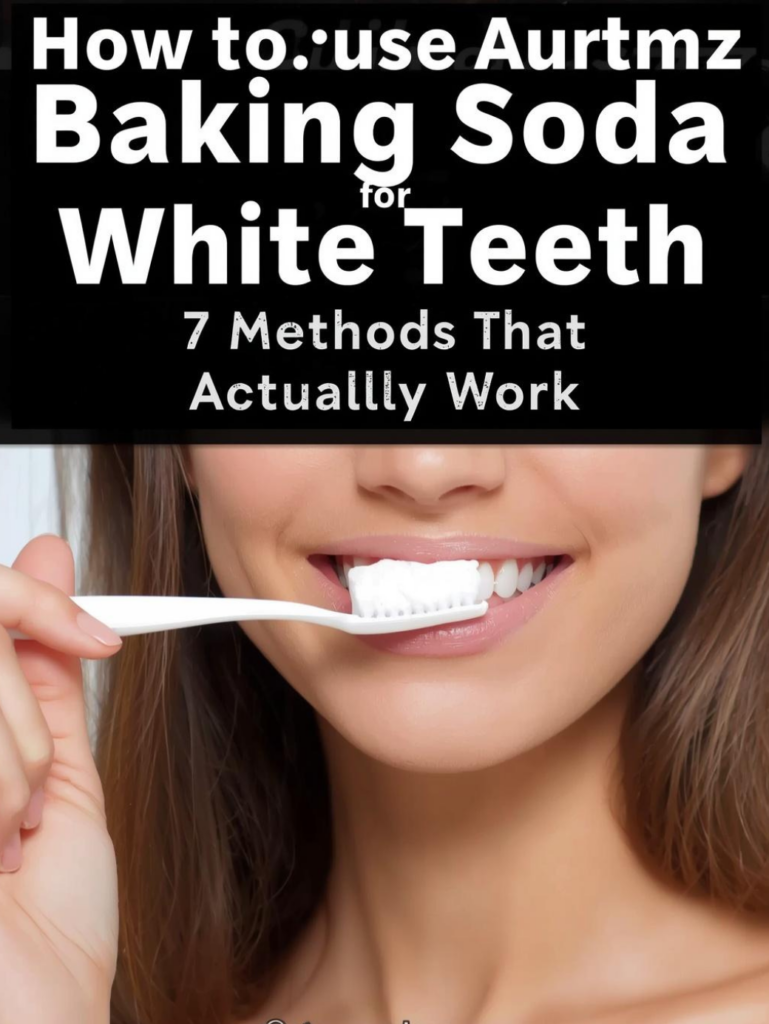
A dazzling white smile is one of the first things people notice — and one of the things most of us wish we had. Professional teeth whitening treatments can cost hundreds of dollars, and over-the-counter whitening strips and gels are expensive, filled with chemicals, and often cause painful sensitivity. So what if the answer was already sitting in your kitchen cupboard, costing almost nothing?
Baking soda — sodium bicarbonate — has been used as a natural tooth whitener for well over a century. It is gentle, effective, affordable, and backed by real scientific research. In this complete guide, you will discover exactly how baking soda whitens teeth, seven proven methods to use it, important safety rules, and everything you need to know to get the best possible results safely.
Why Baking Soda Whitens Teeth: The Science
Baking soda is not just a trendy home remedy. There are solid scientific reasons why it works so effectively on stained, yellowed teeth. Here is exactly what happens when you apply it:
Mild Abrasive Action: Baking soda has a Relative Dentin Abrasivity (RDA) score of just 7 — one of the lowest of any abrasive substance used in oral care. This means it is gentle enough to use regularly without damaging enamel, while still being effective at physically scrubbing away surface stains left by coffee, tea, red wine, and food.
Alkaline Environment: Baking soda is alkaline with a pH of around 8.3. This alkalinity neutralizes the acids produced by oral bacteria — the very acids that eat away at enamel and cause yellowing. A less acidic mouth means healthier, whiter enamel over time.
Stain Dissolution: The alkaline properties of baking soda also help break down the chemical bonds of chromogenic compounds — the pigmented molecules responsible for staining teeth. This helps lift deep-set stains that simple brushing cannot remove.
Antibacterial Properties: Research has shown that baking soda inhibits the growth of Streptococcus mutans — one of the primary bacteria responsible for tooth decay and plaque formation. Less plaque means less surface for stains to cling to.
| Science Says: A comprehensive review published in the Journal of the American Dental Association analyzed multiple clinical studies and found that toothpastes containing baking soda were significantly more effective at removing extrinsic tooth stains than non-baking soda toothpastes, with greater whitening observed with higher concentrations of baking soda. |
What You Need Before You Start
All methods in this guide require baking soda as the base ingredient. Here is everything to have on hand:
- Arm & Hammer pure baking soda (or any food-grade sodium bicarbonate)
- A soft-bristled toothbrush — medium or hard bristles are too abrasive
- Small mixing bowl or the palm of your hand
- Fresh water for rinsing
- Optional add-ins depending on your chosen method (listed with each recipe)
| Pro Tip: Always use food-grade baking soda, not baking powder. Baking powder contains additional ingredients including cream of tartar and sometimes aluminum compounds that are not safe for oral use. Check the label carefully before using. |
Method 1: Pure Baking Soda Paste (The Classic)
This is the simplest, most direct method and a perfect starting point for beginners. It requires just two ingredients and takes under two minutes.
What You Need
- 1 teaspoon of baking soda
- Enough water to form a paste (approximately half a teaspoon)
Step-by-Step Instructions
- Mix the baking soda and water together in your palm or a small bowl until you have a smooth, thick paste. It should be spreadable but not watery.
- Wet your soft toothbrush and dip it into the paste, coating the bristles evenly.
- Brush your teeth gently using small circular motions for exactly 2 minutes. Pay extra attention to the front surfaces of your upper and lower front teeth where staining is most visible.
- Spit out thoroughly and rinse your mouth with clean water for at least 30 seconds.
- Follow with your regular fluoride toothpaste if desired — this restores fluoride protection that baking soda does not provide.
Frequency: Use this method 2 to 3 times per week. Do not use it daily as even low-abrasion scrubbing every day can gradually wear enamel over months of use.
Results: Noticeable whitening within 2 to 4 weeks of consistent use.
Method 2: Baking Soda + Hydrogen Peroxide (Maximum Whitening Power)
This is the most powerful natural whitening combination available. Hydrogen peroxide is the active whitening ingredient in almost every professional and over-the-counter whitening product — and when combined with baking soda, the results are remarkable.
Hydrogen peroxide works differently from baking soda. While baking soda removes surface stains through mild abrasion and alkalinity, hydrogen peroxide penetrates below the enamel surface and bleaches intrinsic stains through an oxidation reaction. Together they tackle staining from both directions simultaneously.
What You Need
- 1 teaspoon baking soda
- Enough 3% hydrogen peroxide to form a paste (use drugstore-grade 3% solution only)
Instructions
- Combine baking soda and hydrogen peroxide to form a paste. It will fizz slightly — this is normal and expected.
- Apply to teeth and brush gently in circular motions for 2 minutes.
- Rinse extremely thoroughly with water — do not swallow any of the mixture.
- Do not eat or drink for 30 minutes afterward.
| Important Warning: Use only 3% hydrogen peroxide solution — the standard drugstore concentration. Never use higher concentrations such as the 6%, 12%, or 35% solutions sold for hair or industrial use. These are far too strong for oral use and can seriously damage gums and enamel. Use this method a maximum of once per week. |
Frequency: Once per week maximum.
Results: Visibly whiter teeth within 1 to 2 weeks. One of the fastest-acting natural whitening methods available.
Method 3: Baking Soda + Coconut Oil (Gentle & Nourishing)
This method is perfect for people with sensitive teeth or gums who find straight baking soda too harsh. Coconut oil contains lauric acid, which has powerful antibacterial properties that kill harmful oral bacteria, reduce plaque, and freshen breath — while the baking soda provides the whitening action. It also has a far more pleasant taste than plain baking soda paste.
What You Need
- 1 teaspoon baking soda
- 1 teaspoon virgin coconut oil (slightly melted to liquid form)
Instructions
- Mix the baking soda and coconut oil together into a smooth paste.
- Apply to your toothbrush and brush gently for 2 minutes.
- Spit out and rinse thoroughly. Note that coconut oil can solidify in cold water pipes over time — spit into a trash can rather than the sink if possible.
- Follow with regular fluoride toothpaste.
Frequency: 2 to 3 times per week.
Results: Gradual whitening over 3 to 5 weeks, with noticeably fresher breath and healthier gums as a bonus benefit.
| Pro Tip: For an even more effective version, add 1 drop of peppermint essential oil to the mixture. This improves the flavor significantly and adds additional antibacterial properties for a complete oral health boost. |
Method 4: Baking Soda + Strawberry (The Tasty Whitener)
This method sounds indulgent, but it has genuine science behind it. Strawberries contain malic acid — a naturally occurring compound that acts as an astringent and helps remove surface discoloration from teeth. Combined with the whitening power of baking soda, this makes a surprisingly effective and completely natural whitening treatment that actually tastes delicious.
What You Need
- 1 ripe strawberry
- Half a teaspoon of baking soda
Instructions
- Mash the strawberry thoroughly with a fork until it becomes a smooth pulp.
- Mix in the baking soda until fully combined.
- Apply the mixture to your teeth using a toothbrush or your finger and leave it on for 5 minutes without brushing.
- Brush gently to work the mixture across all tooth surfaces.
- Rinse very thoroughly — strawberry seeds can get trapped in gum lines if not rinsed well.
- Brush with regular fluoride toothpaste afterward to remove any residual sugar from the strawberry.
Frequency: Once per week.
Results: Brighter, cleaner-looking teeth within 3 to 4 weeks of weekly use.
Method 5: Baking Soda + Lemon Juice (Use With Caution)
This is one of the most well-known natural whitening combinations on the internet — but it also comes with the most important cautions. Lemon juice contains citric acid, which can help dissolve surface stains and brighten enamel. However, its acidic nature means this method requires careful use and strict frequency limits.
What You Need
- 1 teaspoon baking soda
- A few drops of fresh lemon juice — just enough to create a paste
Instructions
- Combine baking soda and lemon juice carefully. It will fizz as the acid reacts with the alkaline baking soda — this is normal.
- Apply quickly to teeth using a toothbrush and brush gently for no more than 1 minute.
- Rinse immediately and thoroughly with water.
- Wait at least 30 minutes before eating or drinking anything acidic.
| Important Warning: This is the most powerful and potentially most damaging method in this guide if overused. Lemon juice is highly acidic and can soften and erode enamel if left on teeth too long or used too frequently. Strictly limit use to once per week at maximum, and never leave the mixture on teeth for longer than 1 minute. If you experience increased sensitivity, stop immediately and switch to a gentler method. |
Frequency: Once per week — strictly.
Results: Fast brightening effect. Results visible within 1 to 2 weeks.
Method 6: Baking Soda Whitening Mouthwash
This is the gentlest and most tooth-safe method in this guide — and it can be used daily without any concern about enamel erosion. It is ideal for maintaining results achieved through the other methods, or as a standalone gentle whitening routine for people with sensitive teeth.
What You Need
- Half a teaspoon of baking soda
- A glass of warm water (approximately 250ml)
- Optional: 1 drop of peppermint essential oil for fresh breath
Instructions
- Dissolve the baking soda completely in the warm water. Stir well until no powder remains visible.
- Add peppermint oil if using and stir again.
- Swish the solution around your mouth vigorously for 60 seconds, making sure to reach all surfaces including between teeth.
- Spit out and rinse with plain water.
- Use after brushing for best results.
Frequency: Daily use is safe and beneficial.
Results: Gradual whitening over 4 to 6 weeks. Excellent for maintaining whitening results achieved through stronger methods.
Method 7: Baking Soda + Turmeric (The Surprising Combination)
This combination surprises most people — turmeric is bright yellow, so how could it possibly whiten teeth? The answer lies in curcumin, the active compound in turmeric, which has potent anti-inflammatory and antibacterial properties. It reduces gum inflammation, kills harmful oral bacteria, and — despite the yellow color — does not stain teeth when used correctly and rinsed thoroughly.
What You Need
- Half a teaspoon baking soda
- Quarter teaspoon turmeric powder
- Enough coconut oil to bind into a paste
Instructions
- Mix all three ingredients into a smooth paste.
- Apply to teeth and brush gently for 2 minutes.
- Let the paste sit on teeth for an additional 3 to 5 minutes before rinsing.
- Rinse very thoroughly — multiple times — until all yellow color is gone.
- Follow with regular fluoride toothpaste.
| Pro Tip: Rinse your toothbrush immediately after use as turmeric will stain the bristles permanently. Use an old toothbrush specifically for this method, or rinse with cold water immediately after use to minimize staining. |
Frequency: Once per week.
Results: Whiter teeth and noticeably healthier gums within 3 to 5 weeks.
All 7 Methods at a Glance
| Method | Frequency | Difficulty | Time Needed |
| Baking soda paste | 2-3x per week | Easy | 2 minutes |
| Baking soda + hydrogen peroxide | Once per week | Easy | 2 minutes |
| Baking soda + lemon juice | Once per week | Easy | 3 minutes |
| Baking soda + coconut oil | 2-3x per week | Easy | 5 minutes |
| Baking soda + strawberry | Once per week | Easy | 5 minutes |
| Baking soda mouthwash | Daily | Very Easy | 1 minute |
| Baking soda + turmeric | Once per week | Easy | 3 minutes |
The Golden Safety Rules
Baking soda is safe and gentle — but like any teeth-whitening agent, it must be used responsibly. Follow these rules to protect your enamel and get the best possible results:
- Never brush with baking soda more than 3 times per week in total across all methods combined
- Always use a soft-bristled toothbrush — never medium or hard bristles
- Brush with very gentle pressure — let the baking soda do the work, not the force of your brushing
- Always follow up with fluoride toothpaste when possible — baking soda does not contain fluoride, which is essential for protecting enamel from decay
- Do not swallow baking soda paste or rinses — it is safe in small accidental amounts but not intended for ingestion
- If you experience increased tooth sensitivity, take a break for 1 to 2 weeks before resuming
- Keep all baking soda-based applications away from orthodontic appliances, dental bonding, or porcelain veneers — the abrasive action can damage these surfaces
- Pregnant women should consult their dentist before beginning any whitening routine
What Results to Realistically Expect
Baking soda is highly effective at removing extrinsic stains — the surface-level discoloration caused by coffee, tea, wine, tobacco, and food. Here is a realistic timeline:
Week 1-2: Teeth appear cleaner and brighter. Surface stains from coffee and tea begin to visibly lift.
Week 3-4: Noticeable whitening effect. Friends may start commenting on your smile.
Week 5-8: Significant whitening of extrinsic stains. Teeth appear noticeably whiter and healthier.
Ongoing: Maintenance treatments keep results stable and prevent new staining from building up.
It is important to set realistic expectations: baking soda works exceptionally well on extrinsic (surface) stains but has limited effect on intrinsic (deep structural) stains caused by aging, medication, or fluorosis. For these types of staining, professional whitening treatments may be necessary.
| Pro Tip: Photograph your teeth under the same lighting every two weeks to track your progress. Changes are gradual and easy to miss day to day, but side-by-side photos will show you clearly that the treatment is working. |
When to See a Dentist
Natural whitening with baking soda is safe and effective for most people. However, consult your dentist if:
- You experience sharp or persistent tooth sensitivity that does not resolve after stopping treatment
- Your teeth appear translucent or feel rough after baking soda use — these may be signs of enamel erosion
- You have significant intrinsic staining that does not respond to surface treatments
- You have dental restorations, crowns, veneers, or bonding that may be affected by whitening
- You want faster or more dramatic results than natural remedies can provide
Final Thoughts: Your Whitest Smile Starts Tonight
You do not need to spend a fortune for a noticeably whiter, brighter smile. Baking soda is one of the most effective, safest, and most affordable natural whitening agents available — and it has been trusted for generations for exactly this reason.
Choose one or two methods from this guide that suit your needs and sensitivity level, commit to using them consistently 2 to 3 times per week, and combine them with good general oral hygiene. Within a month, you will have visible results — and within two months, a genuinely transformed smile that costs almost nothing.
Your brightest smile is already in your kitchen cupboard. Start tonight.
Disclaimer: This article is for informational purposes only and does not constitute dental or medical advice. Overuse of abrasive agents can damage tooth enamel. Always consult your dentist before beginning any whitening routine, especially if you have sensitive teeth, dental restorations, gum disease, or other oral health conditions.
WordPress & Pinterest Publishing Tips
- Suggested tags: teeth whitening, baking soda, natural remedies, oral health, white teeth, beauty hacks, home remedies
- Suggested category: Health & Beauty / Natural Remedies / Oral Care
- Featured image: Bright smile close-up, flat lay of baking soda with toothbrush and lemon, or before/after whitening concept
- Pin title: How to Use Baking Soda for White Teeth – 7 Methods That Actually Work!
- Internal links: Link to your coconut oil article, Vaseline hacks, and spice skincare article
- Meta description: Discover 7 proven ways to use baking soda for whiter teeth at home. Science-backed methods, safety rules, and realistic results — your cheapest whitening secret revealed.